Israel’s Cyberwarfare Capabilities and Doctrine: Intelligence, Forward Defense and Regional Escalation
An evidence-led journey through Israeli cyber power—from its three-layer national-defense concept and Unit 8200 to civilian resilience, the technology ecosystem, Stuxnet, Iran, the Gaza war, commercial spyware, allied integration, and the limits of public attribution.
Begin in June 2025: intelligence opened the sky, but “cyber” does not explain everything
Evidence cutoff: 18 September 2026. Before Israeli aircraft struck Iranian nuclear, missile, and military targets on 13 June 2025, intelligence services had spent years mapping people, sites, air defenses, supply chains, and communications. Reporting described agents, smuggled drones, surveillance, deception, artificial intelligence, and precision targeting. Iran responded with missiles and drones; the twelve-day conflict also triggered phishing, denial of service, data leaks, influence activity, and warnings of wider cyber retaliation.
It is tempting to compress this into one claim: Israel “hacked” Iran’s air defenses. The public evidence does not justify that conclusion. Intelligence preparation may include network exploitation, intercepted communications, compromised devices, human sources, commercial data, physical sabotage, and electronic warfare. A disrupted radar or commander’s phone is not proof of malware. Israel has not published the accesses, authorities, or technical effects that supported the opening campaign.
Israel’s own defensive data confirms that cyberspace became busier. The 2025 annual figures summarized on the INCD institutional profile record about 26,500 reports to the national 119 center, 2,480 alerts, and a 75 percent increase in reports during the June campaign compared with the monthly average. Those numbers measure reports and notifications, not successful Iranian strategic effects.
The 2025 Iran-conflict advisory documented hacktivism, disinformation, and technical activity around the conflict. Much of the visible layer was noisy and opportunistic. The most consequential Israeli accesses, if used, would be among the least likely to be described while still useful.
Apply the practical definition of cyberwarfare: separate the authority, objective, target, mechanism, effect, and conflict context. Intelligence fusion and cyber access can enable kinetic action without being the weapon that causes physical damage. A professional assessment credits Israel with sophisticated integrated intelligence while leaving unproven mechanisms unproven.
That standard shapes the journey ahead. Israel has exceptional technical institutions and a long record of operations attributed by credible sources. It also benefits from strategic ambiguity. Capability should be assessed from the public architecture, repeatable behavior, technical evidence, and measured effects—not from the mythology secrecy creates.
The doctrine: three defensive layers, one technological ecosystem, and action before impact
Israel’s public national cyber-defense concept separates three layers. Market resilience expects organizations to manage ordinary risk with regulation, guidance, alerts, exercises, and a reduced attack surface. Operational response brings national capabilities to significant incidents. National defense addresses campaigns that threaten security and require the combined authorities of defense and intelligence organizations. Scientific, educational, and industrial strength supports all three.
The model distributes responsibility. A hospital remains responsible for its network; a sector regulator sets expectations; CERT-IL helps coordinate; intelligence may warn of a campaign; security bodies may act against the source. This avoids making one agency the administrator of every system, but it depends on clear thresholds and fast information movement.
The 2025 National Cybersecurity Strategy updates the model after the Hamas-led 7 October 2023 attack and regional war. It emphasizes national functional continuity, shared responsibility, proactive defense, critical supply chains, cloud and emerging technology, workforce and public awareness, international cooperation, and a dynamic risk picture. Iran and its partners are identified as leading threats seeking intelligence, disruption, fear, division, and weakened legitimacy.
“Proactive” or “forward” defense should not automatically be translated as hacking back. It includes finding exposed assets, warning targets, blocking infrastructure, enriching intelligence, disrupting campaigns through legal and technical partnerships, and—under separate secret authority—potentially acting against adversary systems. The public civilian strategy does not disclose military rules of engagement.
The Cyber Dome is best understood as a coordinating concept, not a literal cyber version of missile interception. It aims to combine national telemetry, intelligence, automated detection, shared services, and response so that dispersed defenders see campaigns earlier. Unlike a missile, malicious activity can hide inside valid credentials or a supplier for months; false positives, privacy, classification, and commercial trust constrain centralized visibility.
Israel’s 2026 national work plan adds a multi-year program toward 2030 focused on cloud defense, cyber and AI, and quantum computing, alongside international operational cooperation. It is evidence of investment priorities, not proof that quantum or AI will solve attribution, vulnerable legacy systems, or human judgment.
The architecture: separate civilian defense, military continuity, and intelligence access
The Israel National Cyber Directorate (INCD) sits under the Prime Minister’s Office and leads civilian national cyber defense. Its CERT-IL 119 center receives reports, issues guidance, warns organizations, supports incident handling, works with critical infrastructure and sector units, and develops policy and technology. It is not Israel’s acknowledged offensive command.
The IDF’s C4I and Cyber Defense Directorate protects and operates military communications, computing, command systems, and networks. Unit 8200, inside Military Intelligence, performs signals intelligence, codebreaking, surveillance, data analysis, and cyber operations. Mossad conducts foreign intelligence and covert action; Shin Bet handles internal security and counterintelligence. Their cyber roles intersect, but public sources do not reveal their tasking, access-sharing, or operational deconfliction.
Sector regulators and dedicated units translate national guidance into energy, water, health, finance, communications, transportation, and government requirements. Critical systems receive more direct state security supervision. Each organization’s management remains responsible for risk. Police investigate crime, privacy authorities oversee personal-data obligations, and the defense establishment protects classified suppliers through its own security authority.
Israel long operated this architecture through government decisions, sectoral laws, emergency orders, and existing criminal and privacy statutes rather than one comprehensive cyber law. The 2026 National Cyber Defense Bill deliberations seek to formalize the INCD, CERT, sector units, reporting, directions during serious incidents, and a separate framework for defense-critical organizations. Debate must reconcile emergency speed, business burden, classified intelligence, privacy, oversight, and judicial review.
The architecture’s strength is specialization; its risk is seam failure. A supplier serving both civilian and defense customers may fall between regimes. Intelligence may be too classified to drive remediation. A regulator may lack technical staff. A voluntary warning may be ignored. A military system may depend on a commercial cloud or telecom provider outside the commander’s direct control.
Good analysis therefore maps authority before assigning success. Unit 8200 can provide warning or access; it does not patch a hospital. INCD can coordinate a national incident; it does not command foreign espionage. C4I can defend IDF networks; it does not regulate a water company. National capability is the speed and reliability with which these distinct bodies exchange what each is permitted to know and do.
Unit 8200 and the innovation loop: operational talent becomes economic power—and risk
Unit 8200 is central because it joins collection, cryptanalysis, software engineering, language, data science, targeting support, and access development. Young personnel work on real intelligence problems, learn in small teams, and later carry technical skill and trusted networks into startups, major vendors, research, and investment. Reservists can move knowledge back toward national missions during crisis.
The loop is larger than one unit. IDF technology formations, universities, defense companies, multinational research centers, venture capital, and government programs create demand and mobility. The 2025 high-tech report identifies cybersecurity, AI, semiconductors, and other deep technologies as leading areas. This ecosystem supplies national defenders with products and expertise while generating exports and strategic relationships.
Talent density does not mean every Israeli security company is a state proxy. A veteran’s service history is context, not proof of continuing tasking. Commercial endpoint, cloud, identity, or network products are not offensive tools merely because their founders served in intelligence. Analysts should require procurement, personnel, infrastructure, or operational evidence before connecting a company to an operation.
Commercial spyware demonstrates the difficult boundary. NSO Group’s Pegasus and products from Candiru can provide government customers covert access to mobile devices. The U.S. spyware export-control action said the firms supplied tools used by foreign governments to maliciously target officials, journalists, activists, academics, businesspeople, and embassy workers. A Citizen Lab Pegasus investigation documented infections involving Palestinian human-rights defenders.
These cases demonstrate Israeli commercial capability and export-governance risk; they do not prove that Israel directed each customer infection. Licensing gives the state leverage and responsibility over export policy, while the customer normally selects targets. Abuse can endanger dissidents, damage alliances, expose zero-days, provoke sanctions, and undermine the legitimacy of legitimate intelligence and security cooperation.
The innovation loop is thus a strategic advantage with an accountability burden. Fast experimentation, operational experience, commercial capital, and global market access improve national capacity. They also move dual-use knowledge across military, intelligence, private, and foreign-customer boundaries. Sustainable power requires export review, human-rights due diligence, vulnerability disclosure decisions, insider controls, and oversight that can examine classified relationships without treating secrecy as immunity.
From Stuxnet to the port: follow the Iran campaign without turning attribution into folklore
Stuxnet remains the landmark. Discovered in 2010, the malware manipulated industrial controllers while feeding normal-looking data to operators at Iran’s Natanz enrichment facility. It required exact knowledge of centrifuge configuration, multiple exploits, trusted certificates, and a path into a restricted environment. It demonstrated that code, intelligence, engineering, and physical process knowledge could combine to damage equipment.
Israel and the United States have not issued a conventional public acknowledgment, but extensive independent reporting attributes the operation to both governments and commonly links Israeli technical work to Unit 8200. The Iran Primer sabotage timeline records the reported damage and subsequent Iranian accusations. The right wording is widely and credibly attributed, not officially confirmed. Claims about exact numbers destroyed or strategic delay vary and should be sourced.
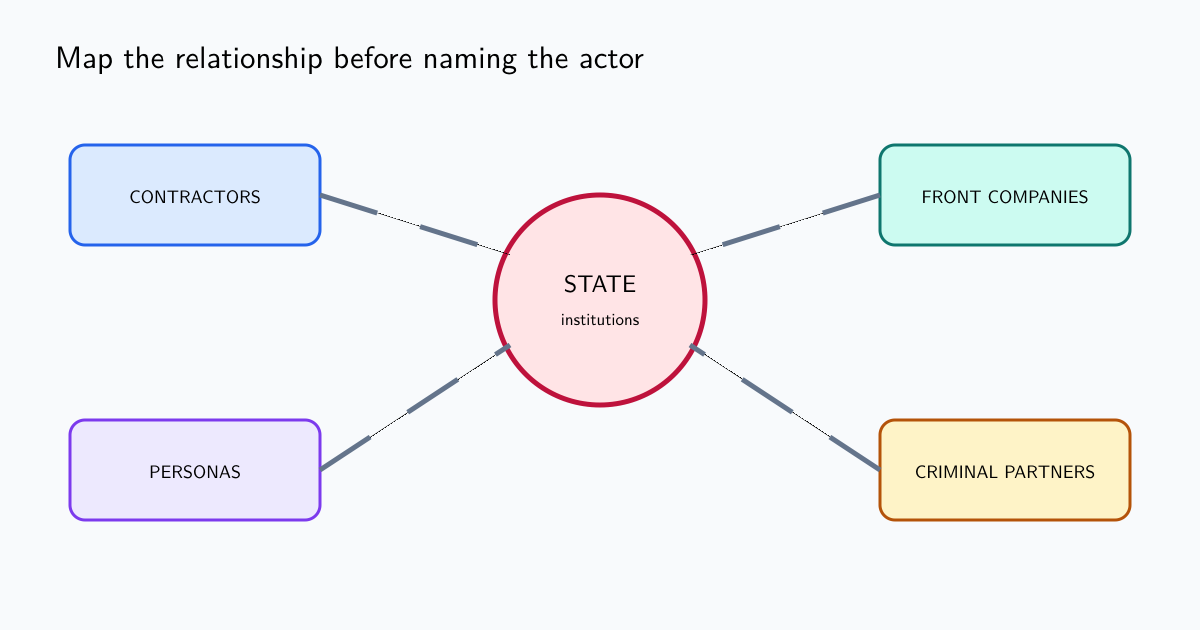
Stuxnet was not a reusable magic weapon. It depended on target-specific intelligence and access. Its discovery exposed techniques and encouraged other states to invest. Iran expanded its own capabilities, and the relationship evolved into persistent espionage, sabotage, influence, and retaliation below and occasionally across the threshold of open conflict. The companion guide to Iran’s cyberwarfare capabilities explains the IRGC, contractor, front-company, and persona ecosystem on the other side of this contest.
In April 2020, Iranian operators reportedly attempted to manipulate Israeli water infrastructure. In May, a cyberattack disrupted traffic at Iran’s Shahid Rajaee port. The Shahid Rajaee port case describes it as Israeli retaliation; the Israel–Iran exchange study explains the escalation dynamics and evidence limits. Israel did not publicly issue an operational order or technical report.
Natanz explosions and power failures in 2020 and 2021 were often labeled “cyberattacks” before evidence emerged. Later accounts supported physical sabotage in important elements. This is a warning: sophisticated intelligence services use humans, supply-chain manipulation, explosives, electronic warfare, and network access together. “Cyber” can become a placeholder for any unexplained sabotage.
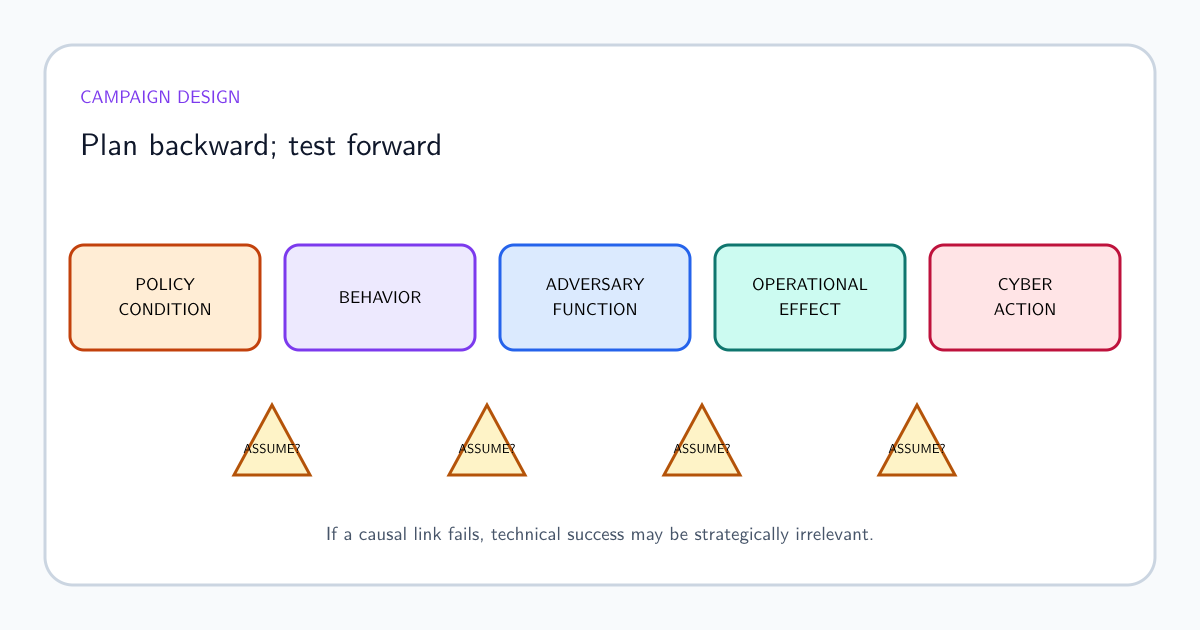
The 2025 open conflict continued the convergence. Israeli intelligence reportedly penetrated Iranian organizations and enabled physical operations; Iranian actors increased espionage, influence, leaks, and attacks against Israel and partners. Public evidence does not yet support a complete cyber battle-damage ledger. Effective cyber campaign design asks what political or military decision changed, how long the effect lasted, what access was consumed, and what retaliation or adaptation followed.
After 7 October: cyber strength met intelligence failure, regional attack, and contested surveillance
The Hamas-led attack of 7 October 2023 killed about 1,200 people in Israel and took roughly 250 hostages. Israel’s subsequent campaign in Gaza caused vast Palestinian civilian death, injury, displacement, and destruction. Cyber capability did not prevent the surprise. Signals, plans, human reporting, assumptions, collection priorities, and leadership judgment must all be examined; possessing excellent sensors is not the same as interpreting warning correctly.
Google’s Google Israel–Hamas cyber study found little evidence that Hamas synchronized a major cyber component with the initial assault. Iran-backed operators and aligned personas adjusted after the attack, accelerating phishing, espionage, hack-and-leak, disruption, and influence. The INCD’s October 2023 cyber review recorded intensifying attacks during the first two months.
Iranian-linked actors targeted Israeli-made Unitronics controllers exposed to the internet, including systems outside Israel. Microsoft’s Microsoft OT investigation showed how default or weakly protected industrial devices let a regional message create global collateral disruption. Product nationality became a targeting label; deployment security determined the opening.
Israel used its intelligence and data systems at enormous scale in Gaza. Reporting and the AP military AI investigation describe expanded cloud, translation, surveillance, and AI-supported workloads. The Human Rights Watch digital-tools analysis raises questions about training data, error, human review, distinction, proportionality, and accountability. The IDF disputes or qualifies important public allegations, and access to classified targeting records is limited.
Cyberwarfare, digital surveillance, and AI-assisted targeting overlap but are not synonyms. Intercepting communications can produce intelligence. Compromising a device can locate a person. A model can prioritize records. A commander authorizes force. Each step needs evidence and a legal basis; automation does not transfer responsibility away from people.
The same care applies to the September 2024 pager and radio explosions involving Hezbollah. The operation was a sophisticated supply-chain and covert-action event with remotely triggered explosives. Calling it a “cyberattack” without qualification obscures the physical mechanism and the civilian-risk questions. The broader lesson is that digital trust, hardware provenance, logistics, intelligence, and physical sabotage now share one operational system.
The civilian shield: strong operational response does not erase governance gaps
Israel’s small geography, digital economy, reserve system, and dense infrastructure allow rapid collaboration. CERT-IL can call an organization directly; veterans know counterparts across government and industry; vendors can contribute telemetry; national leadership can shift priorities quickly. The 2024 2024 INCD annual report recorded roughly 17,000 incident reports, a 24 percent increase, with phishing the largest category and growing concern over credentials, suppliers, cameras, denial of service, and influence.
Metrics need interpretation. Reports are not unique successful intrusions. More reports may reflect more attacks, better awareness, broader collection, or all three. Alerts issued are not attacks prevented. The absence of a catastrophic national outage demonstrates outcome, but it cannot identify which control deserves credit or prove the next campaign will fail.
The June 2026 State Comptroller audit supplies the essential counterweight. It reported that no cyber incident materially disrupted Israel’s economy between the war’s outbreak and the audit cutoff in June 2025, while also finding that protection in parts of the economy remained inadequate. Seven of 21 reviewed organizations scored 60 or lower on organizational frameworks before the war; national cyber exercises had lapsed for six years; sector scenarios were incomplete; regular reporting to senior political leadership was deficient; and comprehensive legislation had been delayed for about a decade.
The sample was not statistically representative, and the INCD disputed aspects of methodology and the treatment of compensating controls. That response matters. So does the audit’s institutional question: could leaders see the aggregate risk, and had organizations rehearsed the decisions a national event would require? Technical defense without governance can succeed repeatedly until dependencies align against it.
Critical cyber key terrain includes electricity, water, hospitals, telecom, cloud identity, emergency alerts, ports, logistics, payment services, municipal systems, and defense suppliers. Their dependencies cross regulatory boundaries. A cloud outage can affect hospitals; a telecom compromise can expose mobilization; a supplier credential can reach many customers.
Mature resilience requires tested isolation, independent recovery credentials, offline backups, supplier inventories, manual alternatives, privacy-aware information sharing, exercises with ministers and executives, and communication that distinguishes verified damage from psychological operations. Civilian harm and reverberating effects belong in planning before a crisis, not after a water, health, or communications incident becomes public.
The 2026 assessment: exceptional integration, strategic ambiguity, and an accountability test
Israel is a top-tier cyber power, but the useful conclusion is more specific than a ranking. It can recruit and train technical talent early, combine signals intelligence with operational planning, protect military and civilian systems through separate professional structures, mobilize a globally connected security industry, work closely with the United States and other partners, and sustain access against difficult regional targets. Its geography and threat environment create urgency; its technology economy gives that urgency scale.
Four evidence bins keep assessment disciplined:
- Demonstrated: the INCD and CERT-IL; sector defense; IDF cyber-defense structures; Unit 8200’s acknowledged intelligence mission; strong industry and research; national alerts and incident response; wartime continuity; and documented adversary campaigns.
- Widely attributed: joint Israeli–U.S. responsibility for Stuxnet, Israeli responsibility for the 2020 Iranian port disruption, and other operations supported by multiple credible reports but not conventional official acknowledgment.
- Declared: proactive defense, the three-layer model, Cyber Dome, cloud/AI/quantum priorities, shared responsibility, and expanding international operational coordination, including 2026 Israel–U.S. operational coordination.
- Unknown or contested: current accesses, tools, zero-days, tasking between agencies, exact cyber contribution to the 2025 Iran campaign, targeting safeguards, surveillance scale, model error, and many claimed strategic effects.
Strength creates constraints. Small elite units compete with industry for experienced people. Heavy reliance on reserves can strain wartime businesses. Commercial cloud and foreign vendors create leverage and dependency. An innovation culture can outrun regulation. Strategic ambiguity protects access but limits democratic evaluation. Surveillance and spyware controversies can damage partnerships and create human-rights harm. Intelligence abundance can reinforce assumptions instead of correcting them—as the failure before 7 October demonstrates.
Israel’s close foreign relationships multiply capability through intelligence exchange, joint research, procurement, vendor access, and diplomatic coordination. They also make third countries part of the attack surface and accountability chain. Cloud providers, exploit vendors, and allied agencies make consequential decisions about service, disclosure, and data. Partnership is not ownership: a joint operation requires evidence, not an assumption that Washington approved every Israeli action.
For daily defense, prioritize the patterns visible in Israel’s threat environment: phishing tied to conflict news; stolen session tokens; mobile and messaging compromise; internet-exposed controllers and cameras; suppliers and managed services; cloud administrators; defense and diaspora identities; hack-and-leak narratives; and Iranian personas that blur state activity with hacktivism. Preserve identity, DNS, endpoint, cloud-control-plane, and OT telemetry. Verify claims before amplifying them.
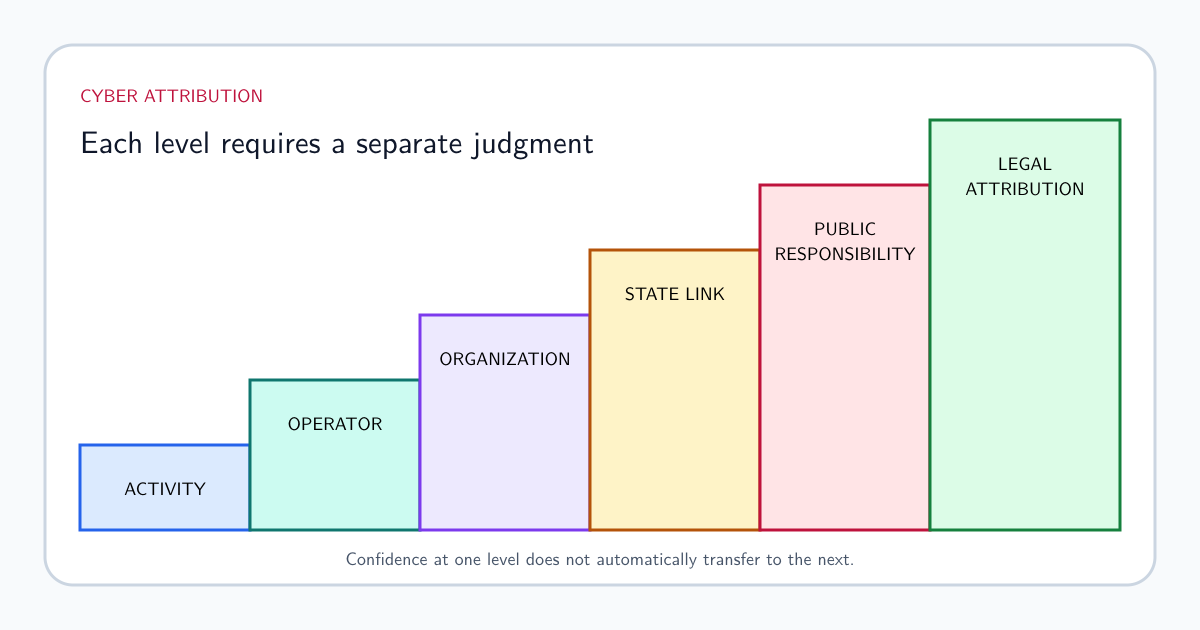
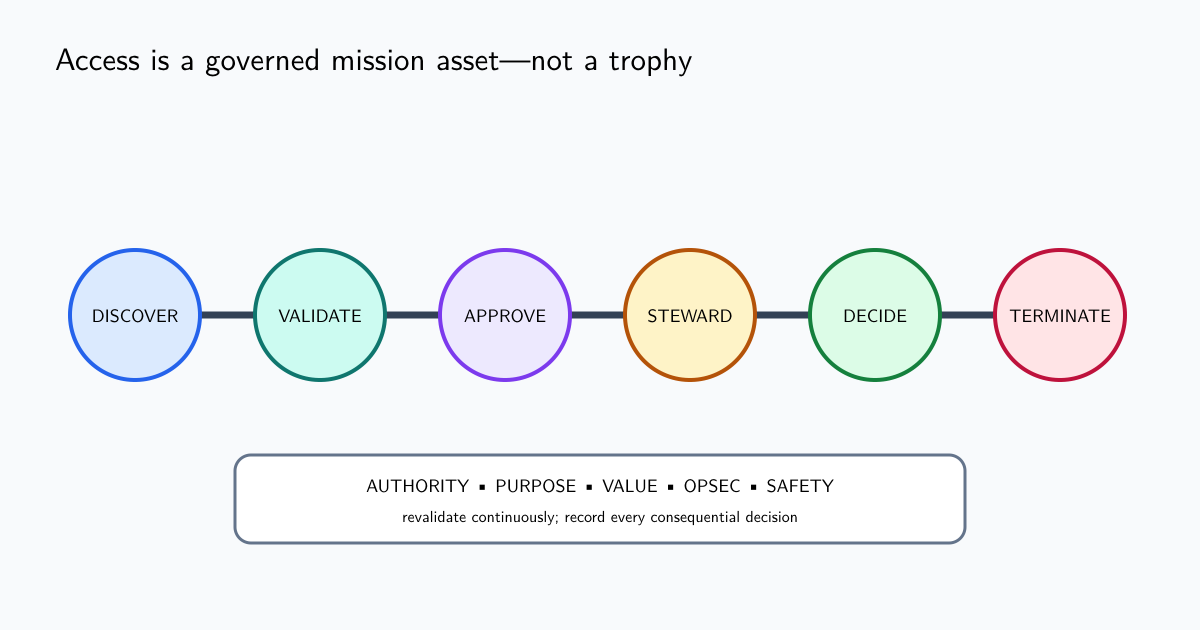
For offensive assessment, use cyber access stewardship. A persistent intelligence position may be worth more than public disruption. A destructive effect can expose a technique, harm civilians, or provoke retaliation. Measure what changed relative to the baseline, how long it lasted, whether the target adapted, and whether the political objective advanced. Apply cyber attribution separately to the operator, sponsor, legal responsibility, and claimed effect.
Israel also treats perception as operational terrain. Leaks, exposure of adversary penetration, covert-action signaling, deepfakes, hostage narratives, and wartime claims intersect with cyber-enabled influence operations. Technical truth does not guarantee audience belief; secrecy may preserve access while surrendering the narrative.
The final judgment is therefore dual. Israel has an unusually integrated intelligence, defense, industrial, and operational cyber system with a credible record against sophisticated targets. Its record is not proof of omniscience, universal access, or automatic strategic success. The decisive challenge through 2026 is to preserve technological advantage while closing civilian-defense gaps, clarifying legal authority, protecting rights, and ensuring that data, AI, secrecy, and speed remain subordinate to accountable human judgment.
Frequently asked questions
What are Israel’s principal cyberwarfare capabilities?
Public evidence supports advanced signals intelligence and cyber operations, military network defense, nationwide civilian incident response, critical-infrastructure protection, vulnerability discovery, intelligence fusion, cyber-enabled influence, a deep security industry, and close operational partnerships. Israel is widely linked to sophisticated operations against Iran, but its government rarely acknowledges them and exact tools, accesses, authorities, and effects remain classified.
What is Israel’s public cyber doctrine?
Israel’s national concept separates market resilience, operational response, and national defense, supported by scientific and industrial capacity. Its 2025 strategy emphasizes shared responsibility, continuity of essential services, proactive risk reduction, rapid national coordination, technological advantage, international partnerships, and the Cyber Dome concept. The public strategy governs civilian defense; it is not a complete doctrine for secret military or intelligence operations.
Is Unit 8200 Israel’s cyber command?
No. Unit 8200 belongs to the IDF Intelligence Directorate and is associated with signals intelligence, codebreaking, data analysis, surveillance, and offensive cyber activity. Military network defense and communications have separate structures in the IDF C4I and Cyber Defense Directorate. Civilian national defense belongs principally to the Israel National Cyber Directorate, while Mossad and Shin Bet have distinct classified missions.
Did Israel create Stuxnet?
Israel has not publicly acknowledged authorship. Extensive multi-source reporting attributes the operation to the United States and Israel, with technical and intelligence contributions commonly linked to Unit 8200. A professional assessment should call this widely and credibly reported rather than officially confirmed.
Are Israeli spyware companies part of Israel’s cyberwarfare forces?
Not automatically. Firms such as NSO Group and Candiru are private companies whose exports require Israeli licensing, and their products demonstrate a strong commercial intrusion ecosystem. Customer operations are not therefore Israeli state operations. Documented abuse against journalists, officials, activists, and human-rights defenders creates serious legal, diplomatic, and human-rights risk.