Iranian Cyber Operations: The IRGC, Contractors, Front Companies, and Personas
Map Iran’s cyber operating ecosystem without collapsing government units, contractors, front companies, criminal partners, hacktivists, and online personas into a single unsupported attribution.
Begin with a claim made in the fog of war
Evidence cutoff: 14 September 2026. Imagine the first hours after a company disappears from the network. A dramatic persona posts a logo and claims retaliation. Iranian-aligned channels repeat it. A vendor recognizes familiar infrastructure. A government official calls it state-sponsored. These observations may eventually point to the same actor—but at the beginning they are different pieces of evidence serving different agendas.
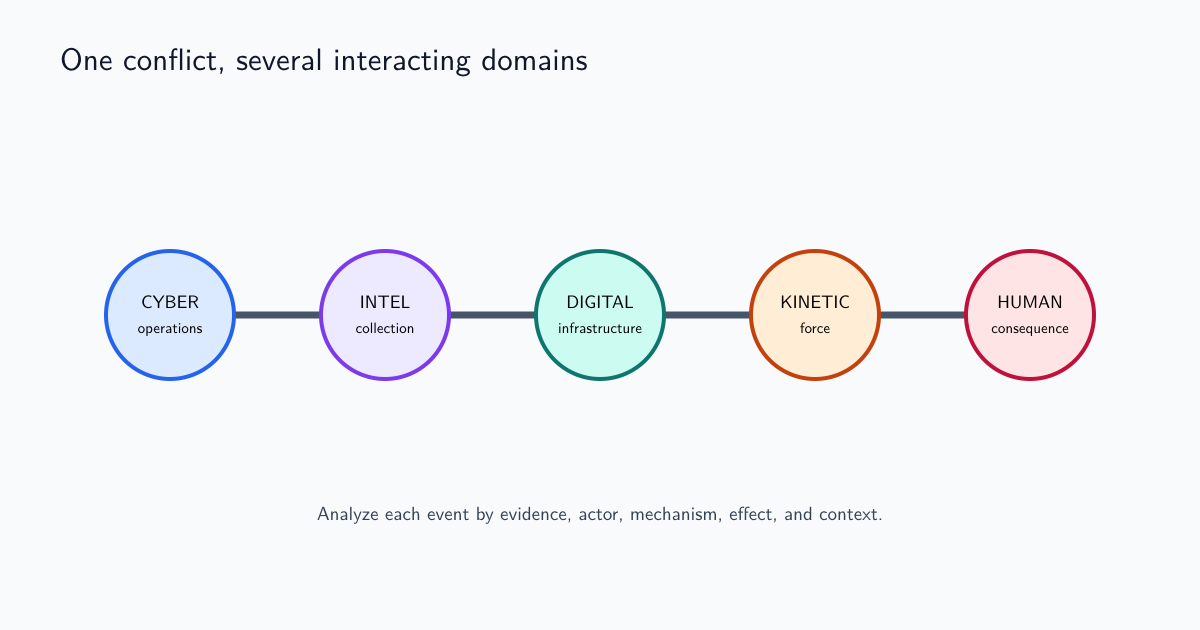
“Iranian” can describe citizenship, location, language, infrastructure, political alignment, victim selection, sponsorship or command. None proves the others. A state intelligence employee, a contractor serving an IRGC organization, a criminal collaborating for profit, a volunteer defacing websites and a persona exaggerating another actor’s work can all appear in the same crisis.
The analytic task is to identify the relationship relevant to the decision. A defender may need reliable behaviors and infrastructure before the operator is named. A sanctions team needs a legally supportable association with a designated entity. A public attribution requires evidence and policy review. A military or diplomatic decision may require a higher threshold for state control and intent.
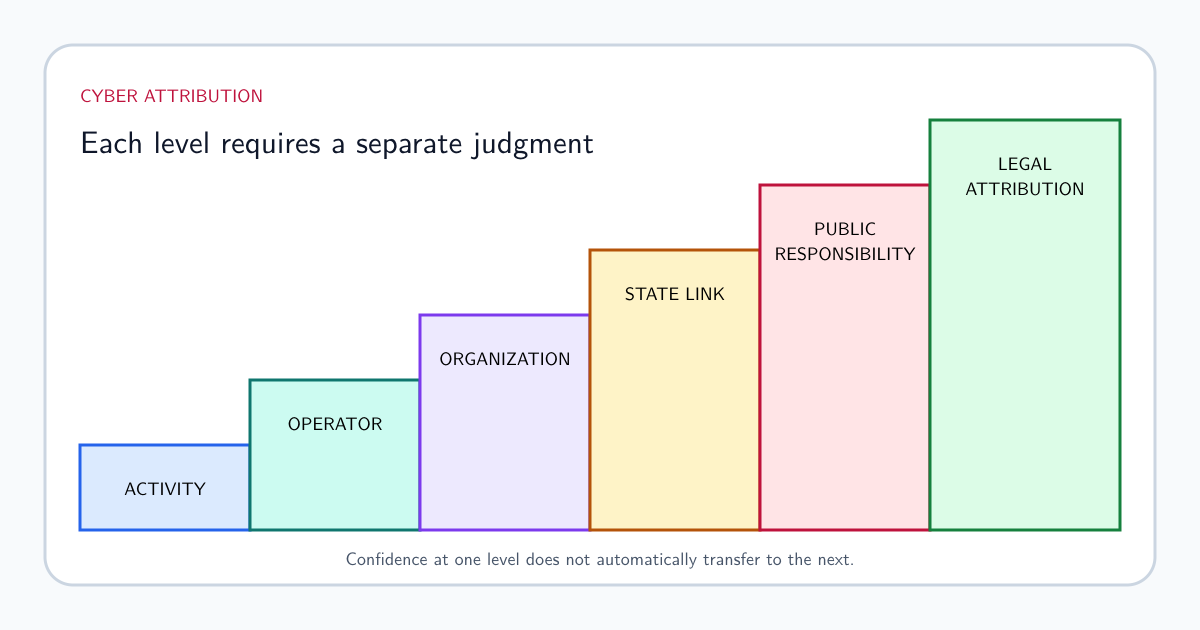
Use the cyber attribution framework to keep four layers separate: technical activity cluster, operator or organization, sponsor relationship, and state responsibility. Confidence can legitimately be high at the first layer and low at the fourth.
Follow the work from state requirement to private hands
Public reporting and government actions associate Iranian cyber operations with several military and intelligence institutions. Their mandates, leadership and tasking are not fully visible. Organizational names and translations also vary across advisories. Analysts should preserve aliases, dates and the source that connects an actor to an institution rather than merging clusters because both are called Iranian.
United States Treasury reporting describes the IRGC Cyber-Electronic Command as working through front companies. In April 2024, the Treasury front-company designations named Mehrsam Andisheh Saz Nik and Dadeh Afzar Arman and described associated personnel and campaigns against United States entities. This is an official United States sanctions determination. It supplies entity names, asserted relationships and a legal action; it is not independently released forensic evidence for every referenced intrusion.
Contracting expands expertise, capacity and deniability while complicating control. A company can mix commercial work with government tasking. Personnel can move between firms, reuse infrastructure or pursue side activity. The correct unit of analysis may be an operator team or campaign rather than the registered company or the broad state label.
A university credential opens the next chapter
The Mabna Institute case illustrates the overlap among private organization, university demand and state intelligence requirements. In August 2026, the Department of Justice announced a superseding indictment charging 17 alleged members. The 2026 Mabna indictment announcement alleges intrusions affecting 144 American universities, 178 foreign universities, at least 53 United States and foreign companies, government agencies and nongovernmental organizations.
Prosecutors allege theft of more than 31 terabytes of academic and proprietary data and state that many intrusions served the IRGC and other Iranian government or university clients. Nine defendants had been charged previously in 2018. These are allegations; the Justice Department itself notes the defendants are presumed innocent unless proven guilty.
Analytically, the case shows why collection requirements matter. Academic credentials can provide research access; university targeting can support scientific, economic, military or intelligence objectives; and the same operators may serve several clients. Victim count alone does not reveal who requested each collection task or how stolen material was used.
The operation reaches the public through a persona
Personas are public identities used to claim, frame or amplify operations. They can conceal an established unit, coordinate supporters, perform influence, exaggerate access or borrow another actor’s incident. A persona’s posts are evidence of messaging and claimed intent. They are not self-validating proof of access, effect or sponsorship.
The multiagency CyberAv3ngers advisory describes CyberAv3ngers as an IRGC-affiliated persona associated with targeting Israeli-made Unitronics PLCs and HMIs across several countries. Crucially, it also notes that several historical claims about compromises of Israeli critical infrastructure were false. The same source therefore supports affiliation and warns against accepting claim volume as incident volume.
During the 2026 war, Handala claimed the disruptive incident at United States medical-technology company Stryker as retaliation for the Minab school strike. Stryker confirmed disruption; the claimant supplied the attribution narrative. Independent technical or government evidence is required to establish who performed the intrusion and the degree of Iranian state control. Cyber-enabled influence operations can magnify the political effect even while technical attribution remains uncertain.
Operational technology and conflict-driven disruption
Iranian-affiliated targeting of operational technology predates the 2026 war. The 2023–2024 CyberAv3ngers campaign exploited internet-exposed Unitronics devices, often using default or absent passwords. It produced defacements and disruption while selecting Israeli-made equipment as a political theme. This combined opportunistic access with strategic messaging.
The 2026 PLC advisory describes expanded activity against controllers from several manufacturers in American government, water, wastewater and energy environments. Investigators reported operational disruption, financial loss and—in one case—malicious project logic overriding instructions associated with safe operating parameters. The authoring agencies assess that activity escalated in response to hostilities.
This supports a change in observed effect and target breadth, not an assumption that every exposed controller is strategically tasked. Opportunity remains central. Defenders should prioritize reachable assets and unsafe control states while intelligence analysts separately assess campaign direction, target selection and conflict linkage.
A defensible actor profile
Build the profile from dated propositions. Record names and aliases, first and last observed activity, technical clusters, victimology, objectives, access methods, infrastructure, malware, public personas, organizational links, government statements, legal actions and known false claims. Give each proposition its own confidence and sources. Do not carry an old organizational attribution into a new campaign without testing it.
Distinguish capability from demonstrated behavior. A group that has stolen credentials has not thereby demonstrated industrial sabotage. Distinguish intent from propaganda. A target list can express aspiration, intimidation or tasking; follow-on reconnaissance and access provide stronger warning. Distinguish benefit from control. An operation favorable to Iran may be independent or only loosely aligned.
Include negative and disconfirming evidence: inconsistent working hours, different infrastructure habits, language anomalies, victim selection that conflicts with the proposed sponsor, false claims and long inactivity. Maintain alternative hypotheses and collection requirements. Confidence should fall when the evidence chain becomes longer, not rise because several vendors repeat the same original report.
What the ecosystem means during the current war
A distributed ecosystem gives Iran several options: government units can pursue sensitive intelligence; contractors can scale collection; personas can signal retaliation; aligned actors can create noise; and criminal collaboration can add disruption or monetization. It also creates friction. Claims compete for attention, access can be exposed, independent actors can escalate at inconvenient times and central direction can be difficult to prove.
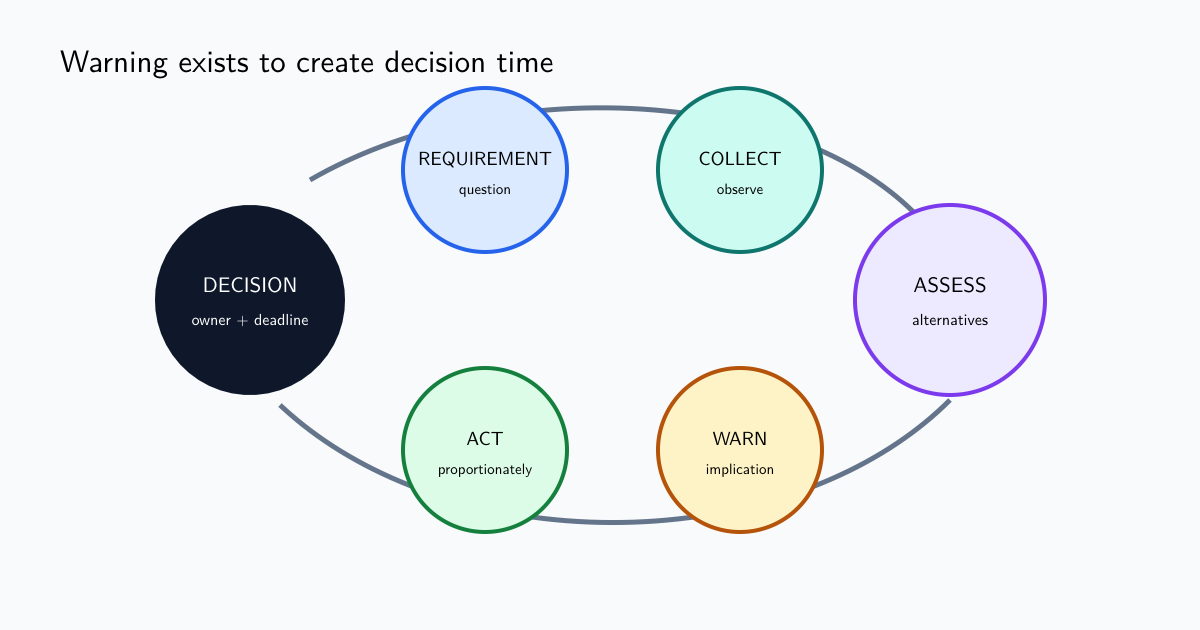
For strategic warning, monitor the transition from rhetoric to preparation: new victim-sector reconnaissance, acquisition of regional infrastructure, credential collection, scanning of exposed OT, tasking consistent across clusters, coordination with kinetic events and pre-positioned media narratives. State what observation would cross a decision threshold. Do not convert geopolitical tension alone into a specific technical warning.
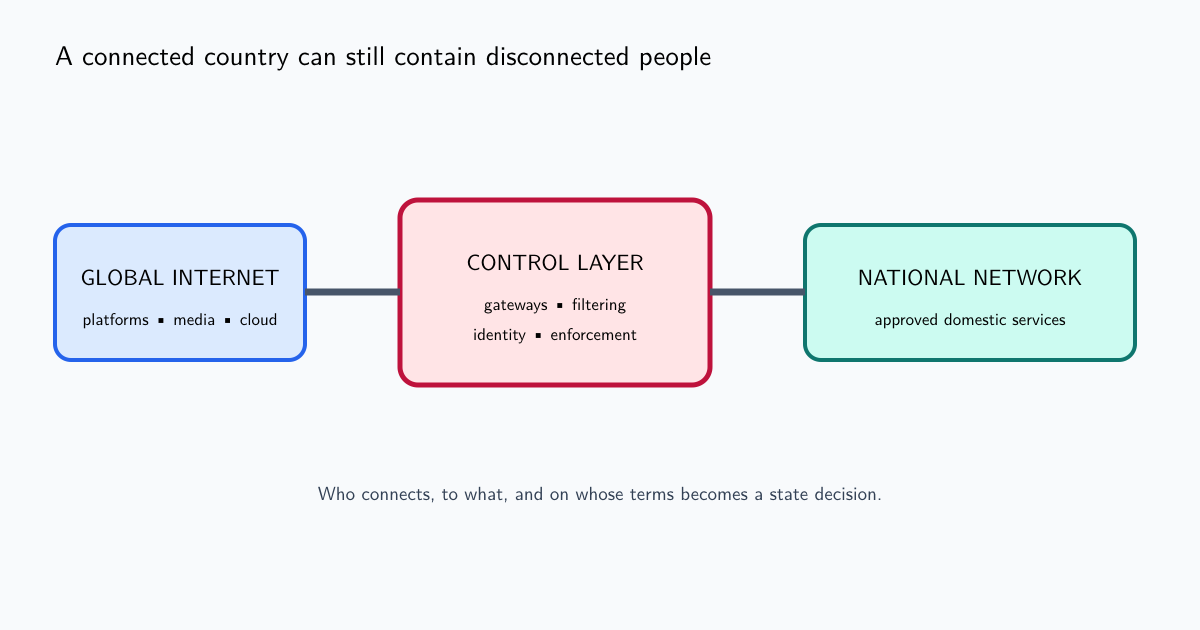
Iran’s controlled internet adds another layer. Domestic restrictions can hide victim reporting and technical evidence from outside observers while privileged accounts continue official messaging. An apparent silence may mean no incident, censorship, a network outage or fear of reporting. Collection gaps must not be mistaken for operational success or failure.
The principal analytic lesson of the Iran–United States cyber conflict is organizational humility. “Iran” is sometimes the appropriate strategic actor, but it is rarely a sufficient technical attribution. Naming the operator, sponsor relationship, confidence and remaining gap makes intelligence more useful—and makes future correction possible.
Frequently asked questions
Does every pro-Iranian hacking group work for the Iranian government?
No. Groups can be directed, sponsored, contracted, tolerated, ideologically aligned, criminally motivated, opportunistic, or falsely presenting themselves as Iranian. The relationship must be assessed from evidence rather than inferred from messaging.
What is an Iranian cyber front company?
In United States sanctions usage, it is a company assessed to act for or support a designated state organization while presenting a commercial identity. A designation records the issuing government’s legal and intelligence judgment; analysts should still identify that source and authority.
Are DOJ charges proof that an accused Iranian hacker is guilty?
No. An indictment contains allegations and defendants are presumed innocent unless proven guilty. It is a primary source for the government’s accusation, evidence narrative, victim scope, and legal theory—not a conviction.
Why do Iranian cyber personas make exaggerated claims?
Possible purposes include intimidation, audience mobilization, perceived retaliation, concealment of another operator, inflation of capability, and exploitation of unrelated outages. Some claims are accurate and some are not, so validation is required case by case.