Cyber Access Stewardship and Operational Security
Govern authorized cyber access as a scarce mission asset through purpose, authority, intelligence gain-loss, OPSEC, safety, deconfliction, and termination decisions.
Define access by mission purpose and authority
Operational access is an authorized ability to observe, interact with, or create an option in a target system. It may support intelligence, defence, disruption, military action, partner warning, or campaign assessment. Access has no independent legitimacy: its permitted use follows the approved objective, target, method, time window, jurisdiction, and command relationship.
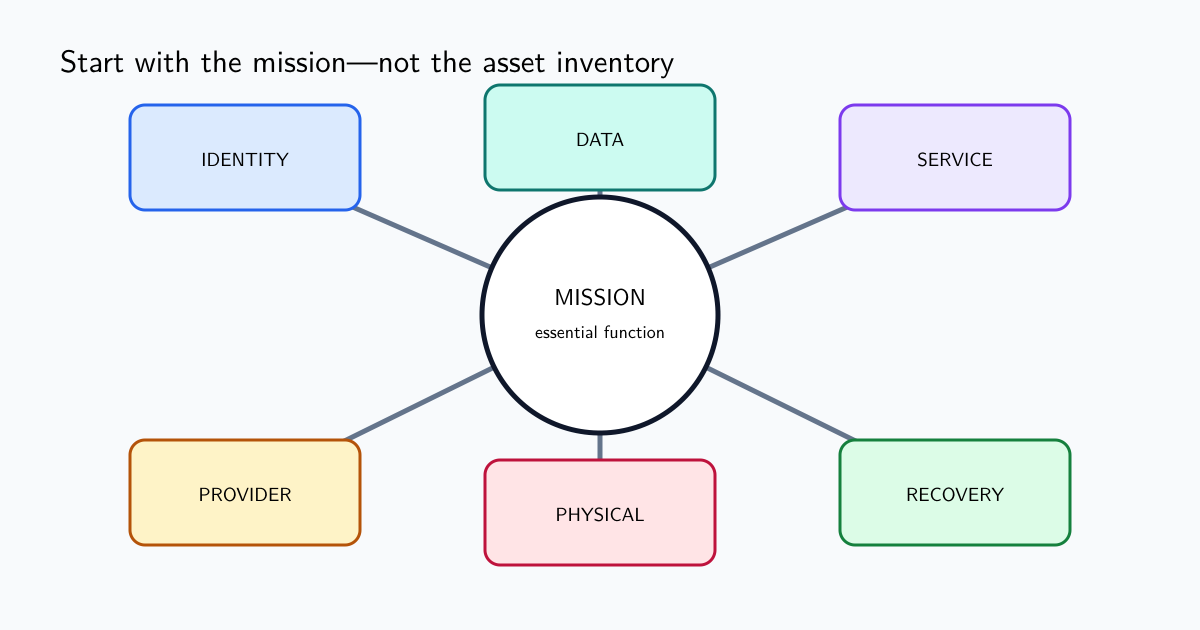
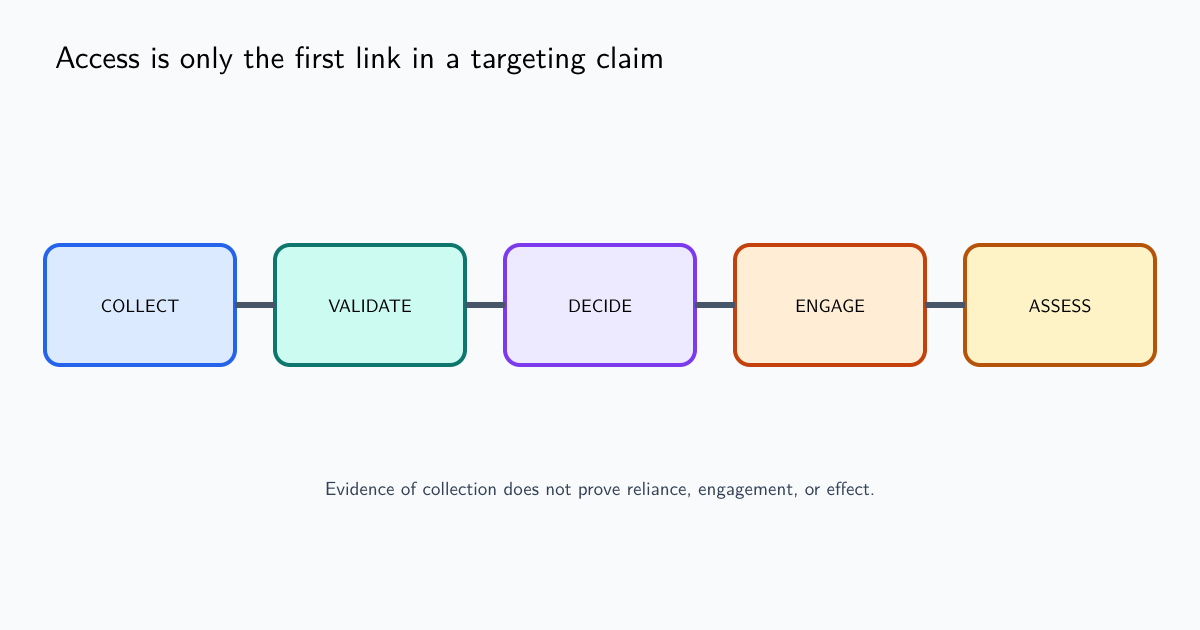
Create an access record at discovery. Identify source, target function, technical scope, confidence, owner, authority, handling, mission value, civilian and partner co-use, detection risk, safety constraints, and expiry. Separate what was observed from what is inferred. Link the access to cyber key terrain only when the mission dependency has been demonstrated.
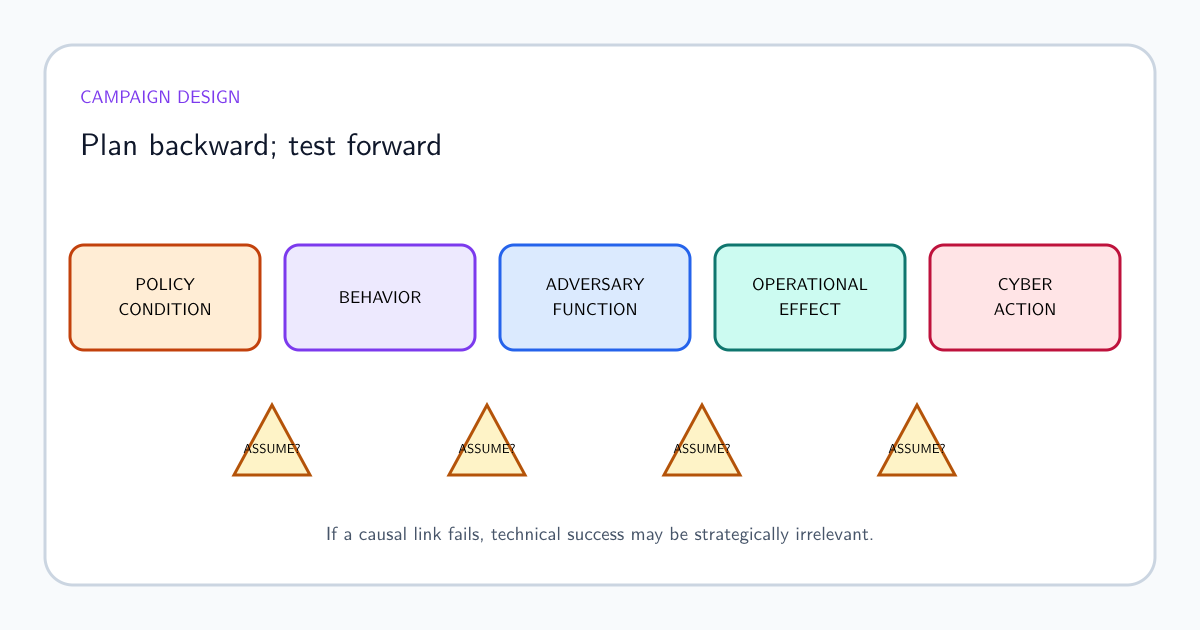
Revalidate before every material change. A credential may gain privilege, a cloud tenant may add civilian users, armed-conflict status may change, a partner may claim an intelligence equity, or a vendor patch may make prior assumptions false. Cyber campaign design should consume a current access judgment, never a stale inventory entry. If purpose or authority cannot be stated, activity pauses.
Balance intelligence gain, loss, and mission protection
Access may reveal adversary intent, capability, topology, or recovery behavior. Using or exposing it may answer an urgent requirement, protect a mission, or enable a partner to evict an actor. The same action can burn collection, disclose a capability, reveal a partner, teach the adversary, or remove a future option. Write the tradeoff before action rather than rationalizing it afterward.
Compare four paths: observe, use, disclose, or terminate. For each, estimate knowledge gained, sources and methods exposed, harm prevented, future access cost, partner consequence, adversary adaptation, attribution likelihood, reversibility, and latest useful decision time. An intelligence gain-loss assessment informs command; it cannot authorize an otherwise prohibited act.
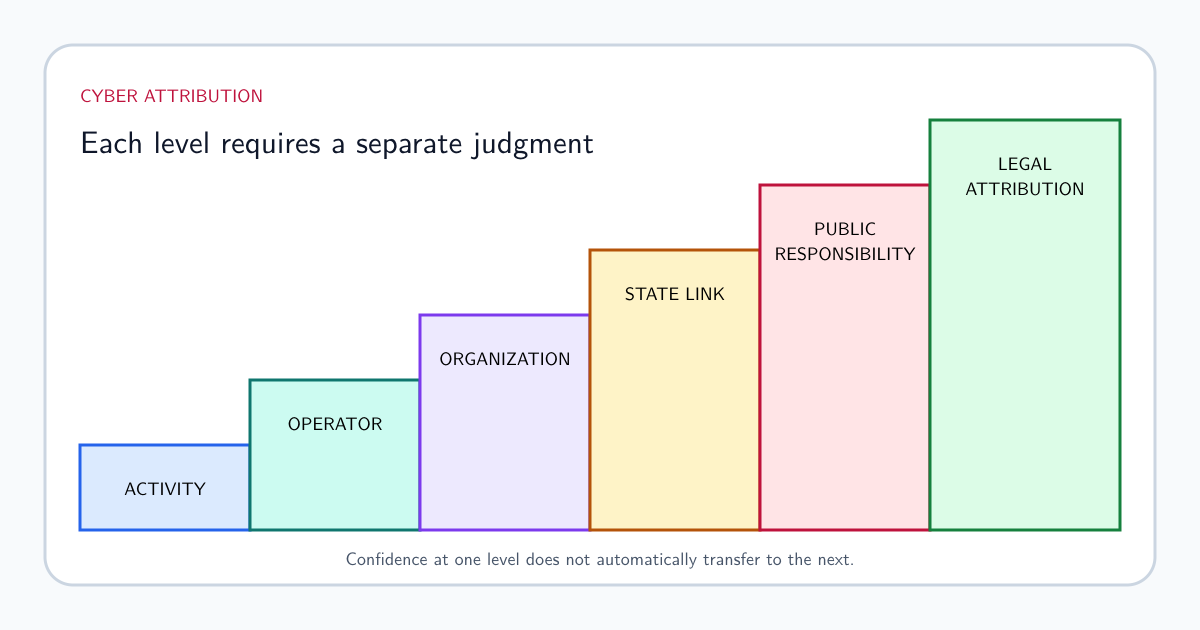
Establish thresholds in advance. Imminent civilian or mission harm may require rapid protective action even when observation has high intelligence value. Conversely, low-consequence ambiguity may justify time-bounded collection. Record dissent and the decision owner. Cyber attribution may influence disclosure or response, but uncertainty about sponsorship does not prevent defenders from protecting an owned environment.
Protect the access, infrastructure, and decision process
Operational security protects indicators that could reveal purpose, timing, capability, identity, partner involvement, and intended effect. Map exposures across people, operational infrastructure, accounts, development and testing, procurement, travel, scheduling, tickets, collaboration platforms, vendor support, source code, telemetry, and public communication. An adversary can combine harmless fragments into warning.
Apply need-to-know access, compartmented planning, role separation, controlled administration, auditable change, secure communications, provenance, and approved cover arrangements. Protect infrastructure from reuse, contamination, unauthorized activity, and accidental interaction with third parties. Validate that collection and command channels remain trustworthy. Do not confuse secrecy with absence of records: responsible operations require traceable authorization and accountability.
Conduct an OPSEC review at each phase and after any anomaly. Ask what the adversary could observe, what conclusion it could draw, and how that changes the campaign. The UK’s Responsible Cyber Power in Practice publicly emphasizes accountable, precise, and calibrated operations; implementation still requires organization-specific classified rules and authority.
Deconflict without dissolving responsibility
The same system may support intelligence, defence, law enforcement, partner collection, military effects, vendor response, and civilian service. Deconfliction identifies overlapping activity, conflicting changes, shared infrastructure, and competing equities before one team destroys evidence, closes another mission path, or creates unsafe interaction. It does not mean that every participant receives every operational detail.
Maintain a decision matrix with action, target, owner, authority, timing, dependency, potential conflict, notification threshold, secure channel, and resolution authority. Use abstracted conflict checks when full disclosure is impossible. Define emergency paths for imminent harm, loss of communications, and contradictory direction. Expire coordination decisions when facts change.
Protect partner sovereignty and data-handling rules. A partner’s consent to hunt does not necessarily authorize collection, persistence, or effects beyond the agreed scope. Log decisions and changes. When conflict cannot be resolved at the working level, preserve the facts and escalate to the named commander, legal adviser, or coordination authority rather than letting technical speed decide policy.
Terminate deliberately and learn from the lifecycle
Plan termination before use. Define triggers for authority expiry, mission completion, target change, civilian harm, compromise, partner objection, loss of observation, excessive exposure, or command direction. Specify who can order suspension, how activity stops, what persistence and infrastructure are removed, which evidence is preserved, and how unintended effects are monitored and remediated.
Confirm termination rather than assuming a command completed. Reconcile accounts, tokens, infrastructure, tasking, data holdings, logs, approvals, and partner notifications. Apply retention and deletion rules. Assess what the adversary observed, what capability was exposed, whether alternate access remains, and whether cyber pre-positioning or defensive risk changed because of the operation.
Close with a stewardship review: purpose served, decisions made, gain and loss, deviations, OPSEC events, safety outcomes, partner impact, cost, and lessons. Feed those findings into future target analysis, training, infrastructure controls, and cyber-effects assessment. Responsible access management makes restraint, pause, disclosure, and termination as professionally executable as use.
Frequently asked questions
What is cyber access stewardship?
Cyber access stewardship is the continuous governance of authorized access according to mission purpose, legal authority, intelligence value, operational security, safety, partner equities, and termination conditions. Access is not an end state and never expands its own authority.
What is intelligence gain-loss?
Intelligence gain-loss compares knowledge and mission value gained through an action with collection, access, sources, methods, partnerships, or future options that may be exposed or lost. It informs decisions but does not override law, safety, or command authority.
Is quiet access always more valuable than action?
No. Observation may answer a priority requirement, but waiting can expose civilians, missions, or partners to harm. The correct decision depends on authority, urgency, expected benefit, alternatives, confidence, and agreed thresholds.
When should operational access be terminated?
Terminate or suspend when authority expires, purpose no longer justifies retention, assumptions change, safety or civilian thresholds are crossed, deconfliction fails, compromise is suspected, intelligence value collapses, or command directs termination.