HTTP Request Smuggling: Detection and Prevention
HTTP request smuggling detection finds parser disagreement, ambiguous message framing, connection desynchronization, and backend request anomalies.
Request smuggling is a parser disagreement across one path
HTTP request smuggling detection begins at the trust boundary between HTTP recipients. A CDN, load balancer, reverse proxy, service mesh, API gateway, and application server may process the same request in sequence. If two components calculate different message boundaries, bytes treated as one request by the frontend can become the prefix of another request at the backend.
RFC 9112 HTTP message framing requirements define request smuggling as exploiting protocol-parsing differences among recipients to hide an additional request. The risk is not limited to one Content-Length versus Transfer-Encoding pattern. Duplicate fields, invalid whitespace, nonstandard transfer codings, HTTP/2 downgrade behavior, and vendor-specific normalization can all create disagreement.
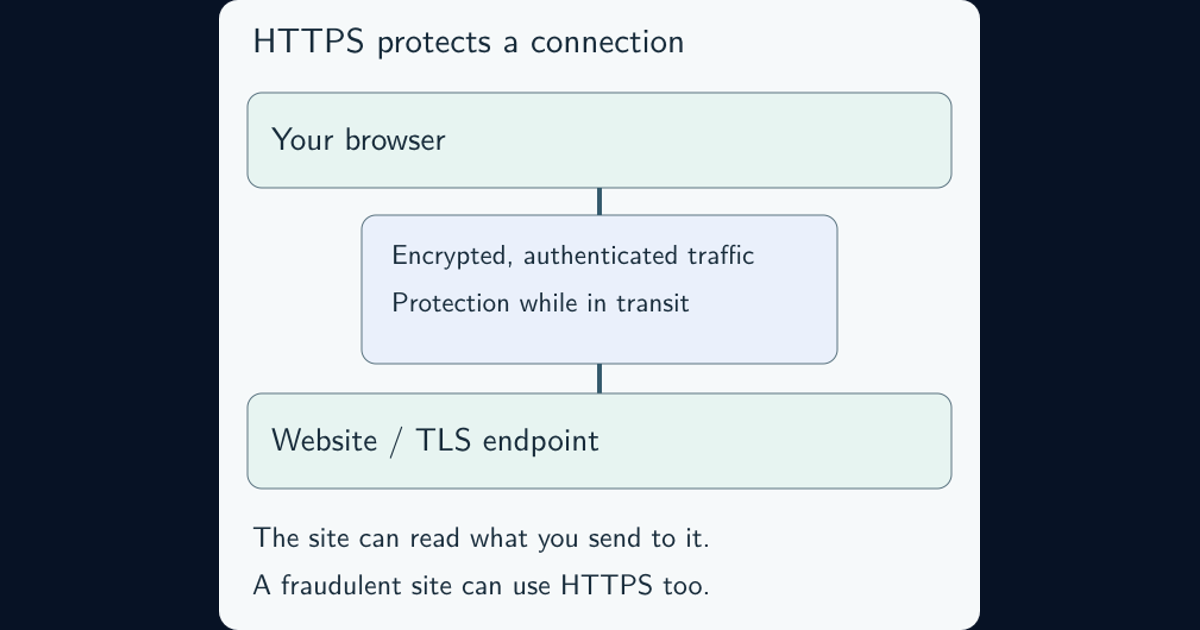
HTTPS does not repair that semantic split. It authenticates and encrypts transport to a TLS endpoint; a proxy can legitimately decrypt and forward a differently framed request. Keep the HTTPS protection boundaries separate from the backend parsing question.
Preserve raw framing evidence before a proxy normalizes it
Application logs usually show the backend interpretation, not the original octets. Preserve packet capture or byte-accurate edge telemetry, frontend and backend request IDs, connection identifiers, protocol versions on both hops, parser errors, routing decisions, response sequence, and the component versions that processed the stream.
This is an authored, non-executable framing illustration—not production telemetry and not a payload to send to a live system:
POST /checkout HTTP/1.1
Host: app.example
Content-Length: 6
Transfer-Encoding: chunked

0

X
The diagnostic fact is the simultaneous framing ambiguity, not the literal bytes above. RFC 9112 says a message containing both Transfer-Encoding and Content-Length might indicate request smuggling and ought to be handled as an error; a recipient must not casually forward ambiguity into a reused connection. Redact cookies, authorization fields, and request bodies while retaining exact header order, casing, whitespace, and line termination needed for analysis.
Detect desynchronization through edge, backend, and response evidence
Build high-confidence signals around disagreement. Alert on requests rejected for conflicting framing fields, duplicate or malformed lengths, invalid transfer codings, forbidden HTTP/2 connection-specific fields, bare carriage returns, and translation failures. Join those events to backend requests that lack a corresponding edge request, inherit another user’s connection context, produce impossible route sequences, or cause response-count mismatches.
Useful invariants include one normalized frontend request mapping to one authorized backend request, monotonically ordered request IDs on a reused connection, and complete accounting for bytes forwarded. A backend 400, 404, or authentication failure immediately after a frontend success can be a weak desynchronization clue, but ordinary client disconnects and health checks create noise. Correlate parser diagnostics with connection-level anomalies before escalating.
Logging only at the application creates security telemetry blind spots. Capture evidence at both sides of every translation boundary and measure the fraction of requests that can be joined end to end.
Make ambiguous framing fail closed at the first recipient
Configure each edge to reject malformed requests rather than repair and forward them. Remove unsupported transfer codings, prohibit conflicting or duplicate length fields, normalize once, and ensure downstream components consume the normalized result. Avoid mixing parsers with known disagreement, and align HTTP versions end to end where operationally possible.
Connection isolation can reduce consequence: do not reuse a backend connection after a framing error, and close the connection after rejecting ambiguity. Restrict backend reachability so clients cannot bypass the canonical frontend. Keep proxies, frameworks, service meshes, and application servers patched, but verify configuration and translation behavior because version currency alone does not establish parser equivalence.
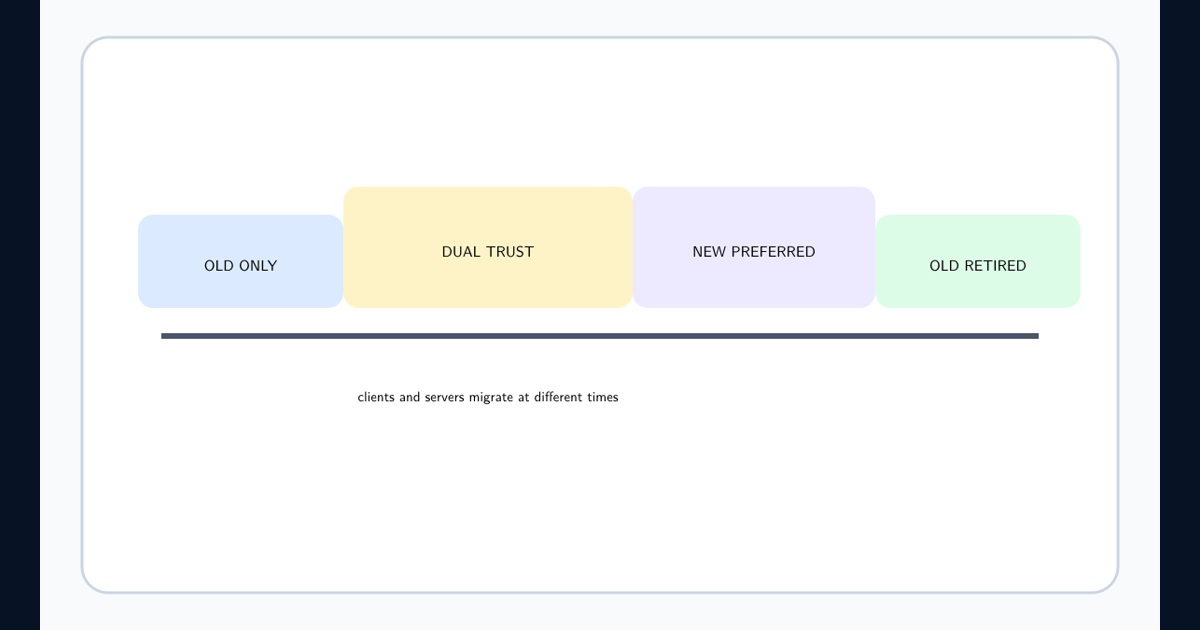
Strict rejection can break legacy clients or unusual integrations. Roll out in observe, canary, and enforce stages; inventory rejected traffic and assign owners rather than permanently allowing ambiguous messages. Preserve an emergency rollback while ensuring it does not silently restore unsafe connection reuse.
Test the deployed chain without targeting production users
Use the OWASP request smuggling testing guidance as a starting taxonomy, then build tests from the exact protocol transitions and products in your architecture. Run only in an authorized isolated environment with a dedicated backend, unique markers, no real credentials, and a stop condition for unexpected routing.
Include valid controls, malformed negatives, boundary cases, duplicate-field variants, HTTP/2-to-HTTP/1 translation, connection reuse, and regression cases for every fixed defect. The success criterion is not that a scanner reports “safe”; it is that every component rejects or interprets each test consistently and no hidden bytes become a separate backend request.
Never send desynchronization probes through shared production connections. Even a benign-looking test can prefix another user’s request or poison a cache. If production assurance is required, use vendor-supported passive checks or a dedicated route with isolated connection pools and formal change approval.
Build a parser-boundary assurance record
Next step: inventory every HTTP recipient from the public edge to the application. Record inbound and outbound protocol, parser and version, normalization rules, framing-error behavior, connection reuse, backend reachability, logging fields, owner, and last regression-test result. Prioritize paths that translate protocols or multiplex many users onto shared backend connections.
Feed confirmed anomalies into the incident response lifecycle, preserving byte-accurate evidence before restarting proxies or closing all connections. A durable outcome is a tested invariant: ambiguous input fails at the first boundary, every accepted request has one backend interpretation, and edge-to-application evidence can prove that mapping.
Frequently asked questions
Does HTTP/2 eliminate HTTP request smuggling?
No. HTTP/2 uses explicit frame lengths, but risk can reappear when an intermediary translates requests to HTTP/1.1 or when implementations disagree about prohibited or malformed fields. Test the complete frontend-to-backend path.
Can a web application firewall stop request smuggling?
A WAF can reject known ambiguous requests, but it cannot guarantee that every downstream parser applies identical framing rules. Prevention depends on strict parsing, normalization, connection handling, protocol alignment, and end-to-end testing.