SCIM Token Compromise: Detection and Response
SCIM token compromise detection correlates provisioning configuration, client authentication, user and group mutations, and downstream access.
A SCIM token is a control-plane credential
SCIM token compromise detection starts by treating the provisioning credential as authority over identity state, not as a background integration secret. Depending on target-side policy, a client may create and disable users, change profile attributes, enumerate resources, and add or remove group memberships that map to application roles.
RFC 7644 SCIM protocol and security considerations do not define one SCIM-specific authentication scheme. Deployments may use bearer tokens, OAuth, mutual TLS, or another HTTP authentication method. RFC 7644 warns that possession of a bearer token may authorize reading, modifying, or deleting resources; tokens require protected transport, sufficient entropy, and bounded lifetime.
The incident boundary therefore includes the identity source, provisioning service, connector configuration, credential issuer, target SCIM endpoint, target directory, group-to-role mapping, and any application that trusts the resulting accounts. Compromise of one token can be narrower or broader than compromise of an administrator—the effective target policy decides.
Preserve the requested mutation and the target response
Capture the initiating job, authenticated client identity, source network, request method and resource, target object, changed attributes, response status, target request ID, connector version, and configuration revision. Never retain the live Authorization value in a case record. Hash or redact it at collection.
This is an authored and sanitized SCIM-style event—not live production telemetry:
{
  "time": "2026-11-10T13:41:08Z",
  "connector": "hr-to-saas-prod",
  "client_id": "scim-provisioner-01",
  "method": "PATCH",
  "resource": "/Groups/8b1c...",
  "operation": "add",
  "path": "members",
  "target_user": "91a7...",
  "result": 200,
  "target_request_id": "req-7f42..."
}
A 200 response proves that the endpoint accepted a request, not that the source HR record authorized it. Conversely, a source-side “success” may hide partial target failure, later retry, or a target-side transformation. Preserve both views and the mapping rules between them.
Detect anomalous provisioning configuration and resource mutations
Monitor credential creation, replacement, validation tests, endpoint URL changes, scope expansion, attribute mapping edits, group assignment changes, job disablement, and unusual restart or on-demand provisioning. Microsoft Entra audit activity reference distinguishes provisioning configuration changes in audit logs from user, group, and deletion actions in provisioning logs—an example of why one log family is insufficient.
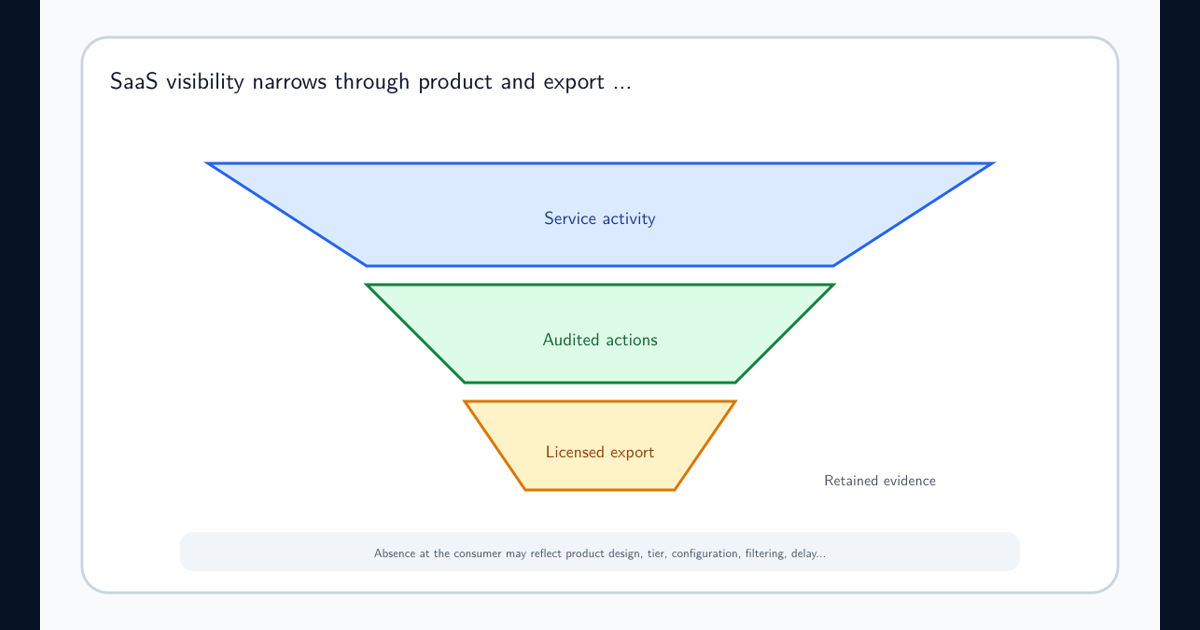
At the target, detect a new client network, calls outside the job schedule, enumeration followed by targeted writes, large mutation volume, privileged-group additions, reactivation after source-side termination, and create-delete churn. Join by stable object identifiers and request IDs rather than display names. Compare the resulting access with SaaS audit log visibility boundaries.
Provisioning spikes can be legitimate after acquisition, migration, mapping repair, or backlog recovery. Require change-ticket, connector revision, expected population, and target-side consequence before escalating. High-confidence findings combine an unauthorized configuration or client signal with an unexpected accepted mutation and subsequent privilege use.
Contain the provisioning path before repairing accounts
Pause or restrict the connector if malicious writes are continuing, but understand the availability tradeoff: legitimate joiner, mover, and leaver changes will queue or fail. Revoke or rotate the SCIM credential at the system that validates it, remove unexpected credentials, restore the endpoint and mappings from reviewed configuration, and restrict network reach where supported.
Export both source and target evidence before bulk repair. Enumerate every resource read or modified during the exposure window, including users, groups, entitlements, deactivations, and attribute changes. Reconcile against an authoritative identity snapshot, then reverse unauthorized changes in dependency order so a compromised privileged group cannot immediately restore access.
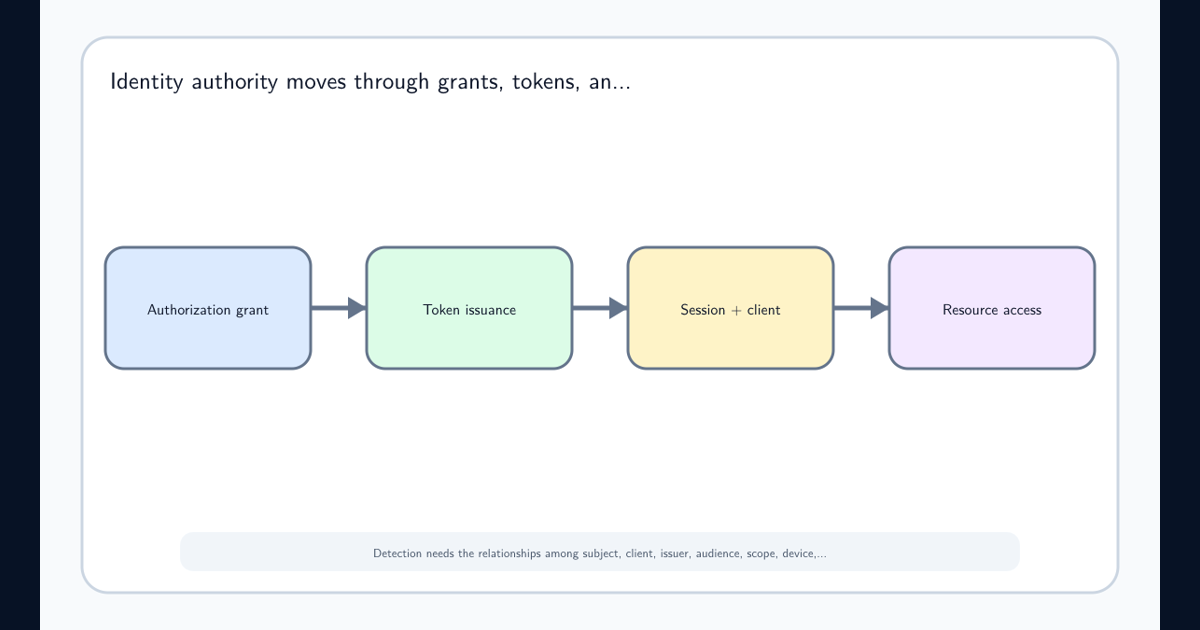
Investigate downstream sessions and actions for accounts created, reactivated, or elevated. A password reset alone does not remove an integration token or every session. Apply the artifact-specific reasoning in identity token and session detection, and verify recovery from the target application’s effective-state view.
Constrain the connector and make reconciliation routine
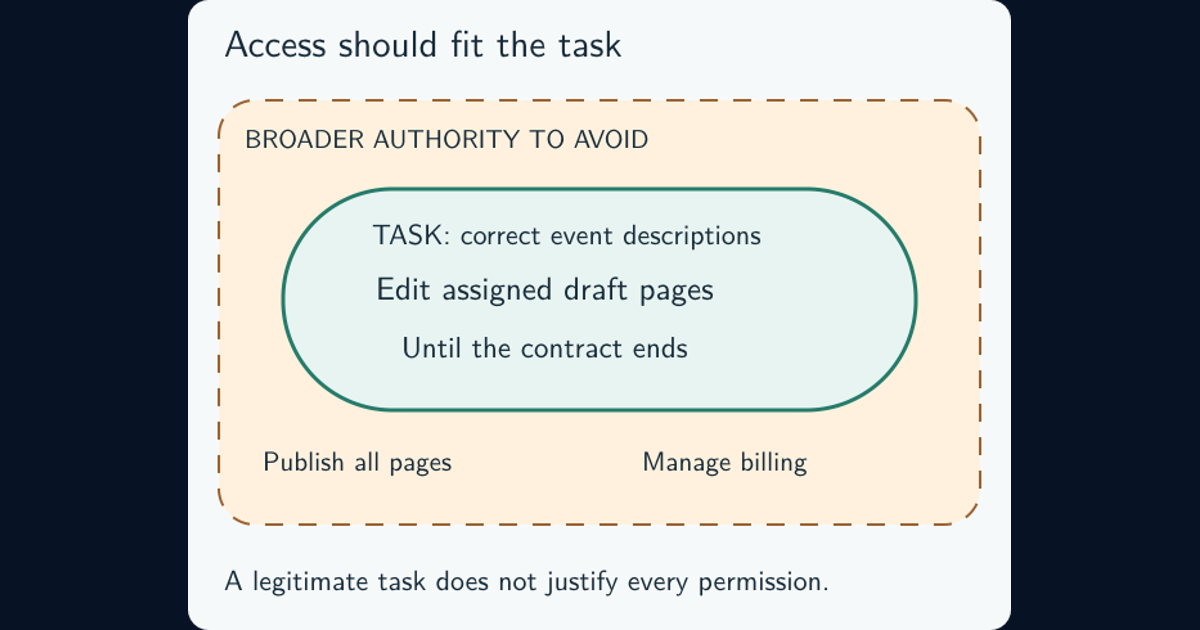
Apply the principle of least privilege to provisioning: separate production and test connectors, limit target resources and operations, exclude administrative roles unless explicitly required, prefer short-lived or proof-of-possession credentials where both products support them, and rotate secrets through an owned lifecycle. Restrict endpoint access to known egress paths when operationally safe.
Export provisioning and target audit logs independently. Alert when coverage stops, schema changes, pagination fails, or a connector claims success without a target event. Maintain a signed or access-controlled baseline of endpoint, mappings, scope filters, credentials metadata, and group-role relationships.
Test changes in a sandbox or scoped pilot population. A malformed mapping can disable thousands of legitimate accounts as efficiently as malicious activity. Use staged enforcement, explicit rollback criteria, and a reconciliation report before expanding scope.
Create a source-to-target provisioning assurance test
Next step: select one non-production user and group. Record the approved source change, observe the provisioning request, verify the target mutation, confirm the resulting role, and then reverse the change. Measure whether every stage has a stable identifier and retained evidence without exposing the credential.
Add one authorized negative test—such as a group outside the connector scope—and confirm that policy blocks it at the expected boundary. The durable control is not merely a rotating secret; it is bounded provisioning authority, independently observable target state, and a rehearsed reconciliation path when those two diverge.
Frequently asked questions
Does resetting an administrator password revoke a SCIM token?
Not necessarily. A SCIM integration token or OAuth client credential can have an independent lifecycle. Revoke or rotate the actual provisioning credential and verify the connector configuration.
Are identity-provider provisioning logs enough for a SCIM investigation?
No. They show intended or attempted provisioning activity. Confirm what the target SaaS service accepted, the effective roles and groups created there, and subsequent sign-ins or API use.