The Detection Testing Pyramid
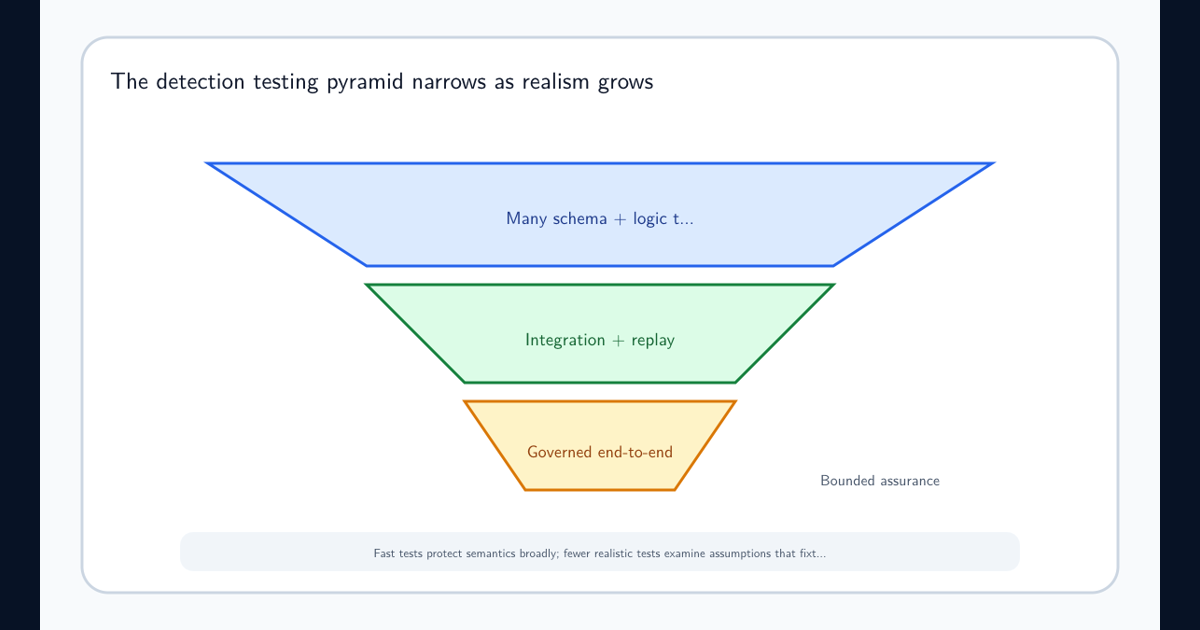
Build confidence through many fast semantic tests, fewer integration tests, and carefully governed end-to-end scenarios, with each layer proving only the assumptions it actually exercises.
Practical guidance for detection engineering decisions and defensible security work.
67 resources
Build confidence through many fast semantic tests, fewer integration tests, and carefully governed end-to-end scenarios, with each layer proving only the assumptions it actually exercises.
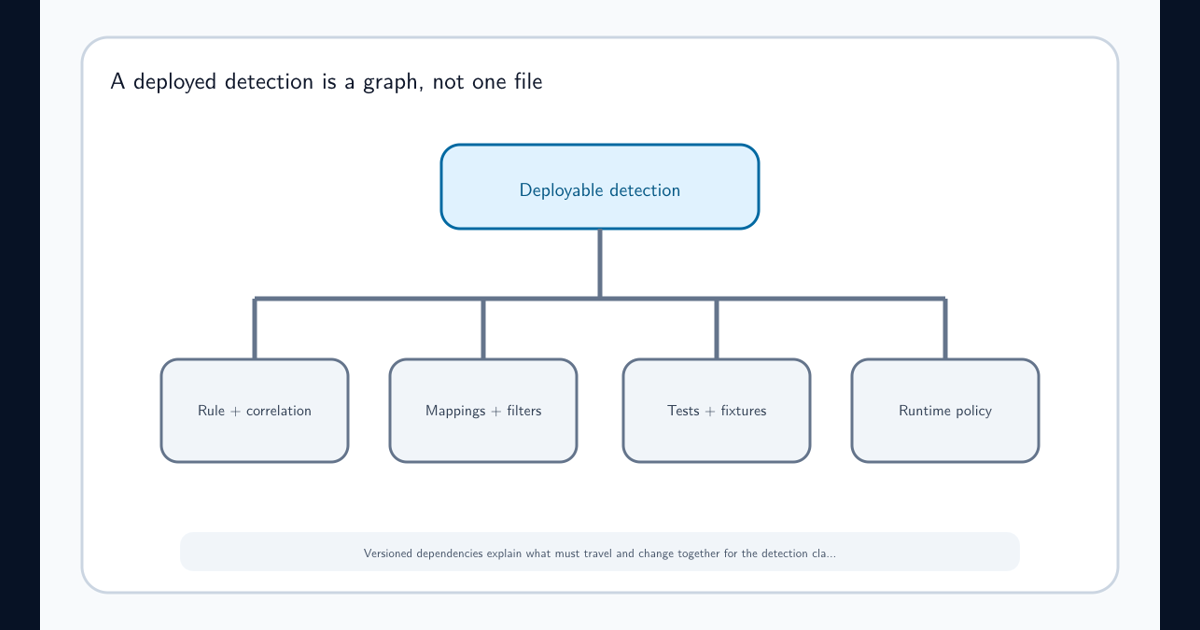
Model shared telemetry, mappings, components, filters, converters, schemas, deployment targets, and delivery routes as a versioned dependency graph that can be tested and packaged with detec...
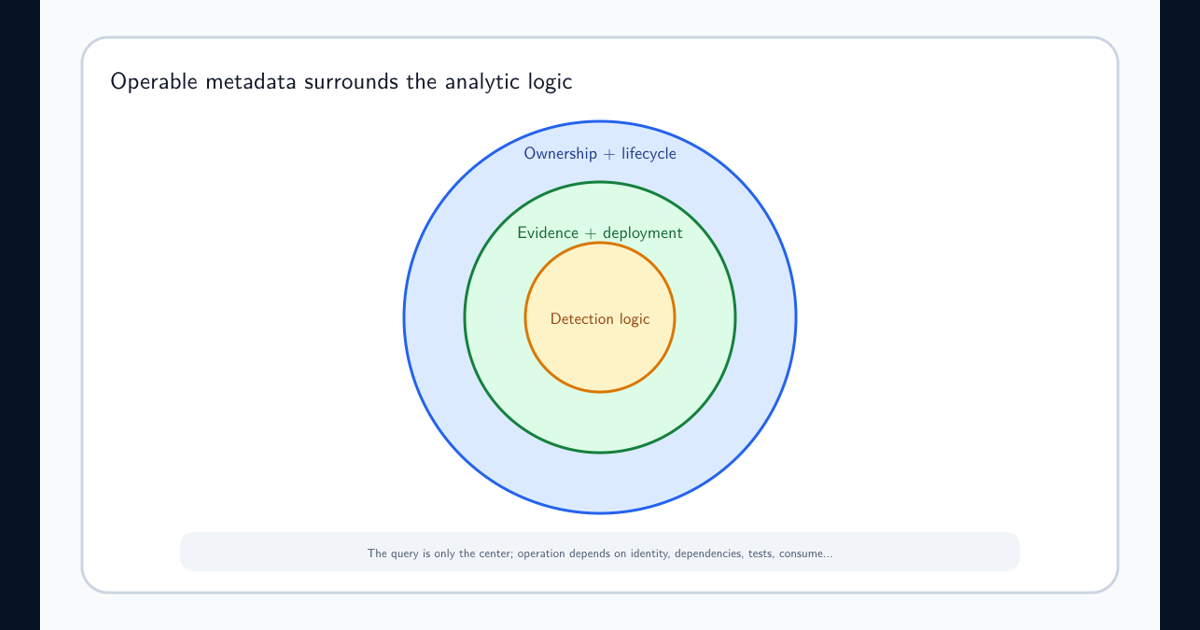
Give detection content stable identity, ownership, evidence requirements, dependencies, tests, deployment state, consumer context, and lifecycle information so a rule can be operated rather ...
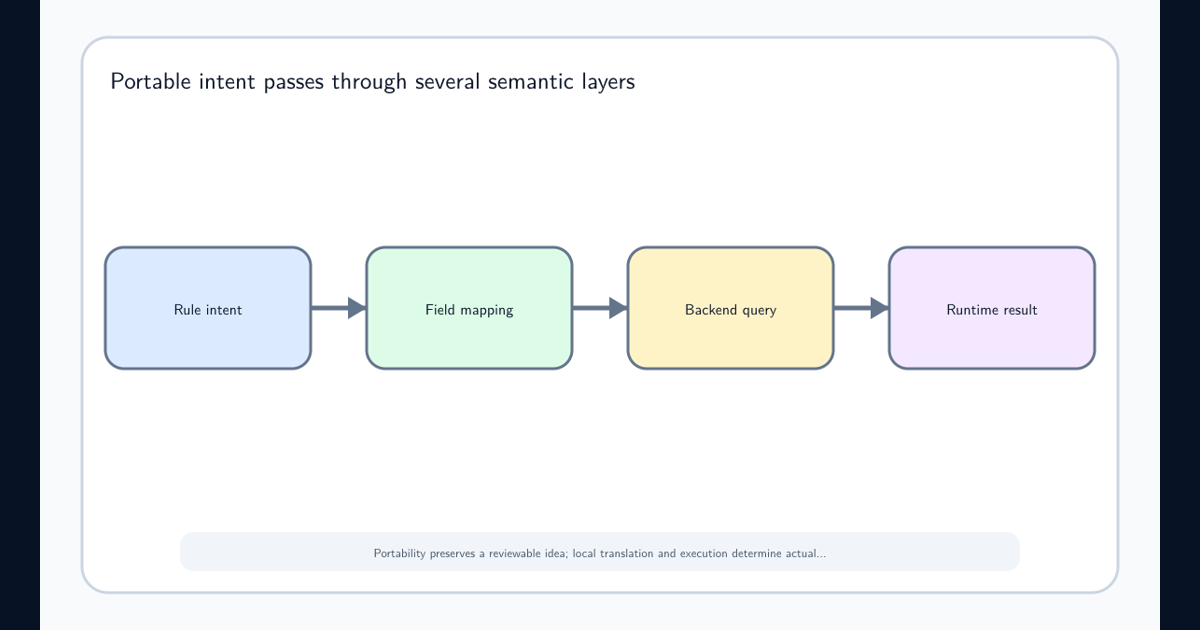
Treat portable detection content as a statement of intent whose meaning can change through field mappings, backend capabilities, query semantics, and execution policy.
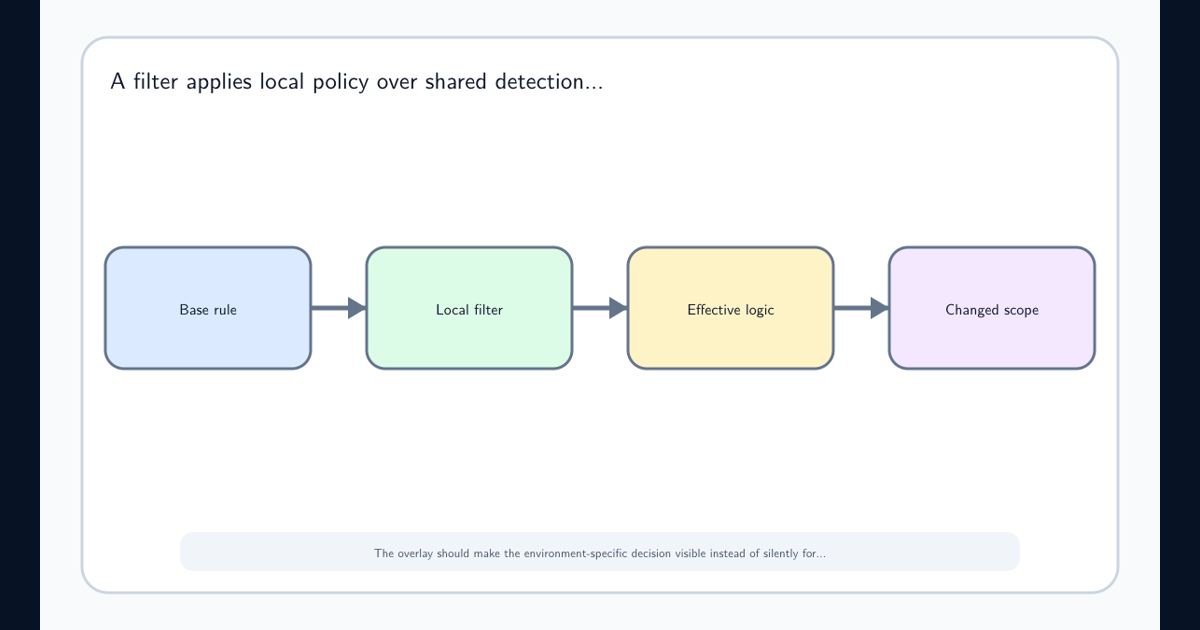
Use Sigma filters as explicit, governed overlays that separate shared detection intent from environment-specific exclusions without hiding changed scope.
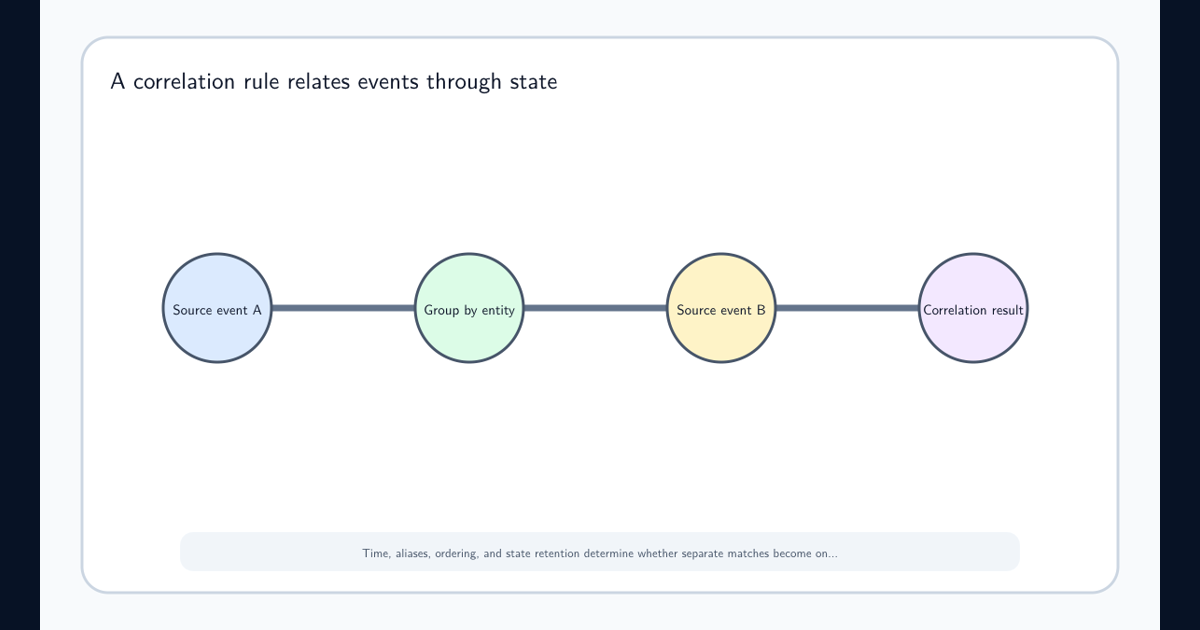
Understand Sigma 2.1 correlation as stateful reasoning over related events, with explicit aliases, grouping, windows, order, cardinality, and backend limits.
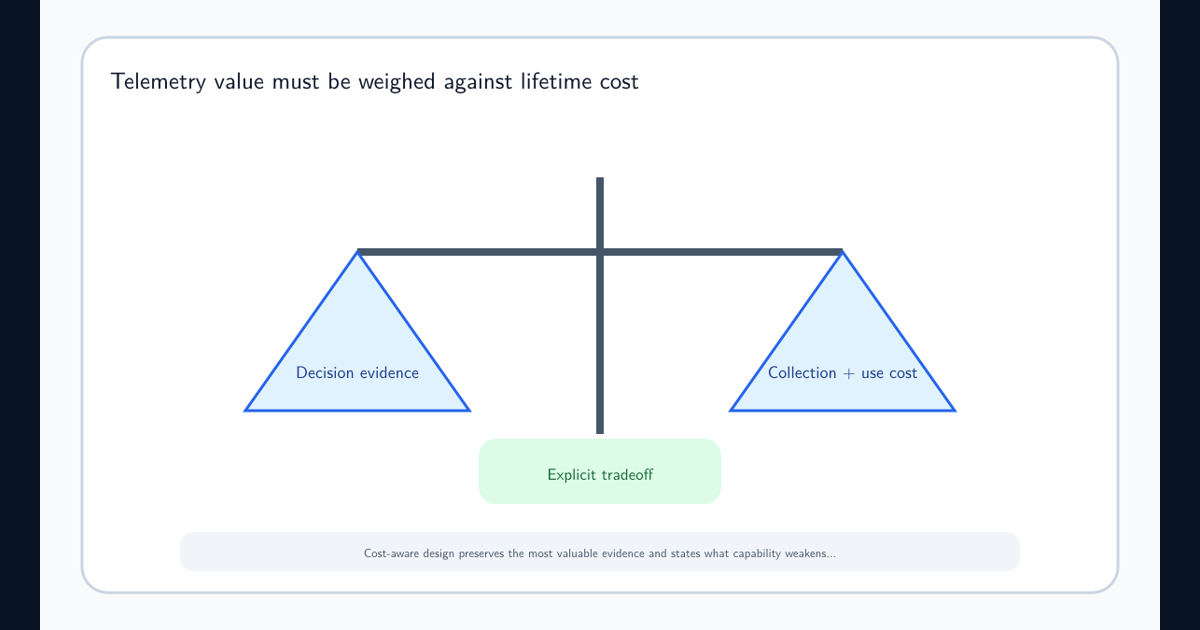
Design telemetry around explicit evidence value, query and retention needs, shared dependencies, and degradation choices so cost control does not silently erase detection capability.
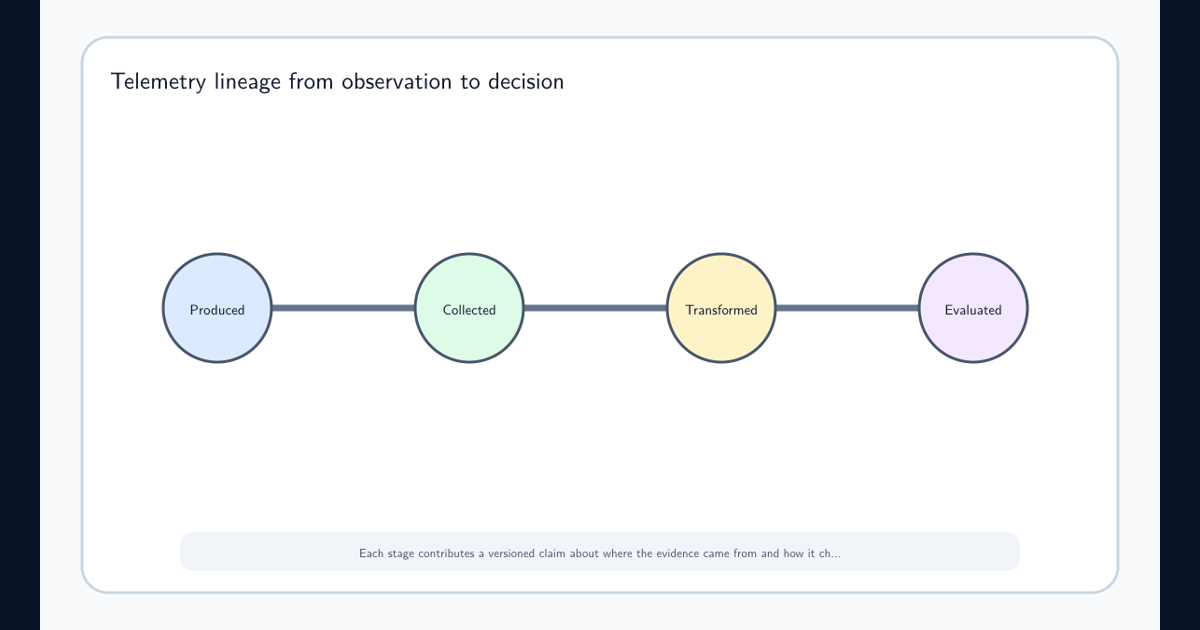
Track telemetry from producer through collection, transformation, enrichment, storage, and analytics, using integrity evidence to verify origin and change without confusing authenticity with...
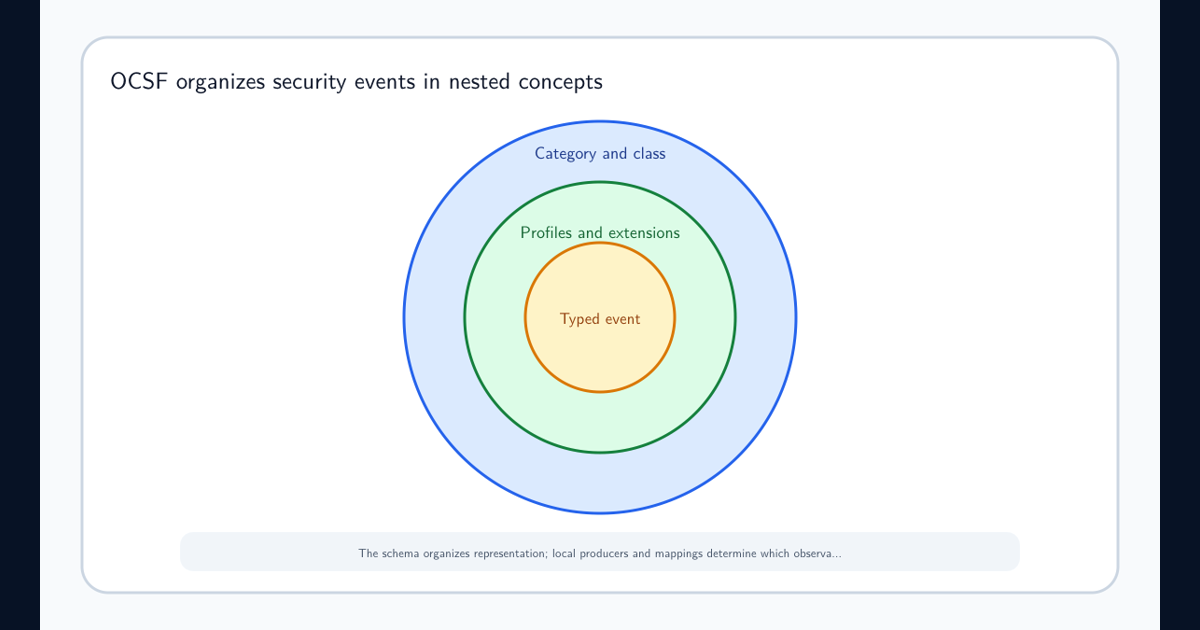
Use OCSF 1.9 as a shared security-event language while keeping observation, profile conformance, extensions, mappings, and local validation separate from coverage claims.
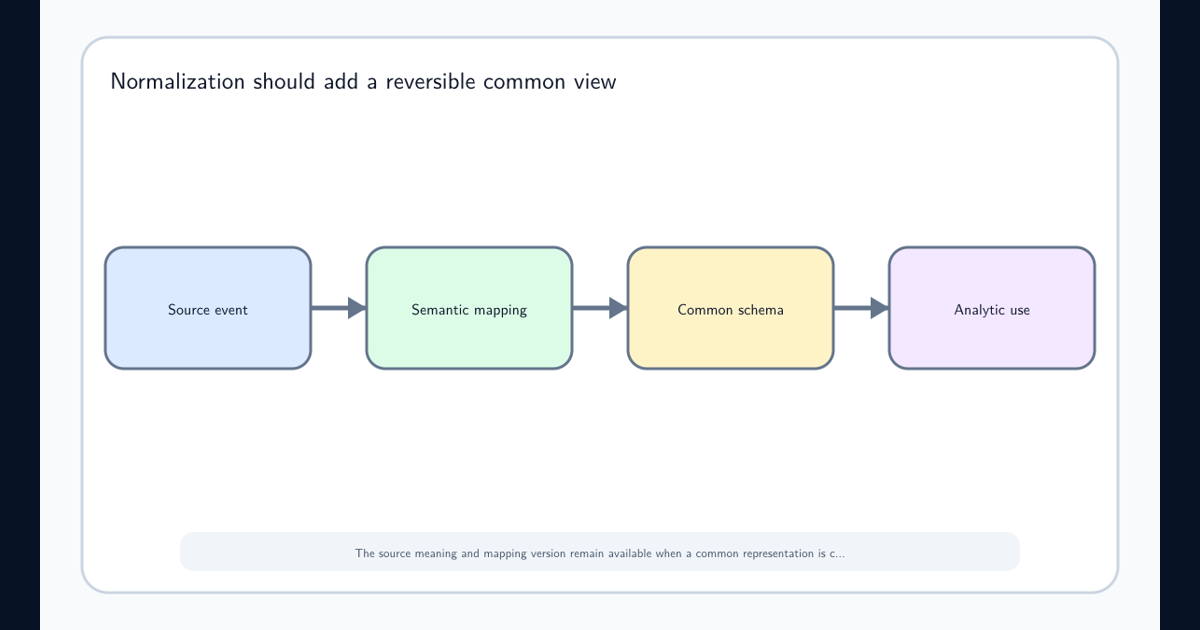
Create a common analytical view without erasing provider meaning, source values, transformation history, or the distinctions needed to verify a detection result.