Cost-Aware Telemetry Design
Design telemetry around explicit evidence value, query and retention needs, shared dependencies, and degradation choices so cost control does not silently erase detection capability.
Cost belongs in the evidence design
A high-volume source is enabled because it might be useful. Months later, storage and query bills rise, so the platform shortens retention without reviewing detections. A thirty-day sequence now operates on seven days of data while its coverage statement remains unchanged.
Telemetry cost includes generation, licensing, collection, transport, transformation, indexing, hot and cold storage, query compute, egress, backup, access control, and analyst time. These costs occur at different stages and respond to different changes.
Start with the consumer decision and evidence requirement. Name the source, population, fields, timing, retention, and access pattern. Cost optimization can then preserve what the decision needs instead of treating all bytes as equally valuable.
Measure value at the field and decision level
Event volume alone cannot tell you value. A rare audit event may be decisive for privilege abuse. A high-volume network field may support many detections. A verbose payload may never be used or may be essential only for a small protected population.
Map fields and event classes to requirements, tests, investigations, and health checks. Record how often they support decisions, which alternative sources exist, and how unique the observation is. Avoid equating frequent query with importance; some high-consequence evidence is rarely needed.
Use this dependency map to find shared value. Improving one identity field can strengthen dozens of analytics. Dropping it to save a small amount can create portfolio-wide degradation.
Choose reduction methods by the claim they preserve
Filtering removes records or fields. Sampling keeps a subset. Aggregation replaces events with summaries. Tiering changes retrieval speed. Shorter retention removes historical comparison. Each method changes what can be concluded.
Sampling may preserve population trends while destroying rare-event detection and sequences. Aggregation may support counts while losing individual identities and order. Cold storage may preserve investigation evidence but miss a real-time decision window. Redaction may reduce exposure while removing content needed to distinguish operations.
Document the before-and-after capability, not just the percentage saved. Test representative analytics and boundary conditions under the proposed reduction. If a claim weakens, update it before the change is promoted.
Retention is part of temporal reasoning
A baseline may need seasonal history. A low-and-slow analytic may accumulate evidence over weeks. An investigation may need records older than the alert. Retention should follow these purposes rather than one platform default.
Separate searchable hot retention, slower investigative retention, and legally or operationally required preservation. Record retrieval latency and whether archived data retains the same schema, identity context, and integrity evidence.
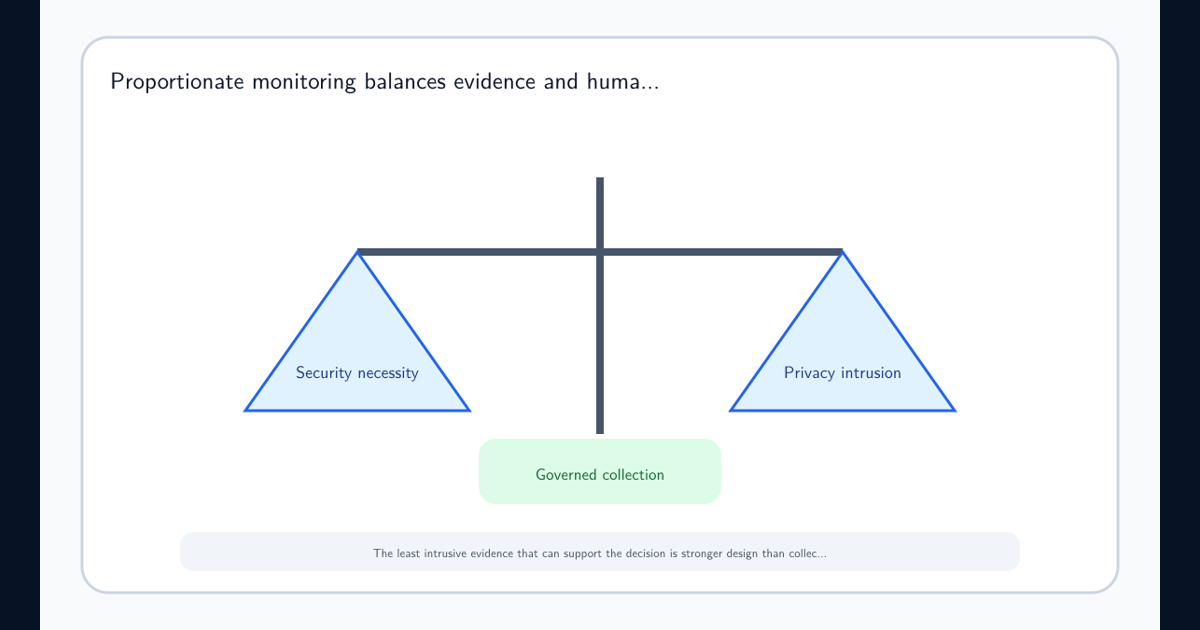
Cost and privacy and proportionality often point in the same direction: collect and retain what has a stated purpose. They can also conflict when security history is valuable but sensitive. Make the tradeoff with accountable owners rather than hiding it in a storage setting.
Make degradation visible when budgets change
Budget pressure can be legitimate. The dangerous outcome is a quiet change whose consumers still see a green coverage dashboard. Connect cost controls to affected data contracts, detections, tests, service levels, and owners.
Monitor cost per source, class, tenant, detection, and query where practical, but interpret allocation carefully. Shared sources and enrichments create common value. A cost number without decision context can punish foundational telemetry because its benefit is distributed.
A defensible proposal says what will change, how much it is expected to save, which claims remain intact, which become slower or narrower, which tests support that assessment, and what rollback evidence is available. Cost-aware telemetry is not cheaper telemetry at any price. It is evidence whose value and burden are both understood.
Frequently asked questions
Should expensive telemetry simply be dropped?
Not before identifying which security decisions depend on it and whether filtering, aggregation, tiering, narrower scope, or another source can preserve the required evidence. Cost changes should produce explicit capability changes.