Sigma Filters and Environment-Specific Tuning
Use Sigma filters as explicit, governed overlays that separate shared detection intent from environment-specific exclusions without hiding changed scope.
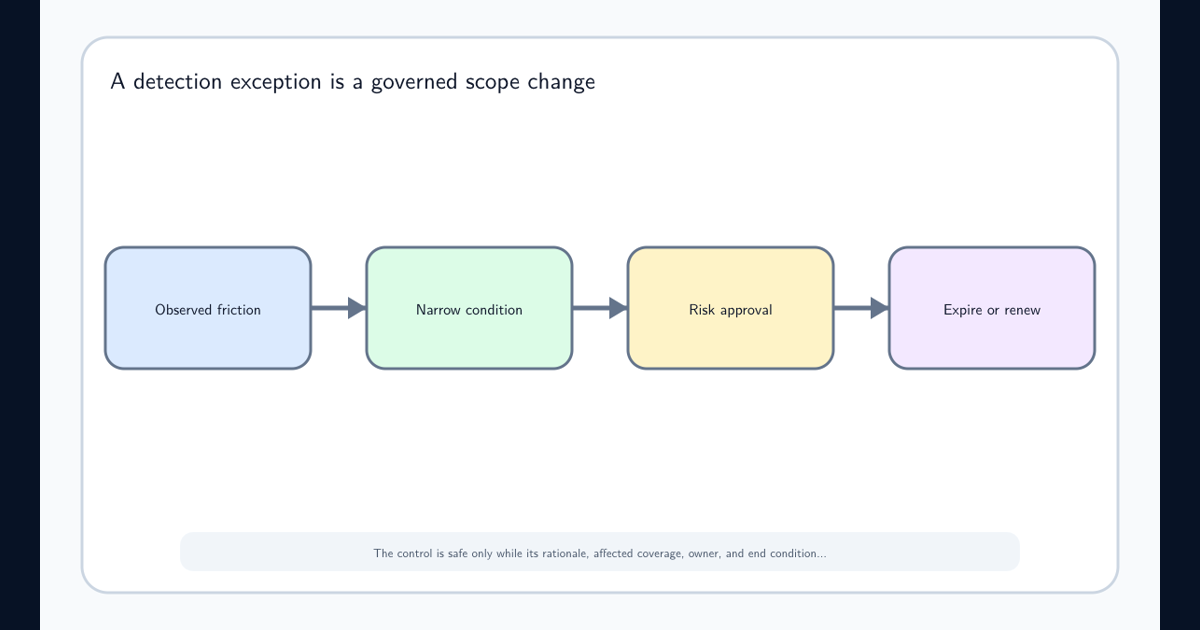
A filter changes the claim even when the rule is untouched
A shared rule recognizes a remote administration pattern. A local backup service creates the same evidence, so the environment excludes that service identity. The base rule remains intact, but the deployed detection no longer covers the excluded identity.
A Sigma filter is reusable logic applied to a rule or selection to include or exclude matches under defined conditions. It can separate local tuning from upstream content, but it is not harmless metadata. The filter changes the effective analytic.
Record the behavior being filtered, exact condition, reason, owner, environment, start, expiry or review trigger, and residual risk. “Known good” is not a durable reason; credentials, tools, paths, and infrastructure can be compromised or imitated.
Choose exclusion features attackers cannot cheaply inherit
Filtering by process name, path, address, or account can remove noise quickly. Those features may also be easy for an attacker to reuse. A signed binary can be abused. A trusted service account can be compromised. An internal address can be assigned to a new device.
Prefer a conjunction that describes the legitimate workflow: identity, managed asset, parent process, approved destination, scheduled job, expected operation, and valid change context. Use the smallest scope that removes the known benign case.
Test a malicious counterexample that shares some trusted features. If the filter excludes the counterexample, it is not merely tuning noise; it is creating a blind path that requires explicit risk acceptance.
Define precedence and composition
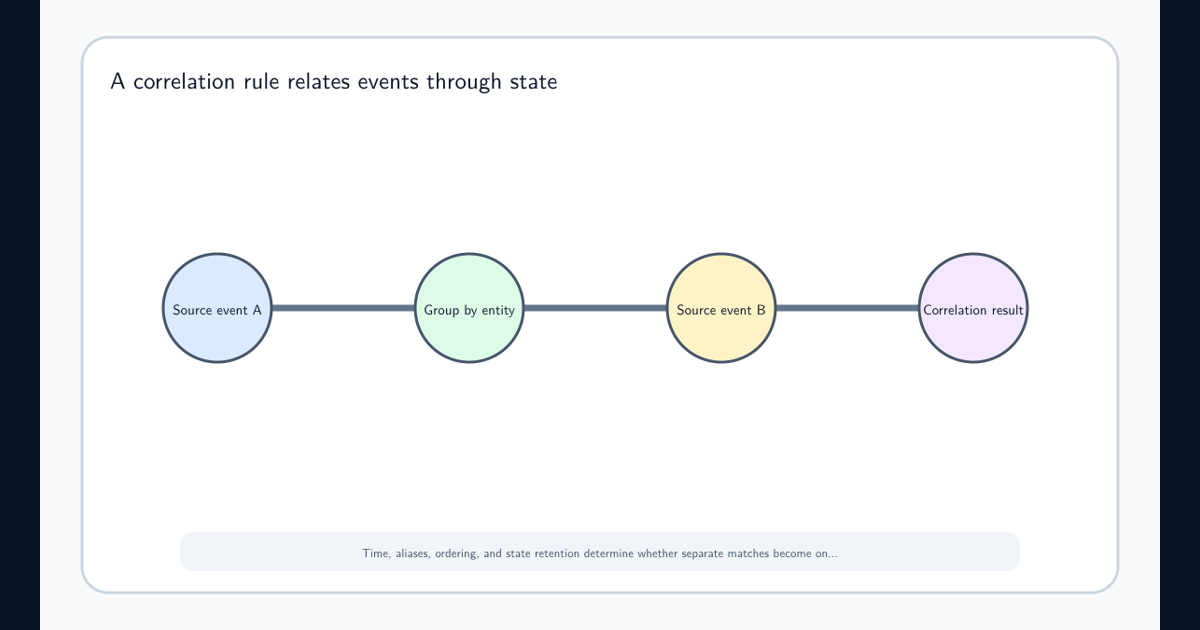
Several filters can apply to one rule: global, platform, tenant, environment, and temporary exception. Their order can change the result, especially when include and exclude logic interacts.
Document which filters apply, precedence, merge behavior, and the effective compiled condition. Detect conflicts and orphaned filters. A renamed rule or selection should not silently detach its tuning overlay.
Treat filter dependencies as versioned content. Review upstream rule changes against the filter: new behavior may be unintentionally excluded because an old condition now matches a broader selection.
Test the overlay and the unfiltered intent
Keep base-rule tests that prove the shared behavior still matches. Add filter tests for the legitimate case, near neighbors that should remain visible, a malicious imitation, missing fields, and expiry behavior.
Compare match populations before and after the filter with known labels where possible. A large reduction is not automatically success; it may remove useful evidence. Examine which entities and behavior variants disappeared.
Connect the overlay to exception and allowlist governance. Promotion should require owner approval and validation proportional to the potential blind spot. Runtime drift should reveal a filter applied outside its approved environment.
Let filters expire, migrate, and retire
Temporary maintenance and incident exceptions need automatic expiry or a strong review trigger. Permanent business workflows still need periodic review because ownership, architecture, and threat paths change.
At review, verify the reason, current population, feature durability, source health, malicious counterexample, and whether the base rule or environment changed. Remove redundant filters after upstream improvements rather than allowing overlays to accumulate indefinitely.
An operable filter record tells a future engineer what noise it addressed, what behavior it hides, how that risk was tested and accepted, and when the decision must be reconsidered. That clarity is the reason to keep tuning separate from the base rule.
Frequently asked questions
Why use a Sigma filter instead of editing the base rule?
A separate filter preserves upstream intent and makes the local policy, owner, reason, scope, tests, and expiry reviewable. Editing the base rule can hide what was removed and complicate updates.