Stealing PII: Attack Paths, Detection, and Response
Understand how attackers steal PII through identity, endpoint, cloud, SaaS, email, database, and insider paths, and how to detect, contain, and scope it.
Stealing PII is the unauthorized acquisition, collection, movement, disclosure, or possession of information that identifies or can materially affect a person. An attacker may seek it for identity fraud, account takeover, extortion, resale, social engineering, surveillance, competitive advantage, or access to another system.
A defensible investigation separates what the evidence proves. A record was queried. A file was opened. Rows were exported. An archive was created. Bytes crossed a boundary. A public link was enabled. A criminal claimed possession. These facts can form an evidence chain, but none automatically proves every other step.
The response must do two things at once: stop continuing loss and preserve enough evidence to identify affected information, people, systems, identities, destinations, time, and control failures. Premature certainty can misdirect containment or produce an inaccurate breach scope.
Define PII by Identifiability, Context, and Harm
NIST SP 800-122 treats PII as information that can distinguish or trace an individual’s identity, alone or when linked with other information. Names, addresses, identifiers, biometrics, financial records, health information, employment data, location, device identifiers, account recovery details, and combinations of ordinary fields can all matter.
Do not search only for a universal “PII” label. The same field can have different sensitivity depending on precision, population, use, aggregation, linkability, and potential harm. A public business address differs from a protected home address tied to a vulnerable person. A list of random dates differs from dates of birth joined to names and identifiers.
Classify datasets and fields, but retain business context: data owner, purpose, subjects, jurisdiction, system, copies, access, retention, encryption, downstream sharing, and recovery path. That inventory gives detection and response a protected object to follow.
Understand Why Attackers Target Personal Data
Personal data can be valuable directly or as an enabler. Government and financial identifiers can support fraud. Contact and relationship data can improve phishing. Health, employment, legal, and location records can enable coercion or targeted harm. Authentication and recovery details can open accounts. Customer or employee data can increase extortion pressure even when systems are recoverable.
Value depends on completeness, freshness, population, exclusivity, and joinability. One incomplete row may be low impact while a verified dataset with names, identifiers, contact details, account state, and recovery fields enables reliable abuse. Copies can be combined with prior breaches or public sources.
Scope harm to individuals as well as the organization. NIST’s PII confidentiality-impact approach considers possible harm when information is inappropriately accessed, used, or disclosed. Use that consequence to prioritize containment and review rather than treating every field as equivalent.
Map the Data Before an Incident
Build a practical data map for high-consequence collections. Record the system and service, data categories, table or repository, owner, subjects, geography, purpose, retention, encryption, identities and roles, interfaces, export functions, downstream processors, backups, logs, and normal movement. Include SaaS, analytics, support, collaboration, test, data lake, and local analyst copies.
Focus on paths that can move a meaningful amount of data: database queries, bulk APIs, report exports, administrative consoles, synchronization, snapshots, sharing links, email, removable media, and service-to-service transfers. Document which approvals and destinations are expected.
The personal-data lifecycle guide helps reduce the number of unnecessary copies. Data that is not collected or is deleted after its purpose ends cannot be stolen from that location.
Trace Initial Access, Identity, and Privilege
PII theft can begin with phishing, stolen passwords or sessions, infostealer logs, exposed services, vulnerable applications, malicious OAuth consent, compromised API keys, supplier access, insider misuse, or an accidentally public repository. Identify the earliest proven access and every identity or workload that inherited authority from it.
Review authentication result, device, source network, session, token, client, MFA event, consent, role assignment, privilege activation, service principal, impersonation, and access-policy decision. A valid login is not proof of an authorized person or purpose. Conversely, unusual geography alone is not proof of compromise.
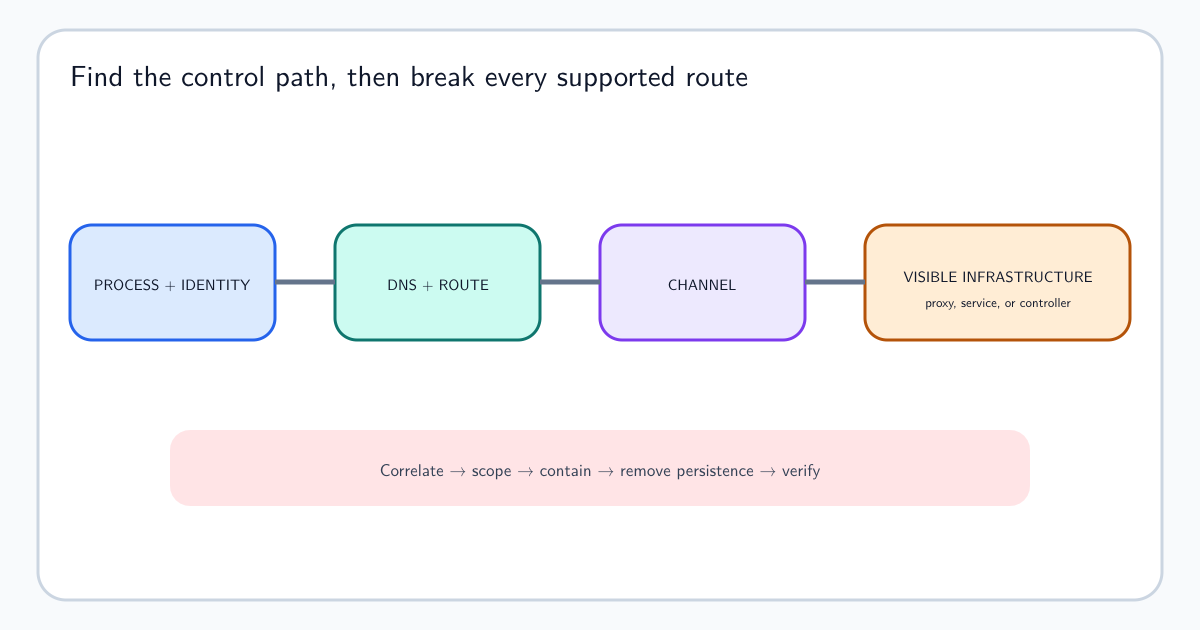
Containment must cover the access chain. Resetting one password may leave active sessions, refresh tokens, application secrets, recovery methods, delegated grants, or copied keys usable. The infostealer response guide shows why stolen access artifacts outlive the original malware event.
Detect Discovery, Collection, and Staging
MITRE ATT&CK’s current Collection tactic includes data from local systems, repositories, email, cloud storage, browsers, input capture, screen capture, and other sources. Collection may be a database query, API enumeration, mailbox search, folder synchronization, report job, snapshot, clipboard operation, or repeated object read.
Look for changes in breadth, sequence, and purpose: first use of a bulk endpoint, many distinct subjects, broad filters, high row counts, enumeration before retrieval, access outside role or schedule, a new client, unusual joins, disabled safeguards, or service identities reading interactive-user data. Compare with the person’s and workload’s historical function.
Staging prepares data for movement. Evidence can include archive creation, compression, encryption, renamed extensions, temporary directories, cloud snapshots, export packages, object aggregation, local database dumps, or one host gathering files from many systems. Link source reads to the staging artifact by process, session, job, object ID, hash, size, and time where available.
Follow Exfiltration Across Network, Cloud, SaaS, Email, and Media
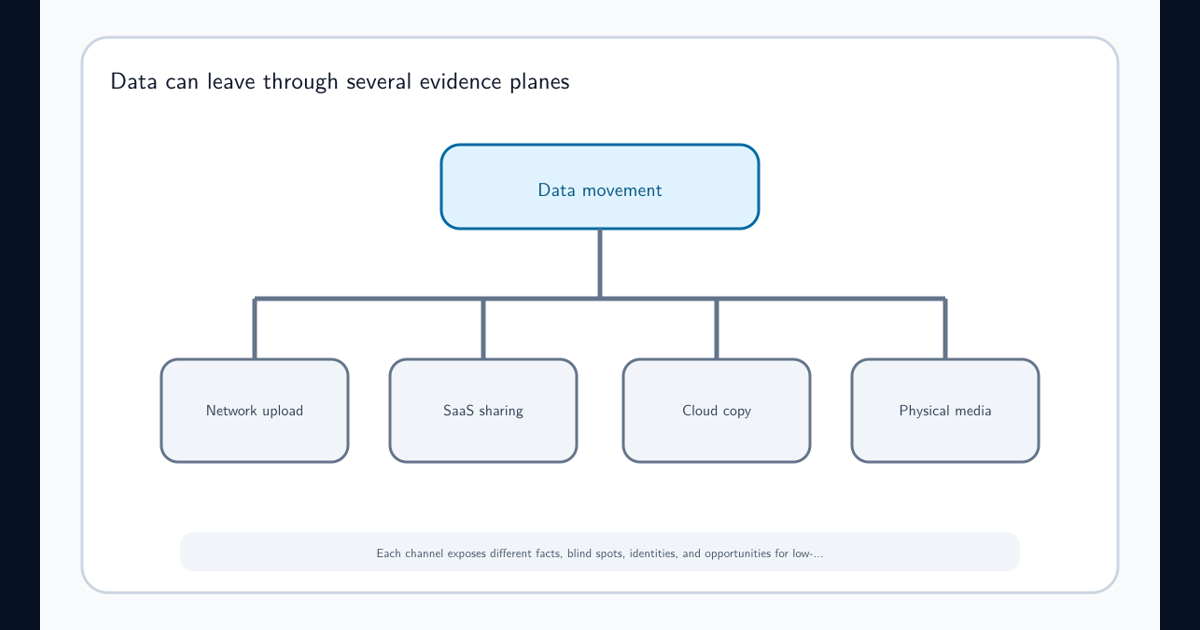
MITRE ATT&CK’s Exfiltration tactic covers automated transfer, command-and-control channels, alternate network media, web services, physical media, scheduled transfer, cloud-account transfer, and other routes. PII can also leave through legitimate features such as external sharing, report delivery, support export, synchronization, webhook, backup, or administrator download.
Use the exfiltration-channel guide to select evidence for the path. Network flow can show endpoints, timing, direction, and bytes. Application and cloud audit can show actor, object, permission, recipient, and result. Endpoint telemetry can connect file access, archive creation, removable media, process, and connection.
Encrypted traffic and approved services complicate interpretation. A large upload does not prove content. A public link changes exposure without proving download. A successful export proves the service produced an output, not necessarily that an attacker received it. Preserve the strongest claim each source supports.
Include Insider Misuse and Compromised Authorized Tools
An employee, contractor, administrator, support agent, developer, analyst, or supplier may already have legitimate access to sensitive data. The same native tools used for work—query consoles, reporting, collaboration, scripts, notebooks, ticket exports, cloud drives, and email—can collect or move PII without malware.
Detect misuse through divergence from role, purpose, case, population, time, destination, volume, and peer behavior. Do not treat anomaly as intent. A new assignment, audit, migration, legal request, or incident can explain unusual access. Require case context and proportionate review.
Protect privacy during monitoring. Limit who can see employee and customer evidence, record the investigative purpose, minimize unrelated data, separate facts from allegations, and follow organizational HR, legal, privacy, and labor processes. A security alert should start a controlled inquiry, not an automatic character judgment.
Build an Evidence Matrix Across Control Points
No single log proves PII theft. Combine sources that answer different questions:
- Identity: who or what authenticated, with which session, device, token, role, and policy result?
- Application and database: which records, fields, searches, queries, exports, shares, and administrative actions occurred?
- Endpoint: which process read, transformed, archived, copied, printed, or wrote the data?
- Cloud and SaaS: which object, account, permission, recipient, snapshot, job, or API call changed exposure?
- Network and egress: which destination, protocol, direction, timing, and transfer shape was observed?
- Data security controls: which classification, DLP, encryption, rights, and exception applied?
- Case and business context: what purpose, approval, ticket, owner, or workflow explains the activity?
Normalize identifiers and time carefully. Preserve raw event references. A join based only on close timestamps is weaker than a shared session, process, job, request, object, or transfer identifier.
Test Alternative Explanations and Calibrate the Claim
Build at least three hypotheses: authorized business activity, policy violation or accidental exposure, and malicious theft by a compromised or misused identity. Add alternatives specific to the event, such as a scheduled migration, backup, security scan, litigation hold, support case, data-quality job, or system malfunction.
For each hypothesis, list expected and inconsistent evidence. Check source coverage before treating an absent event as evidence. If endpoint telemetry stopped before a transfer, “no archive observed” is weak. If the database audit is complete and shows no query by the suspected identity, that can be more diagnostic.
State the assessment in bounded language: confirmed access, likely collection, observed staging, transfer to a destination controlled by an unknown account, claimed possession not independently verified, or affected population still under review. Separate confidence from impact and urgency.
Contain Continuing Loss Without Destroying Evidence
Coordinate containment across identity, endpoint, application, database, cloud, network, sharing, and supplier controls. Options include revoking sessions and tokens, disabling or restricting accounts, rotating keys, isolating hosts, stopping export jobs, removing public links, suspending integrations, blocking destinations, preserving snapshots, and narrowing database permissions.
Sequence action according to active risk, evidence volatility, business consequence, and reversibility. Do not power off a critical system or delete a malicious archive merely because it feels decisive. Preserve volatile context, logs, object versions, access records, configurations, and relevant communications through approved forensic procedures.
The FTC’s current data-breach response guide advises organizations to mobilize the response team, stop additional loss, investigate scope, preserve evidence, fix weaknesses, and coordinate communications and notification. Adapt those principles to applicable law, contracts, sector rules, and counsel.
Scope Affected Data, People, Systems, and Destinations
Build a reproducible scope table with source system, dataset, fields, subject population, time window, identity, query or action, export or staging artifact, destination, encryption state, evidence source, confidence, owner, and open question. Preserve the query and inclusion logic used to calculate affected records.
Distinguish accessed, viewed, queried, exported, staged, transferred, publicly exposed, and confirmed acquired. Count unique people separately from rows and files. Handle duplicates, shared accounts, deleted records, backups, test data, and unknown values explicitly. Keep lower and upper bounds when exact scope is not yet supported.
Coordinate privacy, legal, regulatory, contractual, law-enforcement, insurer, customer, employee, and communications decisions through accountable owners. Notification requirements vary. Do not let a generic security severity score substitute for analysis of data type, people, misuse likelihood, safeguards, jurisdiction, and potential harm.
Reduce PII Theft Opportunity and Measure Readiness
Reduce retained PII, separate high-impact collections, enforce least privilege, use phishing-resistant authentication for sensitive access, protect service credentials, approve bulk exports, monitor privileged queries, restrict unmanaged destinations, govern sharing, encrypt appropriately, and test deletion and incident procedures. Validate supplier and administrator access rather than assuming contracts or roles enforce themselves.
Measure coverage and outcomes: high-impact datasets with owners, current access review, bulk paths under monitoring, logging completeness, export approval coverage, unmanaged shares, stale access, mean time to contain, time to defensible scope, preserved evidence, repeated control failures, false positives, and exercise findings closed. Avoid celebrating blocked bytes without knowing whether protected data or harmful movement was involved.
Exercise a realistic chain from compromised identity through query, export, staging, transfer, detection, containment, scoping, and correction. Include incomplete evidence and a legitimate alternative. The objective is not to prove that every theft is preventable; it is to make harmful access harder, important movement visible, and response decisions faster and more accurate.
Frequently asked questions
What does stealing PII mean?
Stealing PII means obtaining or moving personally identifiable information without authorization for misuse, sale, extortion, fraud, access, surveillance, or another harmful purpose. The evidence may show access, collection, staging, transfer, disclosure, or possession; those are related but distinct facts.
What types of PII do attackers target?
Targets can include names combined with contact or demographic data, government identifiers, account and financial records, health and employment data, location, biometrics, authentication and recovery details, and datasets whose combinations identify or materially affect people.
How can an organization detect PII theft?
Combine data inventory and classification with identity, endpoint, database, application, cloud, email, network, sharing, and egress evidence. Look for unusual access, broad queries, large or repeated exports, staging, new destinations, permission changes, and activity inconsistent with the user, workload, purpose, and time.
Does a large upload prove that PII was stolen?
No. Transfer volume can support an exfiltration hypothesis, but it does not identify the content, actor authority, destination control, or outcome. Link source-object access, transformation or staging, identity, process, destination, and transfer evidence where possible.
What should responders do first after suspected PII theft?
Stop continuing loss without destroying evidence, preserve relevant logs and volatile context, restrict compromised identities and paths, protect exposed secrets, identify affected data and people, and coordinate security, privacy, legal, business, communications, and appropriate authorities under the organization’s incident plan.
Does every suspected PII theft require breach notification?
Notification duties depend on jurisdiction, sector, data type, affected people, evidence, contracts, and other facts. Security teams should preserve evidence and involve qualified privacy and legal owners promptly rather than making notification decisions from a generic checklist.