Infostealers: Credential Theft, Session Theft, and Response
Understand how infostealers collect valuable access artifacts and how defenders contain, scope, and recover from exposure.
Access is the product
Infostealers monetize access by collecting passwords, cookies, tokens, browser data, wallets, files, and system context that can be packaged and resold. The malware execution is one event; the resulting access risk can persist across services.
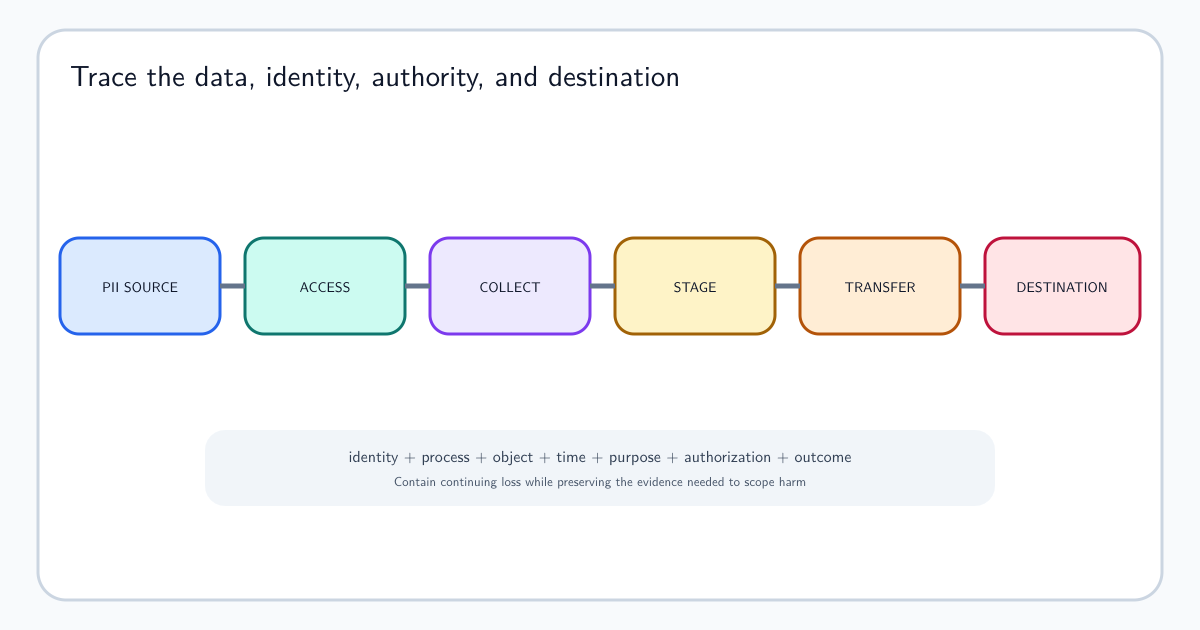
Stolen collections often combine authenticators with context such as browser profile, device details, installed software, screenshots, and account URLs. That context can help a buyer select valuable accounts or make later access look plausible. Do not reduce the incident to “change the browser passwords.” Inventory the identities and services reachable from the user, including email, cloud, developer platforms, finance, password managers, remote access, and administrative consoles. If files, form data, identity records, or other personal information may also have been collected, use the PII data-theft response guide to trace the protected data, movement, destination, and affected population.
Separate lure from infection
A fake installer, advertisement, cracked tool, repository, attachment, or malicious update may deliver the stealer. Record the channel separately from the payload so prevention and investigation address both the social route and technical execution.
Preserve the lure, referring site, download URL, file name, hash, signature, execution time, process lineage, persistence, and network destinations. The same malware family can arrive through many campaigns, while one campaign can rotate payloads. Separating delivery from capability helps teams decide whether to remove a malicious advertisement, block a repository, correct software-distribution practice, or improve user verification in addition to remediating the endpoint.
Identify collected artifacts
Determine which browsers, profiles, applications, files, credentials, authenticators, and sessions were accessible on the device. Malware intelligence describes likely capability, while version and local evidence determine what was actually exposed.
Bound the interval between likely execution and trustworthy isolation. Identify logged-in users, browser profile paths, synchronized vaults, cookies, refresh tokens, cryptocurrency wallets, messaging sessions, configuration files, cloud credentials, SSH keys, and documents in reachable folders. A capability report supports hypotheses but cannot prove collection or exfiltration. Correlate file access, process behavior, network transfer, command-and-control records, and downstream account use, while stating retention gaps.
Contain before restoring trust
Isolate affected systems, revoke sessions and tokens, rotate credentials from a trusted device, remove unauthorized grants, and rebuild when integrity cannot be established. Sequence recovery so a compromised endpoint cannot capture replacement secrets.
Protect an independent communication and identity route first. Then contain the host, preserve proportionate evidence, revoke active sessions and refresh tokens, reset high-value identities, rotate keys, remove new factors and OAuth grants, and inspect mailbox or developer persistence. If the device cannot be trusted, rebuild it through an approved source before introducing new credentials. Password changes alone may leave bearer sessions, API tokens, recovery methods, and attacker-created access intact.
Follow the access downstream
Review authentication, mailbox, cloud, financial, developer, and administrative activity from the earliest plausible theft time. Coordinate identity, endpoint, fraud, legal, and business owners. Continue monitoring because stolen access may be used or sold later.
Look for new devices, unusual token refresh, forwarding rules, payment changes, repository access, secrets viewed, cloud-role assumption, support impersonation, and account recovery. Distinguish confirmed misuse from plausible exposure so action remains proportionate. Notify external service providers through established processes where needed. Define an enhanced-monitoring period based on token lifetimes, account value, and evidence, then document residual uncertainty instead of promising that every stolen artifact has expired. For high-value identities, verify recovery contacts and delegated access too; resetting the primary password will not remove an attacker-controlled forwarding rule or trusted delegate.