Cybersecurity Asset Intelligence: Scope and Workflow
Build reliable cybersecurity asset intelligence by combining discovery, ownership, business context, exposure, control status, lifecycle, and provenance.
Security teams cannot protect an asset merely because a row exists for it. They need to know whether the row describes a current object, which observations belong to the same object, who is accountable, what business function depends on it, how it can be reached, which controls and telemetry apply, and when the evidence was last verified.
Cybersecurity asset intelligence is that decision-ready, time-bounded knowledge. It combines inventories and observations, resolves identity, preserves source and confidence, and connects an asset to security-relevant context. It should answer questions such as: Which internet-facing systems support this critical service? Where is this software version running? Which newly observed cloud resources lack an owner or endpoint telemetry? What depends on a supplier that just disclosed an incident?
This guide explains scope, data sources, identity resolution, ownership, exposure, lifecycle, governance, metrics, and implementation. The goal is not a magical “single source of truth.” It is a governed evidence system that shows what is known, how it is known, what conflicts, and what action follows.
Start With Decisions, Not a Universal Asset List
Define the decisions the capability must support before buying a platform or merging every table. Vulnerability teams need affected products, versions, reachability, controls, and owners. Incident responders need current identities, network locations, dependencies, telemetry, and containment contacts. Detection engineers need expected data sources and coverage. Risk teams need critical services, consequences, and accountable acceptance.
Write each use case as a question, required evidence, response time, consumer, and action. “Identify every internet-facing production service without a named owner within one hour” is testable. “Create complete visibility” is not.
Prioritize a small set of high-value questions. For each, specify which asset classes matter, how fresh the evidence must be, what uncertainty is tolerable, and which workflow receives the result. This prevents a costly data lake that collects attributes without improving a decision.
Define Asset Scope Beyond Hardware
Scope follows risk and operational dependency. It commonly includes physical and virtual hosts, endpoints, network devices, applications, software components, containers, images, cloud accounts and resources, SaaS tenants, domains, certificates, repositories, service identities, user and privileged accounts, data stores, operational technology, IoT, facilities technology, and supplier-operated services.
The NIST Cybersecurity Framework 2.0 Asset Management category includes inventories of hardware, software, services, systems, network communication and data flows, and supplier services. The UK NCSC’s asset management guidance likewise treats asset information as an operational capability rather than a static hardware list. Its Cyber Assessment Framework principle A3 connects data, people, systems, and supporting infrastructure to essential functions.
Do not force unlike objects into one flat schema. A certificate, employee laptop, cloud function, dataset, and supplier service have different identifiers, owners, lifecycles, and security questions. Use shared core fields plus type-specific attributes and explicit relationships.
Separate Inventory, ITAM, CMDB, CAASM, EASM, and Vulnerability Roles
These capabilities overlap, but they answer different questions:
- Inventory records known objects and selected attributes.
- IT asset management (ITAM) manages financial, contractual, operational, and lifecycle accountability. NIST SP 1800-5 describes how effective ITAM can connect physical and virtual assets and improve security visibility.
- A configuration management database (CMDB) represents approved configuration items and service relationships for operational management.
- Cyber asset attack surface management (CAASM) generally aggregates and reconciles internal asset and control data across tools.
- External attack surface management (EASM) observes externally reachable assets and exposures, including unknown or misattributed infrastructure.
- Vulnerability management identifies weaknesses and drives treatment; it depends on reliable product, version, exposure, and ownership context.
Product definitions vary. Evaluate the questions a capability can answer, the evidence it preserves, and the workflow it can trigger. No category label guarantees discovery coverage, correct entity resolution, or organizational adoption.
Combine Discovery Sources and State Their Blind Spots
No source observes everything. Combine authoritative records with active and passive observations: procurement and HR systems, CMDB and service catalogs, endpoint and identity platforms, vulnerability scanners, network management, DNS and certificate data, DHCP, cloud control-plane APIs, container platforms, source repositories, SaaS administration, flow records, logs, and approved external discovery.
CISA’s Binding Operational Directive 23-01 distinguishes asset discovery from vulnerability enumeration and recognizes active scanning, passive flow, logs, and APIs as discovery methods. Its mandatory frequencies apply to US federal civilian executive branch agencies; other organizations can use the directive as an operational benchmark, not as a universal legal requirement.
Record coverage limits beside each source. Endpoint agents miss unsupported and unmanaged systems. Active scanners see only reachable ranges and allowed probes. Passive network sources see observation points, not the whole environment. Cloud APIs depend on account enrollment and permissions. External discovery can misattribute shared infrastructure. Absence from one source is not proof that an asset does not exist.
Resolve Identity Without Hiding Conflicts
Asset intelligence fails when every hostname becomes a new asset or unrelated objects are merged. Build a canonical identifier that is independent of mutable names, then retain all observed identifiers: serial number, cloud provider resource ID, instance ID, device certificate, endpoint agent ID, MAC and IP address, hostname, account, domain, repository, tenant, and scanner identifier.
Match with type-aware rules. A cloud instance ID can be strong within its account and region. An IP address is usually weak because DHCP, NAT, load balancing, and reassignment change its meaning. A hostname may be reused after retirement. Prefer deterministic identifiers, use probabilistic matches only with explainable evidence, and queue ambiguous cases for review.
Preserve source records and conflicts. If the CMDB names one owner and the cloud tag another, do not silently choose the newest value. Apply field-level source precedence, show both claims, record the resolution rule, and open a correction workflow where the conflict affects a decision.
Add Ownership, Criticality, Function, and Dependencies
An asset record should identify a technical custodian, accountable service or business owner, support group, environment, purpose, data sensitivity, lifecycle state, and the business function it enables. Ownership must resolve to a maintained role or group, not an employee name that becomes stale when someone leaves.
Criticality is contextual. A small identity connector may be more consequential than a large application server because many services depend on it. Represent “runs on,” “connects to,” “authenticates through,” “stores,” “administers,” “receives updates from,” and “supplied by” relationships. State direction and evidence for every important edge.
Use tiers with written criteria and business validation. Avoid a mystery importance score that hides assumptions. If dependencies are incomplete, show the gap and the date of the last service review rather than presenting an inferred map as fact.
Connect Exposure, Vulnerabilities, Controls, and Telemetry
Security relevance changes with deployment. Add network zone, internet reachability, ingress and egress paths, public names, authentication, privilege, data access, vulnerabilities, configuration findings, endpoint protection, logging, backup, segmentation, and observed communication. Record the evidence and observation time for each claim.
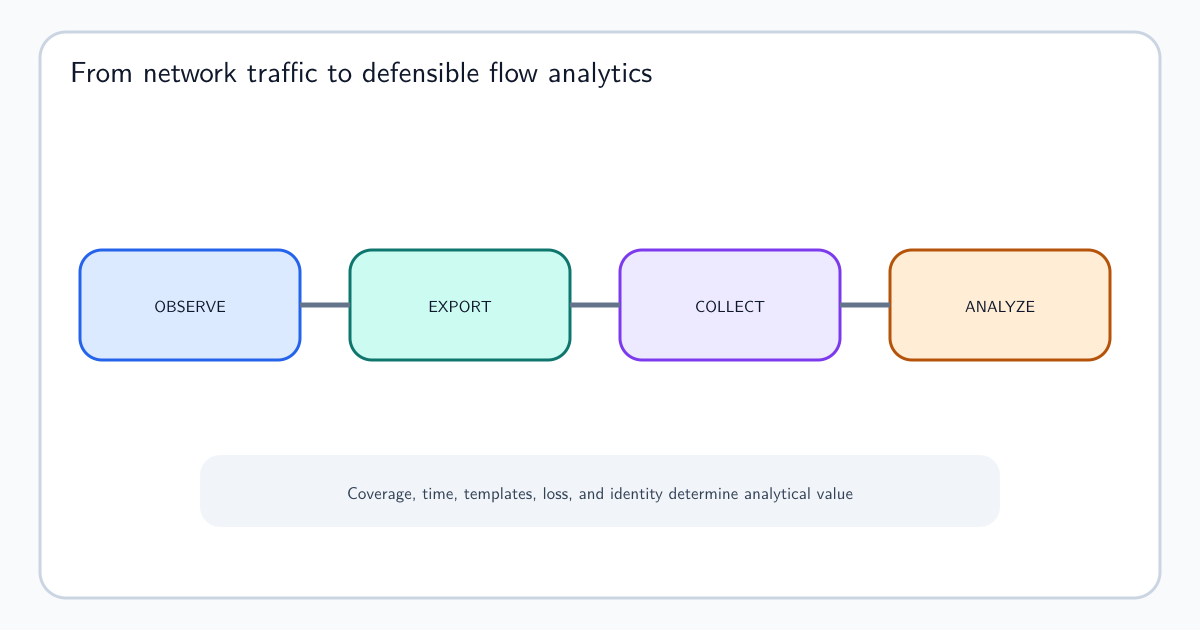
Reachability is not a permanent Boolean. A firewall rule, cloud security group, routing change, reverse proxy, identity policy, or tunnel can change the path. Combine control-plane configuration with observations and safe validation. The NetFlow monitoring guide explains how flow data can reveal communication relationships while preserving its sampling and observation limits.
Asset intelligence should feed vulnerability prioritization with affected instances, reachable functions, owners, critical dependencies, and controls. It should not collapse those distinct facts into an unexplained “risk score.”
Design a Minimum Decision-Ready Asset Record
Use a core record that every asset type can support:
- canonical ID, asset type, and lifecycle state;
- all observed identifiers and aliases;
- technical custodian and accountable service owner;
- business function, environment, criticality rationale, and data class;
- location, account, tenant, network zone, and external exposure;
- product, version, configuration, and key dependencies where applicable;
- control, vulnerability, and telemetry coverage;
- source, first seen, last seen, observed at, confidence, and stale-after time for each important fact;
- conflicts, exceptions, and open actions.
Separate an observed fact from an inference. “Cloud API returned publicIpAddress at 10:05 UTC” is evidence. “Internet reachable” is a conclusion that may also require routing, security-group, proxy, and validation data. Store both with the reasoning that connects them.
Make Freshness, Confidence, and Provenance Explicit
“Last updated” on the whole record is insufficient. One synchronization can refresh the row while the owner, version, or reachability remains years old. Track observed-at, ingested-at, first-seen, last-seen, source, collection method, expected reporting interval, and stale-after time at field or evidence level.
Calibrate freshness to volatility and decision urgency. An ephemeral workload may become stale in minutes; a purchased network appliance may remain valid for days; a building location may need annual validation. A missing heartbeat can mean retirement, collection failure, network isolation, or permission loss. Model those possibilities rather than automatically deleting the record.
Express confidence with reasons: authoritative API, authenticated agent, repeated passive observation, owner attestation, external inference, or unresolved conflict. Confidence should guide verification, not disguise uncertainty with a precise-looking percentage.
Embed Intelligence in Onboarding, Change, and Retirement
At onboarding, require a service owner, custodian, purpose, environment, data class, dependency declaration, approved exposure, baseline controls, logging destination, backup expectation, and retirement trigger. Generate stable identifiers as early as possible and propagate them into cloud tags, endpoint records, tickets, and telemetry.
Reconcile important changes continuously: new public endpoints, owner departure, privilege expansion, missing agent, unsupported software, changed supplier, new data flow, or loss of logs. Route exceptions to the owner with evidence and a deadline.
Retirement must revoke identities and certificates, remove DNS and routes, close supplier access, preserve required records, dispose of data and hardware, and verify that scanners and external observations no longer see the asset. Keep tombstones long enough to prevent a recycled hostname or IP from being mistaken for the retired object.
Connect Asset Intelligence to Security Workflows
Asset intelligence creates value only when it changes action:
- Vulnerability management: find affected instances, reachability, owners, criticality, controls, and treatment status.
- Incident response: scope related identities, hosts, data, dependencies, telemetry, and containment authority.
- Detection engineering: find critical assets without expected logs and validate collection after change.
- Identity and zero trust: relate accounts, workloads, devices, privileges, and policy state.
- Exposure management: reconcile outside-in discoveries with owned services and approved architecture.
- Supplier risk: link external services, privileged integrations, data, and business dependencies. The third-party vulnerability guide shows how this context turns a supplier disclosure into a local decision.
Define bidirectional feedback. A responder who discovers the true owner or a previously unknown dependency should correct the asset evidence, not leave the knowledge in a closed ticket. Measure whether corrections reach the appropriate source system.
Govern, Measure, and Implement in Stages
Establish a data owner, field stewards, role-based access, retention, acceptable monitoring, privacy review, audit logging, and correction process. Asset data can reveal sensitive architecture, employee activity, privileged identities, and investigative targets. Collect only what supports an approved purpose, restrict raw detail, and separate broad operational views from sensitive investigative access.
Measure outcomes: percentage of critical services with verified dependencies; assets with accountable owners; required sources reporting within threshold; unresolved identity conflicts; unknown or unapproved externally reachable assets; critical assets missing controls or telemetry; and median time to answer priority questions. Track denominators and blind spots. A falling asset count can indicate successful cleanup or failed collection.
Implement in stages. First, choose two or three decisions and define the minimum schema. Second, connect a few complementary sources and measure coverage. Third, resolve identity and ownership conflicts. Fourth, integrate one operational workflow with feedback. Fifth, add asset classes and automation only after accuracy is demonstrated.
Review false merges, missed assets, stale owners, and actions that arrived too late. Cybersecurity asset intelligence is not a finished database. It is a continuously tested capability for knowing what matters, why it matters, how current the evidence is, and who must act.
Frequently asked questions
What is cybersecurity asset intelligence?
Cybersecurity asset intelligence is reconciled, time-bounded knowledge about assets and their security relevance. It connects identity, ownership, business purpose, dependencies, exposure, vulnerabilities, controls, telemetry, lifecycle, source, and confidence so a team can make a specific decision.
How is asset intelligence different from an asset inventory?
An inventory records known items and attributes. Asset intelligence reconciles multiple inventories and observations, preserves provenance and freshness, exposes conflicts and unknowns, and adds the context needed for security decisions. A trustworthy inventory is an input, not the complete outcome.
Is a CMDB the source of truth for cyber assets?
A CMDB may be authoritative for approved services, owners, and relationships, but it may miss unmanaged, short-lived, cloud, or externally visible assets. Treat sources as authoritative by field and use, rather than declaring one system universally correct.
What is the difference between CAASM and EASM?
CAASM commonly aggregates and reconciles internal asset and control data across tools, while EASM focuses on assets and exposures observable from outside the organization. Product boundaries vary, so evaluate coverage, identity resolution, evidence, workflow, and export rather than relying on a category label.
How current must asset intelligence be?
Freshness must match the asset and decision. Ephemeral cloud resources may require near-real-time observation, while a facility record changes slowly. Record observed-at, last-seen, source, expected reporting interval, and an explicit stale threshold for each important field.
Which asset intelligence metrics matter most?
Measure decision coverage, freshness, ownership, reconciliation conflicts, unknown or unapproved assets, critical-service dependency coverage, control and telemetry coverage, and time to answer operational questions. A large record count alone does not demonstrate useful visibility.