Cloud Shared Responsibility and Operational Ownership
Translate cloud shared responsibility into testable ownership for identity, configuration, workloads, SaaS integrations, evidence, and recovery.
Responsibility changes by service model
Providers secure portions of physical infrastructure, managed services, and platform operation; customers still own decisions about identities, data, configuration, workloads, integrations, and use. The boundary changes between infrastructure, platform, managed, and SaaS services.
Responsibility is specific to a service and configuration, not merely to a provider. In infrastructure services, the customer may operate the guest system and network policy; in managed databases, the provider operates more of the runtime; in SaaS, the customer still controls users, sharing, integrations, retention, and business use. Read the current service documentation and contract, then map the actual workload. A provider control does not compensate automatically for an unsafe customer setting.
Assign decisions not slogans
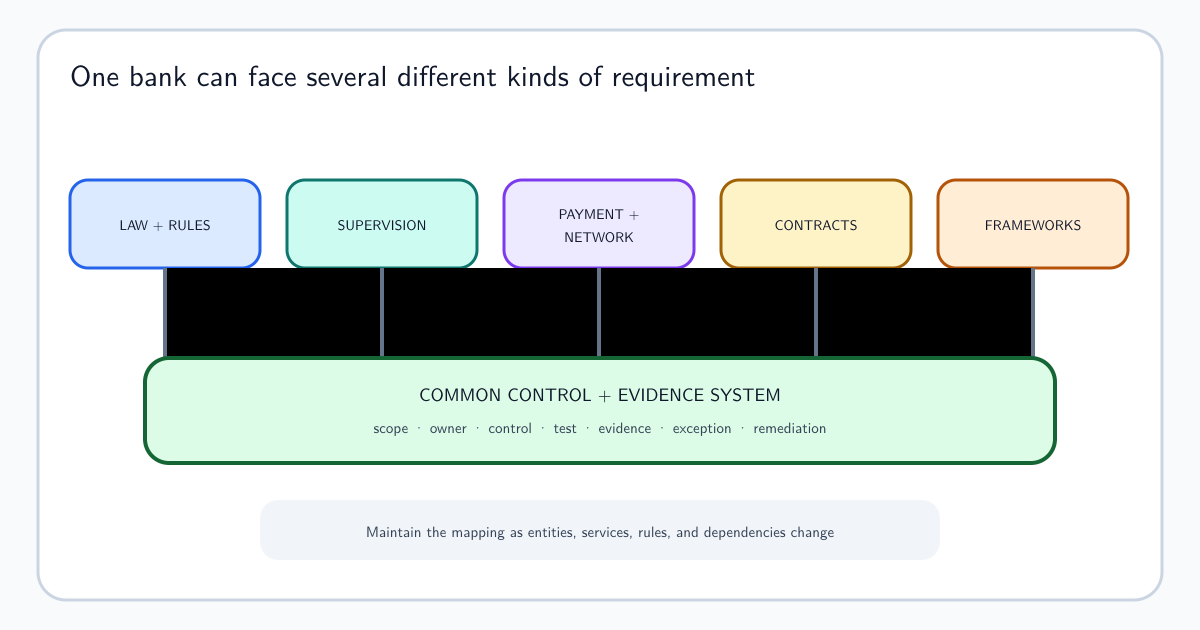
Create a responsibility matrix with a named owner, control objective, evidence, failure response, and review interval. Shared does not mean ambiguous. Contracts and provider attestations inform assurance but do not replace customer configuration and monitoring.
Distinguish the party operating a control from the person accountable for the risk decision. A platform team may run centralized logging while an application owner defines required events and security monitors changes. For each control, record who configures it, who verifies it, which evidence demonstrates operation, and who acts on failure. Include vendors, managed-service partners, marketplace components, and support accounts, because they introduce additional identities and handoffs.
Protect boundaries and change paths
Separate environments, constrain service identities, use secure defaults, review public exposure, and route changes through controlled deployment. Boundaries reduce blast radius when one account, workload, or integration fails.
Use separate accounts, subscriptions, or projects where consequence justifies it; centralize identity without making one administrator universally powerful. Prefer short-lived workload identities, explicit network paths, encryption with governed keys, and policy-tested configuration. Protect CI/CD and infrastructure-as-code because they can change many controls at once. Review exceptions for owner, rationale, compensating control, expiry, and evidence instead of allowing temporary exposure to become architecture.
Collect evidence across cloud layers
Connect identity, control-plane, workload, network, data, and application events. Cloud threat intelligence becomes useful when those signals reveal an access path and business consequence rather than an isolated unusual event.
Collect administrative changes, authentication and token activity, resource access, workload logs, data events, network flows, security findings, and application audit trails according to the workload’s risks. Send critical evidence to a separately controlled destination with sufficient retention. Test fields, timestamps, identities, and alerts using known actions. Provider dashboards and findings are interpretations; preserve source records and know which regions, services, and data operations are not covered.
Design and test recovery
Backups need protected identities, separation from production authority, defined recovery objectives, and tested restoration. Verify configurations, secrets, monitoring, dependencies, and data integrity before declaring a service trustworthy.
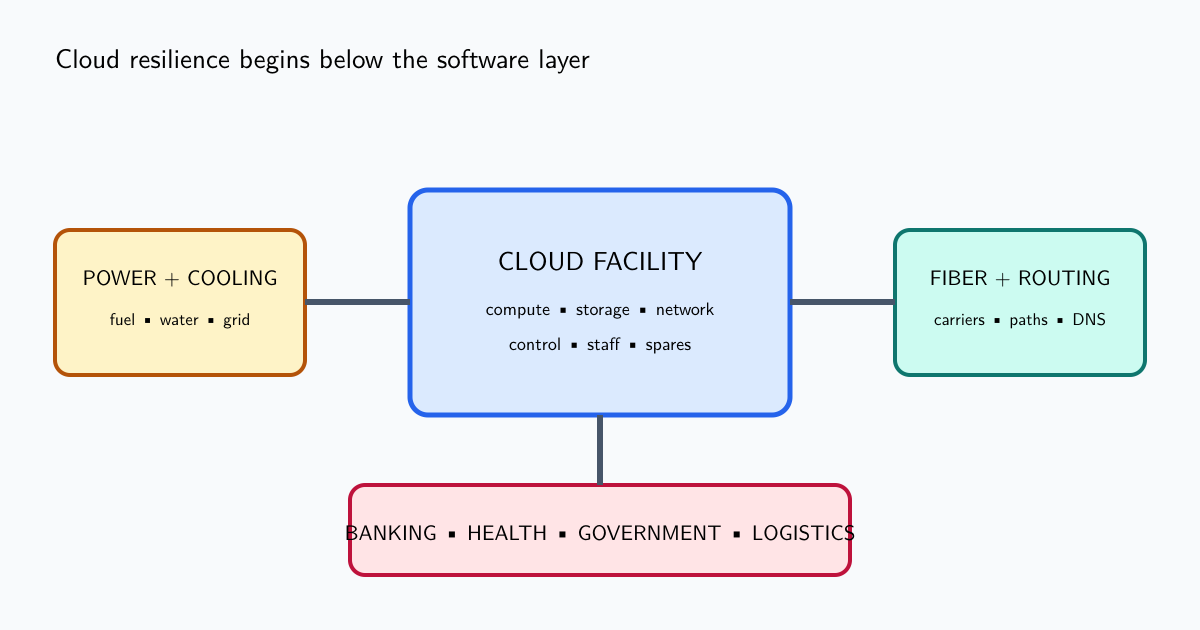
Design for loss of the control plane, identity provider, region, supplier, and privileged credentials—not only disk failure. Keep recovery access and copies from sharing every production dependency. Exercise restoration into a controlled environment, rebuild policy and networking, rotate exposed secrets, validate data and security controls, and obtain business-owner acceptance. A successful backup job proves creation of a copy; only a recovery exercise shows whether the organization can restore a usable, trustworthy service in time. Record actual recovery time and unresolved dependencies after each exercise, then assign improvements to named owners instead of treating the test as a pass-or-fail ceremony.