CTI Collection & Sources
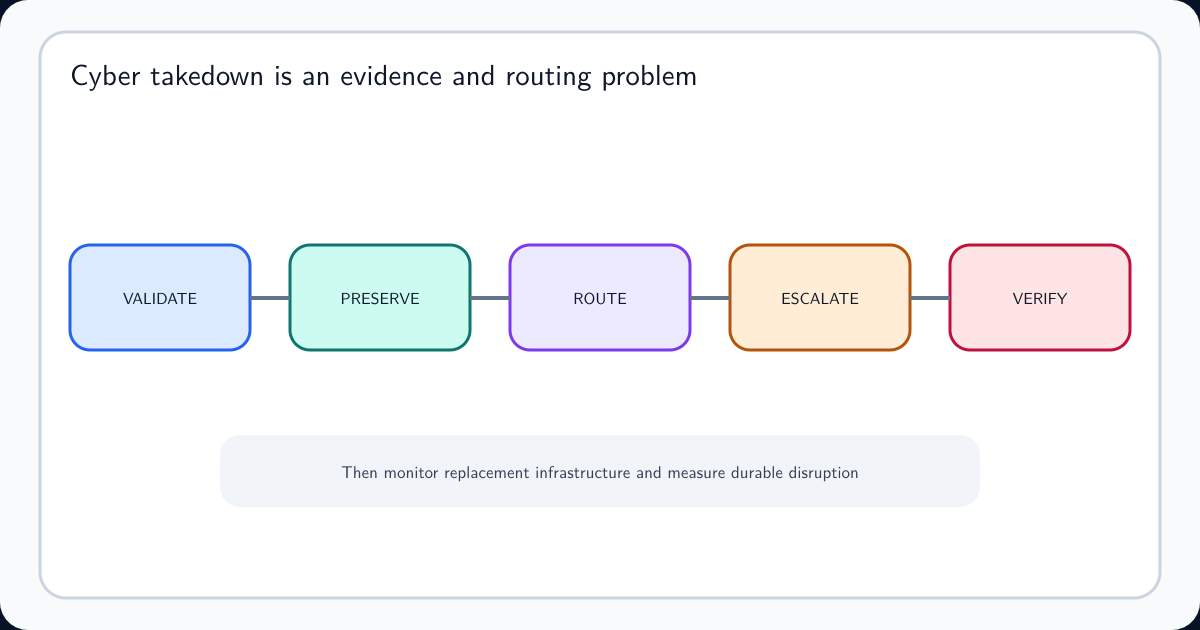
Cyber Takedown Services: Process, Evidence, and Metrics
Learn how cyber takedown services investigate, report, escalate, and measure disruption of phishing sites, malicious domains, and impersonation.
Methods for finding, evaluating, corroborating, and governing Cyber Threat Intelligence sources.
11 resources
Learn how cyber takedown services investigate, report, escalate, and measure disruption of phishing sites, malicious domains, and impersonation.
Plan public-source research with clear authority, minimization, researcher safety, provenance, retention, and escalation boundaries.
Analyze traffic distribution systems as conditional routing layers without confusing dual-use technology, infrastructure, and criminal operations.
A practical method for turning cloud telemetry and threat reporting into prioritized intelligence about identities, control-plane activity, workloads, and business impact.
Decide where language and regional collection matter, measure source imbalance, and build coverage that reflects your actual operations and suppliers.
Trace online claims, screenshots, copied reports, and social posts to evidence, test context and independence, and choose a proportionate response.
Decide whether dark web monitoring fits a real intelligence requirement, and define safe collection, validation, escalation, and service expectations.
Use historical DNS and registration data for discovery and corroboration without mistaking co-location, privacy services, or stale records for shared control.
Run a decision-based trial that tests unique coverage, relevance, timeliness, provenance, integration effort, and measurable operational value.
Convert an intelligence requirement into lawful, safe, source-specific OSINT tasks with validation rules, stop conditions, and a clear owner.