Cloud Infrastructure Under Kinetic Attack: Lessons from the 2026 Iran War
A deep examination of the Iranian drone strikes that damaged AWS facilities in the UAE and Bahrain, their cloud-service effects, military significance, civilian exposure, legal questions, and resilience lessons.
Before dawn, an availability zone catches fire
Evidence cutoff: 14 September 2026. At about 04:30 Pacific time on 1 March, the language on an AWS status page changed the meaning of a cloud outage. “Objects” had struck a facility in the United Arab Emirates. Sparks and fire followed. Firefighters cut power. Customers watching dashboards were no longer troubleshooting an ordinary software or capacity failure; the regional war had entered the building underneath their services.
The next update widened the scene. AWS said two UAE facilities had been directly struck and that a drone strike near a Bahrain facility caused physical impact. Structural damage, power interruption, fire suppression and resulting water damage turned recovery into construction, safety inspection and infrastructure restoration as well as incident response.
The Reuters AWS incident report connected the damage to Iranian drone attacks launched after United States and Israeli strikes against Iran. Reuters reported disruption to core cloud services and effects on financial institutions. The Associated Press cloud assessment independently reported damage to three AWS facilities and AWS advice that customers move workloads and traffic away from affected regions.
High-confidence facts are therefore limited but consequential: physical facilities were damaged; cloud services were impaired; Iran conducted the surrounding drone campaign; and recovery required physical repair. Whether every facility was deliberately selected, which military function Iran believed it supported, and the intelligence supporting that belief require separate evidence.
The outage forces a basic realization: the cloud is a place
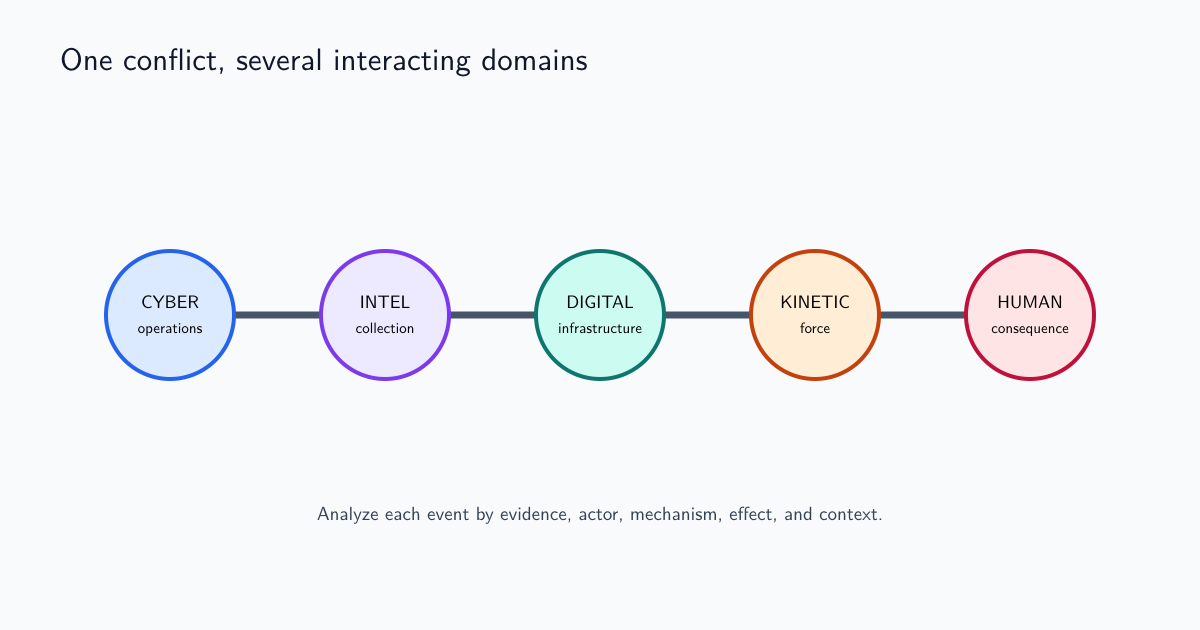
A drone did not exploit a software vulnerability. Calling the event a cyberattack would confuse delivery mechanism with target function. The facilities belonged to the physical layer of cyberspace: buildings, servers, storage, network equipment, power distribution, cooling, fire suppression, fuel, fiber connections and people. Damaging that layer produced digital service effects.
This distinction improves decisions. Cybersecurity teams normally model credential abuse, software flaws, configuration error and malicious code. Armed conflict adds blast, fire, water, grid instability, fuel interruption, denied site access, staff displacement, damaged carrier routes and scarce replacement equipment. The same application can fail through either path, while detection, response authority and recovery options differ.
In the broader Iran–United States cyber conflict, cloud facilities also carry symbolic and strategic meaning. They represent American commercial presence, regional digital transformation and computing capacity potentially used by governments, companies and civilians. Strategic relevance does not itself answer whether a specific attack was lawful or effective.
Follow the failure from concrete to customer
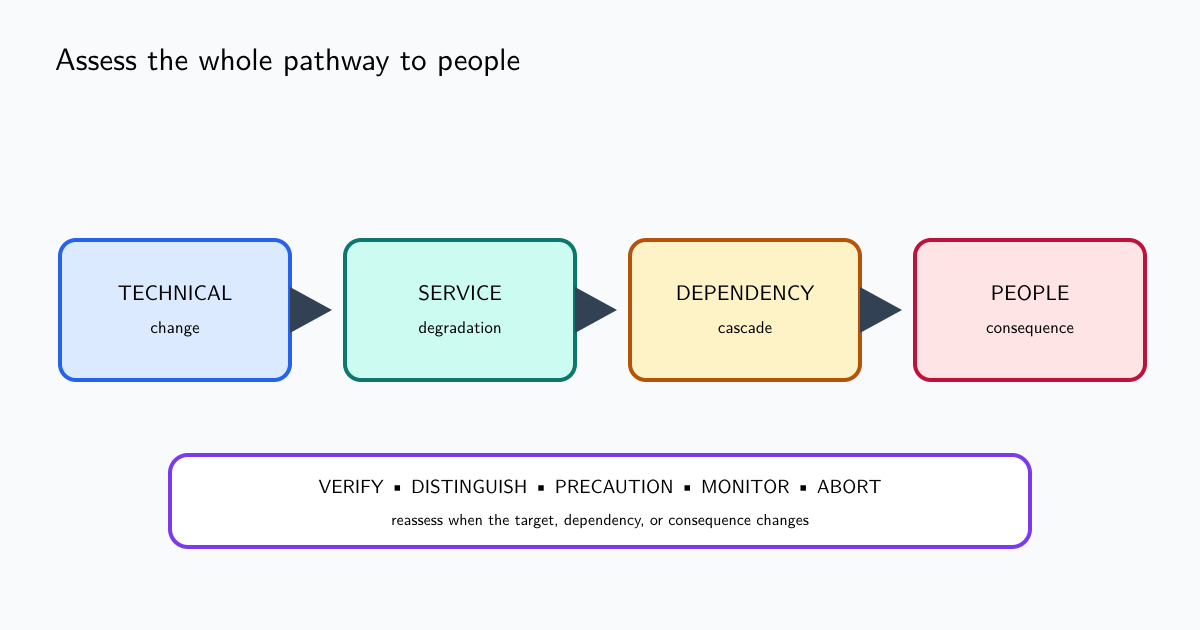
Trace the causal chain. A strike can damage utility intake, switchgear, generators, cooling, network rooms or server halls. Fire suppression may protect life while adding water damage. Loss of power or safe cooling forces equipment shutdown. Network paths and capacity then determine which services remain reachable. Customer architecture determines whether workloads fail over or stay coupled to the damaged zone.
An availability zone is not the same as an AWS region, and a cloud region is not automatically a complete continuity boundary. Applications may replicate compute while retaining a regional database, identity service, key-management dependency, deployment pipeline, observability stack or human approval path. Capacity in a surviving zone may be insufficient during mass migration. Data can be intact while the service is unavailable.
A disciplined cyber-effects assessment separates facility damage, platform degradation, customer application failure, mission interruption and strategic consequence. Reuters reported affected financial organizations, but that does not establish every downstream loss. Analysts should use provider status data, customer confirmation, independent network measurement, transaction evidence and recovery timing before estimating consequence.
Military use, civilian use, and the legal question
Commercial cloud infrastructure can serve governments, armed forces, hospitals, banks, universities and ordinary businesses simultaneously. Shared use creates a difficult target-analysis problem; it does not erase civilian protection. The ICRC states that data centers used solely for civilian purposes are civilian objects and must not be attacked. Whether a particular center or component becomes a military objective requires case-by-case analysis of its contribution to military action and the definite military advantage offered by neutralization in the circumstances at the time.
The ICRC data-center guidance also emphasizes that proportionality and precautions remain applicable even if a specific object qualifies as a military objective. Foreseeable direct and indirect civilian harm matters, including effects on people working at the site and populations dependent on hosted essential services. The attacker’s public assertion that a provider supports military activity is therefore not a completed legal assessment.
This resource does not determine the lawfulness of the March strikes. Public information does not reveal the target folder, intelligence, weapon selection, expected advantage, feasible alternatives or civilian-harm estimate available to the attacker. It identifies the questions a competent review must answer and avoids treating either military use or civilian dependence as an assumption.
The map reveals dependencies the architecture diagram hid
Provider regions are only one geography. Customers concentrate identity, backups, keys, monitoring, software delivery, incident coordination and specialist staff in ways that cloud diagrams often hide. Several providers can share the same grid substation, carrier corridor, landing station, fuel route or urban risk area. A nominally multi-cloud service can therefore contain common physical and organizational failure modes.
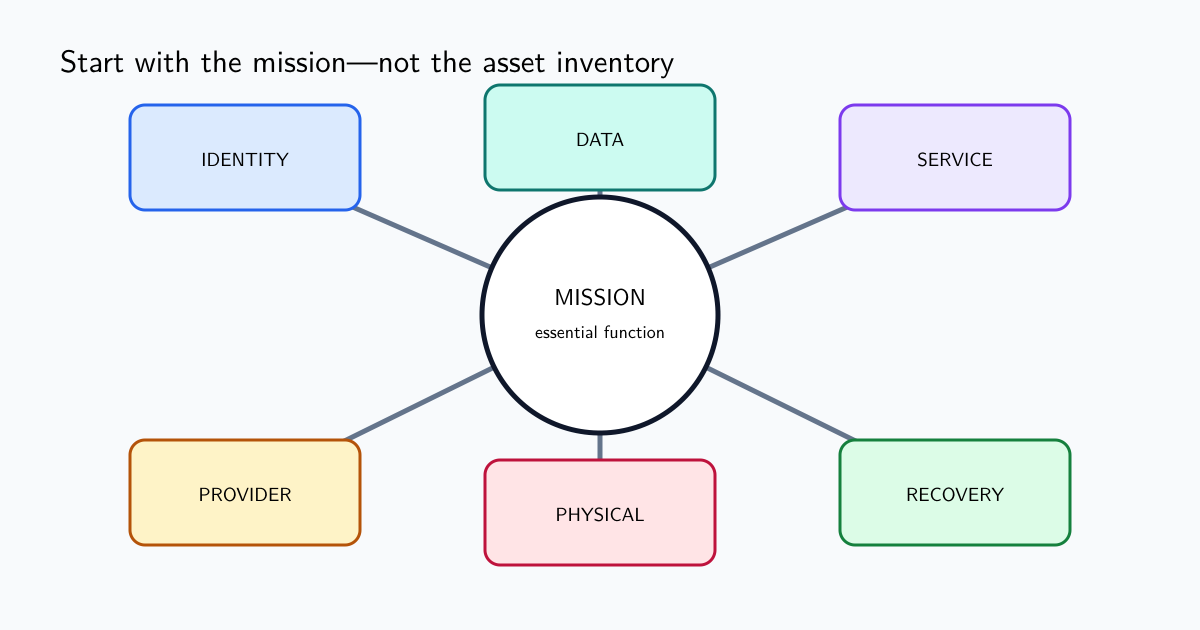
Use cyber key terrain and mission-dependency mapping to identify which resources are decisive for the service: authoritative DNS, identity federation, certificate issuance, key management, network transit, data stores, deployment control, backup catalogs and human break-glass authority. Add power, cooling, water, fuel, site access, vendor support, spares and telecommunications. Record where geographic coordinates or vendor confidentiality restrict sharing.
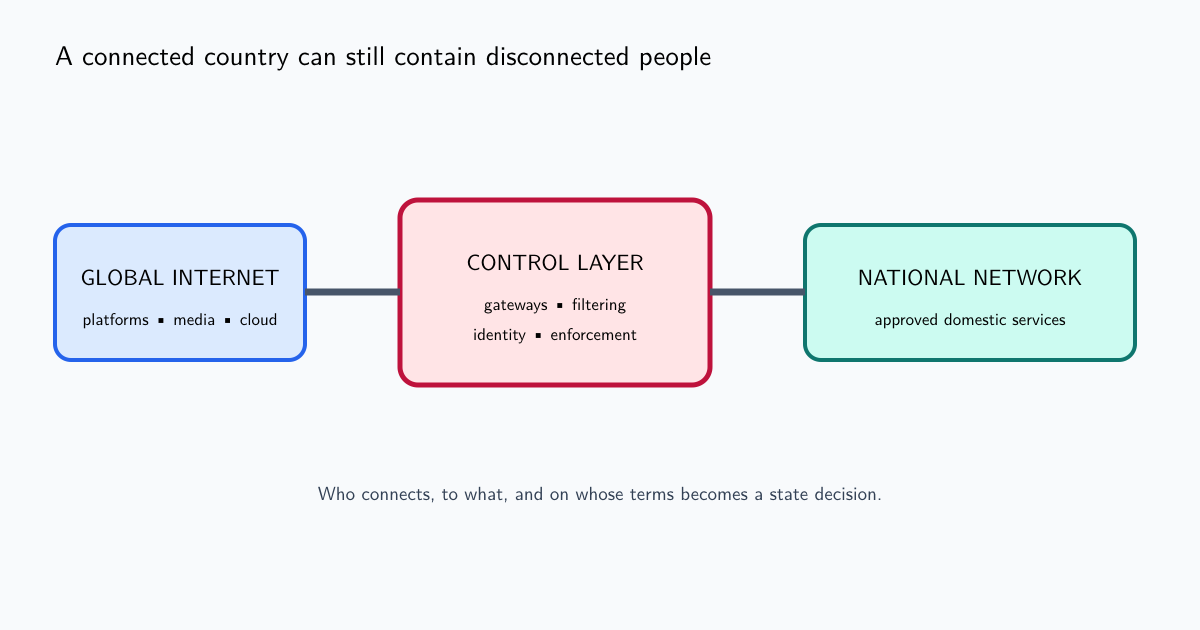
The CISA infrastructure dependency primer distinguishes physical, geographic, cyber and logical dependencies. That model is particularly valuable in war: two independent digital services may still fail together because they are collocated or depend on the same physical utility. Inside Iran, the same concentration problem appeared when outages at domestic providers and data centers cascaded into the Iranian censorship system, interrupting services the state intended to preserve during international isolation.
A wartime cloud-resilience standard
Define the minimum mission, maximum tolerable outage and acceptable data loss before choosing architecture. Identify a recovery region sufficiently separated from the primary region’s military, utility and telecommunications risks. Replicate the data, configuration, identities, keys and deployment artifacts required to operate there. Pre-arrange quotas and capacity; a recovery plan that depends on emergency procurement during regional conflict is an aspiration.
Exercise loss of an entire region without assuming the primary control plane remains available. Test DNS change, certificate and secret access, privileged authentication, application startup order, integrity validation, customer communication and return to normal operation. Include destructive cyber activity during physical recovery and physical denial during cyber incident response. Maintain offline contact and decision records for the period when collaboration platforms fail.
Protect people as well as uptime. Establish shelter, evacuation, remote operations, staffing rotation, vendor access and stop-work criteria. Coordinate with physical security, facilities, legal, continuity, threat intelligence and public authorities. The goal is not uninterrupted convenience; it is safe preservation or restoration of the prioritized mission under credible conditions.
Questions for intelligence and executive decisions
Intelligence teams should monitor threats to named providers, changes in targeting language, attacks on power and telecommunications near facilities, airspace and logistics constraints, provider health notices, routing anomalies, regional capacity and adversary narratives about military cloud use. Separate indicators of intent from capability and opportunity. A public target list can signal coercion, guide supporters, deceive defenders or precede action.
Executives need decisions rather than a stream of headlines: which services must move, by what deadline, with which data and legal constraints; when staff should leave a site; whether customers need warning; and which dependencies lack a tested alternative. State what would trigger migration, degraded operation, manual processing or shutdown. Price the decision against both conflict exposure and migration risk.
After an incident, record observed facility, platform and customer effects separately. Compare them with the baseline and plausible no-strike counterfactual. Include civilian harm and reverberating effects, adversary adaptation and market consequences. A damaged building, a restored service and a changed strategic decision are three different assessment findings.
Frequently asked questions
Were AWS data centers attacked during the 2026 Iran war?
Yes. AWS said two facilities in the UAE were directly struck and a nearby drone strike physically affected a Bahrain facility on 1–2 March 2026. The incidents caused structural, power, fire-suppression, and service effects.
Was the AWS incident a cyberattack?
No. The delivery mechanism was kinetic. It is cyber-conflict relevant because physical damage to cloud infrastructure interrupted digital services and exposed dependencies that ordinary cybersecurity analysis can overlook.
Does military use make an entire commercial cloud a military target?
Not automatically. Military-objective status requires a case-specific legal assessment. Even where a particular object qualifies, distinction, proportionality and feasible precautions remain applicable, including assessment of foreseeable civilian effects.
Is a multi-availability-zone design enough for wartime resilience?
It reduces some facility failures but does not guarantee continuity. Organizations must test application behavior, identity and control-plane dependencies, data replication, capacity, network paths, staff access, third parties, and recovery in a sufficiently separated region.