Cloud KMS Key Deletion: Detection and Recovery
Cloud KMS key deletion detection covers destructive requests, recovery windows, dependency mapping, unusable ciphertext, purge controls, and restoration.
Key state and recovery semantics are provider-specific
Cloud KMS key deletion detection starts by distinguishing key, key version, key material, alias, policy, grant, and dependent ciphertext. Disabling a key, scheduling deletion, soft-deleting a vault object, purging it, and destroying one key version have different effects and recovery boundaries.
AWS KMS key deletion guidance uses a mandatory waiting period for customer-managed keys and makes a pending-deletion key unusable. Azure Key Vault recovery guidance separates soft delete from purge protection. Google Cloud KMS destroy and restore guidance permits restoration during the scheduled-destruction interval but not after destruction.
Do not generalize one provider’s command or timer to another. Capture exact service, key type, version, origin, replication, state, and configured recovery period.
Preserve the destructive request and current key state
Capture provider, account or project, key and version identifiers, state, origin, region, replicas, deletion or destruction time, recovery deadline, actor, source, request ID, authentication context, policy and grant changes, key usage, errors, alarms, and dependent-resource inventory.
This is authored AWS-style telemetry:
{"eventTime":"2026-11-10T16:27:11Z","eventName":"ScheduleKeyDeletion",
 "userIdentity":{"arn":"arn:aws:iam::111122223333:role/key-admin"},
 "requestParameters":{"keyId":"arn:aws:kms:eu-west-1:111122223333:key/<redacted>",
 "pendingWindowInDays":7},"sourceIPAddress":"198.51.100.39","requestID":"kms-91b..."}
Record the provider-reported deletion date and time zone. Do not rely on the request’s nominal duration alone; eventual processing and service rules can affect the effective boundary.
Detect destructive operations and failed dependency use
Alert on disable, deletion scheduling, purge, key-version destruction, cancellation, recovery, imported-material deletion, replica changes, policy and grant edits, logging changes, and new administrators. Require change approval and multi-party validation for destructive operations.
Join control-plane events to decrypt, unwrap, sign, or data-key failures; service health; backup restore errors; database and object access; and application incidents. Cached data keys can delay visible impact, so lack of immediate failure does not mean the key is unused.
Separate planned retirement from attack using dependency evidence, owner, ticket, waiting period, and test results. A high-confidence finding combines an unauthorized destructive request with key use or protected-data dependencies.
Cancel or recover before the irreversible boundary
Confirm the exact key and provider state through a trusted administrative path. If recovery remains available and deletion is unauthorized, cancel scheduled deletion or restore the soft-deleted object, re-enable only after policy and administrator integrity are verified, and preserve the destructive event.
Inventory dependencies before changing aliases or application configuration. Validate decryption and signing through controlled tests, restore role assignments and integrations that recovery does not automatically recreate, and monitor for continued destructive attempts. A restored key may still be compromised if an attacker exported, backed up, or controlled it.
If irreversible destruction occurred, escalate through the incident response lifecycle. Determine whether protected data can be restored from a separately recoverable key, backup, replica, or re-encryption path. Never claim recoverability without testing actual ciphertext.
Separate key use from destructive key administration
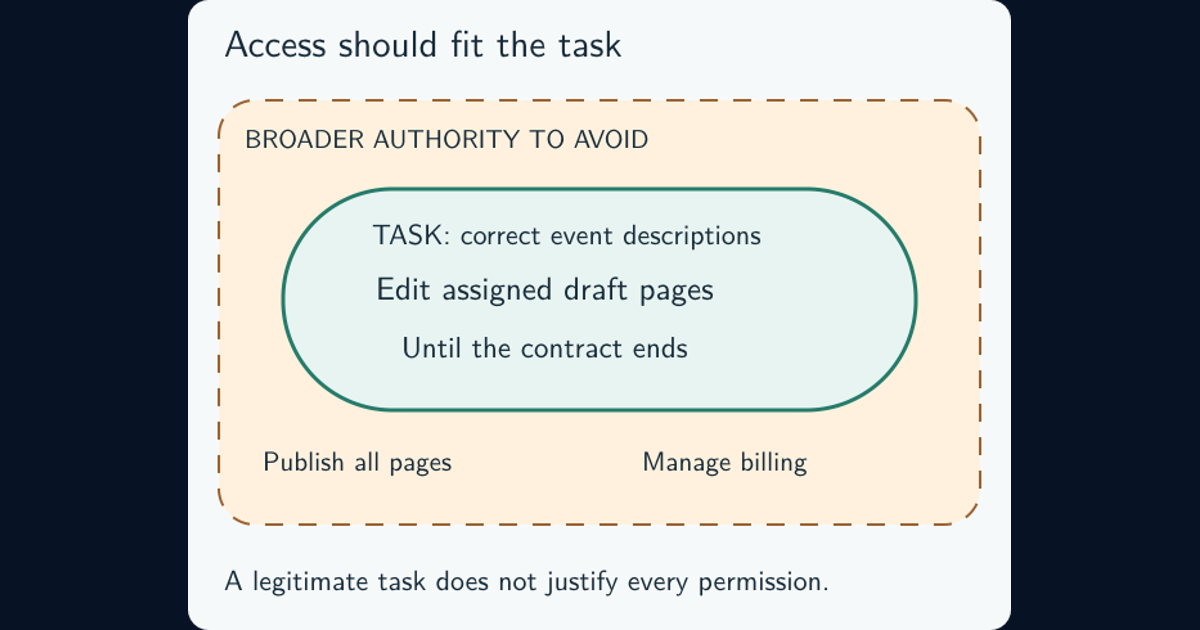
Apply the principle of least privilege: separate encrypt/decrypt use, policy administration, backup, disable, delete, purge, and recovery. Require strong authentication, privileged workstations, time-bound elevation, approval, and alerts for destructive actions.
Enable provider recovery features and set waiting periods appropriate to detection and compliance needs. Export audit logs independently, maintain dependency inventories by key version, alarm on pending deletion and failed use, and test recovery with non-production ciphertext.
Longer recovery windows reduce destructive risk but delay legitimate deletion and name reuse. This is part of cloud shared responsibility: the provider supplies mechanisms, while the customer owns authorization, dependency knowledge, retention, and response.
Prove one critical key is recoverable before it matters
Next step: choose one non-production customer-managed key. Map every resource and ciphertext sample, key version, owner, policy, grants, recovery setting, deletion alert, and runbook. Disable—not destroy—the test key under approval, observe failures, re-enable it, and verify actual decryption.
Use a provider-supported scheduled-deletion exercise only in an isolated account with disposable data and explicit authorization. The durable control is a known dependency graph, separated destructive authority, a recovery window longer than detection time, and tested cryptographic restoration.
Frequently asked questions
Can a deleted cloud KMS key be recreated with the same name?
A new key is not automatically the same cryptographic identity. Ciphertext and policies reference key material, versions, or identifiers; once provider recovery is exhausted, recreating a label generally does not restore decryption.
Is disabling a KMS key safer than deleting it?
It is usually more reversible, but it can still immediately disrupt cryptographic operations. Dependency mapping, approval, alerting, and a tested re-enable procedure remain necessary.