DNS over HTTPS: Enterprise Visibility and Control
DNS over HTTPS enterprise visibility requires approved resolvers, client policy, endpoint attribution, encrypted-flow evidence, and split-DNS testing.
DoH protects DNS transport while changing the observation point
DNS over HTTPS enterprise visibility depends on which client selects which resolver and where evidence is collected. RFC 8484 DNS over HTTPS maps each DNS query-response pair into an HTTPS exchange, providing confidentiality and server authentication against on-path observation and interference.
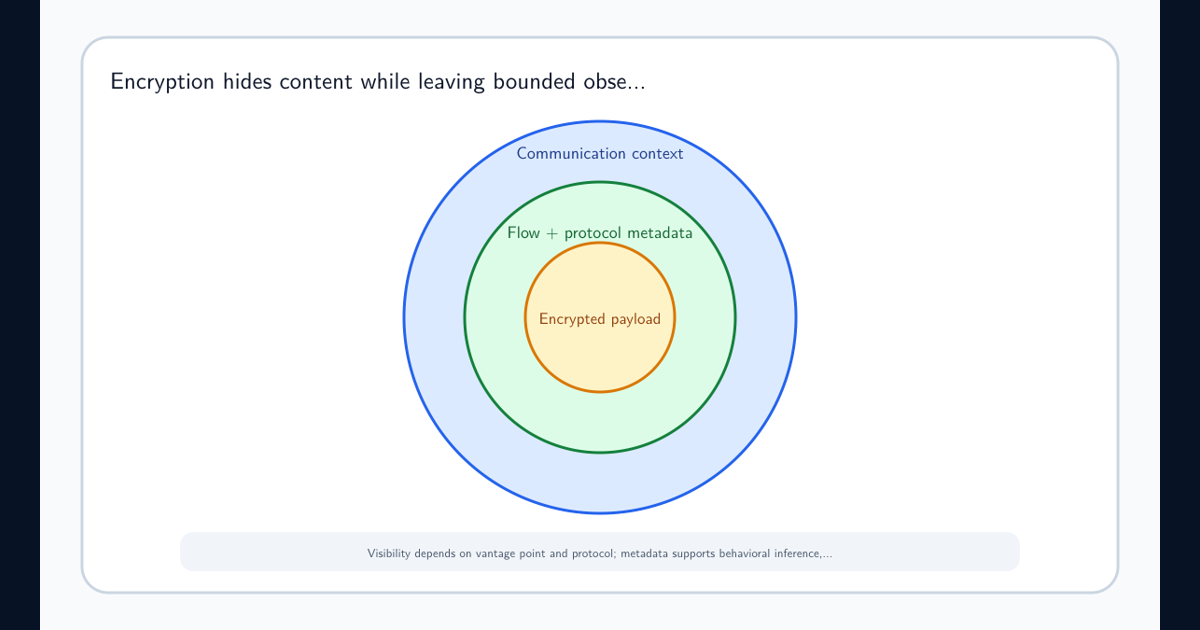
That privacy property also means a network control that relied on plaintext UDP or TCP DNS cannot inspect the query. The relevant evidence may move to managed endpoint policy, browser telemetry, an HTTPS proxy, resolver logs, or post-resolution connection metadata. DoH is not intrinsically bypass or malware; unmanaged resolver choice is the governance problem.
Draw the actual path for operating system, browsers, mobile clients, applications with embedded resolvers, VPNs, containers, and guest devices. A single device can use several resolution paths simultaneously.
Record resolver policy and connection evidence without inventing query visibility
Preserve client identity, process, policy source and version, configured DoH URI, bootstrap address, connection destination, TLS server identity, HTTP method where observable, content type, timestamps, bytes, resolver response evidence, and subsequent connections. Do not claim the queried domain from an encrypted flow unless endpoint or resolver evidence supports it.
This is an authored policy observation—not a decoded live query:
{"time":"2026-11-10T15:06:24Z","device":"ws-1042","process":"chrome.exe",
 "policy_source":"device","doh_mode":"secure","template":"https://dns.corp.example/dns-query",
 "destination_ip":"192.0.2.53","tls_sni":"dns.corp.example","resolver_log_join":"rq-71a..."}
A TLS connection to a known resolver supports “the process contacted a DoH service,” not “this exact name was queried.” Apply the limits in encrypted network traffic metadata.
Detect unauthorized resolver paths and policy drift
Inventory approved resolver URIs, addresses, certificate identities, client modes, fallback rules, and split-DNS dependencies. Detect browser or OS policy changes, unmanaged profiles, new resolver destinations, DoH content types or paths where visible, unexpected encrypted DNS from server workloads, and processes that resolve names outside the approved client stack.
Correlate endpoint process attribution with proxy, NetFlow monitoring, resolver, and EDR evidence. Known-resolver lists are incomplete and change over time; IP blocking alone can create false positives on shared hosting and miss private or newly deployed endpoints.
Distinguish privacy tools, browser upgrades, security agents, VPN clients, malware, and application-native resolvers through provenance and behavior. Strong findings combine an unauthorized configuration or process with sensitive name resolution, policy bypass, suspicious follow-on connections, or attempts to disable managed settings.
Provide an approved encrypted resolver before restricting alternatives
Define managed browser, operating-system, and application policy around an approved resolver that supports enterprise privacy, availability, filtering, logging, data handling, and split-horizon requirements. Chrome Enterprise DNS over HTTPS policy and Mozilla enterprise DNS over HTTPS policy illustrate platform-specific control points; confirm the exact versions you deploy.
Restrict external resolvers through endpoint policy, network egress, proxy controls, and application governance only after the approved path works. Make fallback behavior explicit: silently falling back to plaintext can defeat privacy, while failing closed can break access during resolver outages.
Logging DNS names creates sensitive behavioral data. Apply minimization, role-based access, retention limits, and lawful-purpose controls. Security visibility is not permission for indefinite employee browsing surveillance.
Test resolution behavior from the application perspective
Validate external names, split-horizon names, DNSSEC-dependent workflows, captive portals, VPN transitions, proxy authentication, certificate revocation dependencies, offline startup, and resolver outage. DNS investigation evidence should identify which component answered and when, not assume all clients followed the intended path.
Use authorized test names and devices. Confirm the application reaches the correct destination, the resolver records only permitted evidence, policy drift is detectable, and fallback matches design. Do not infer success merely because a browser loads one public page.
Roll out by device group with health metrics and a rollback path. Blocking before measuring application-native DoH can create availability incidents without restoring useful visibility.
Build a resolution-path assurance matrix
Next step: choose one managed workstation and inventory every resolver path used by the OS, two browsers, the VPN, and one business application. Record policy owner, resolver, encryption, split-DNS behavior, evidence source, retention, fallback, and outage behavior.
Generate one authorized test lookup through each path and verify endpoint-to-resolver correlation. The durable outcome is not maximum DNS collection; it is an approved privacy-preserving resolver path, detectable deviation, correct enterprise resolution, and evidence proportionate to a defined security purpose.
Frequently asked questions
Is DNS over HTTPS malicious or unsafe?
No. DoH protects DNS traffic from on-path observation and modification. Risk depends on resolver choice, client policy, enterprise requirements, and whether security and split-DNS functions remain available.
Should an enterprise block all external DoH endpoints?
Only after providing a reliable approved encrypted resolver path and testing applications. Endpoint lists are incomplete, and broad HTTPS blocking can disrupt unrelated services or push clients to alternate mechanisms.