Cognitive Bias in CTI: A Practical Review Checklist Before You Publish
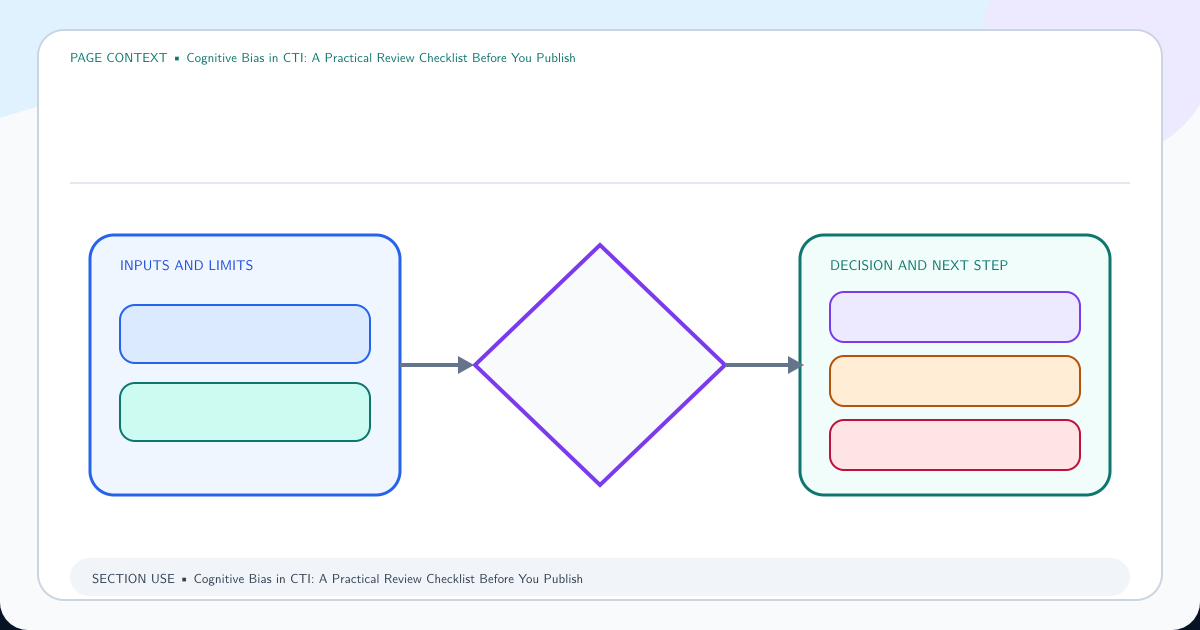
Find confirmation bias, anchoring, mirror imaging, recency effects, and group pressure before they distort a consequential intelligence judgment.
Practical methods for evaluating evidence and producing defensible Cyber Threat Intelligence judgments.
11 resources
Find confirmation bias, anchoring, mirror imaging, recency effects, and group pressure before they distort a consequential intelligence judgment.
Turn malware analysis into CTI by selecting findings that improve scoping, detection, containment, prioritization, or warning.
Investigate domains, IP addresses, certificates, hosting, and relationships while setting evidence thresholds that prevent false cluster expansion.
Analyze victim selection without confusing public visibility with adversary preference, then turn the pattern into a defensible warning decision.
Create a living actor profile that separates observed behavior, assessed capability, targeting, infrastructure, aliases, and uncertain attribution.
Build an evidence-backed timeline across reports, infrastructure, malware, and incidents without turning uncertain dates into a false narrative.
Choose the analytic framework that matches your question: relationships with the Diamond Model, intrusion progress with the Kill Chain, or observable behavior with ATT&CK.
Use ACH when several explanations fit the same evidence, compare them consistently, and show decision-makers what could change the leading judgment.
Write CTI reports that readers can use by defining the decision, separating evidence from judgment, leading with key assessments, expressing likelihood and confidence, tailoring depth, expla...
Learn how cyber threat attribution is built and communicated: the levels of attribution, evidence types, clustering, hypothesis testing, confidence, naming problems, deception, legal and pol...