Privacy and Proportionality in Security Monitoring
Apply purpose limitation, necessity, minimization, access control, retention, and oversight to security monitoring while preserving the evidence needed for a defined defensive decision.
Purpose must be specific enough to constrain collection
“Security” is too broad to justify every field, population, and retention period. A usable purpose names the behavior or risk, affected systems, consumer, decision, and required timing. It explains why the chosen evidence can change that decision.
Purpose limitation means data collected for one reason is not silently reused for unrelated monitoring. Necessity asks whether the purpose can be achieved with less data. Proportionality weighs expected security value against intrusion, misuse risk, and impact on people.
Write these constraints before enabling a source. If the purpose later expands, review the new use rather than treating availability as permission.
Minimize content, population, precision, and time
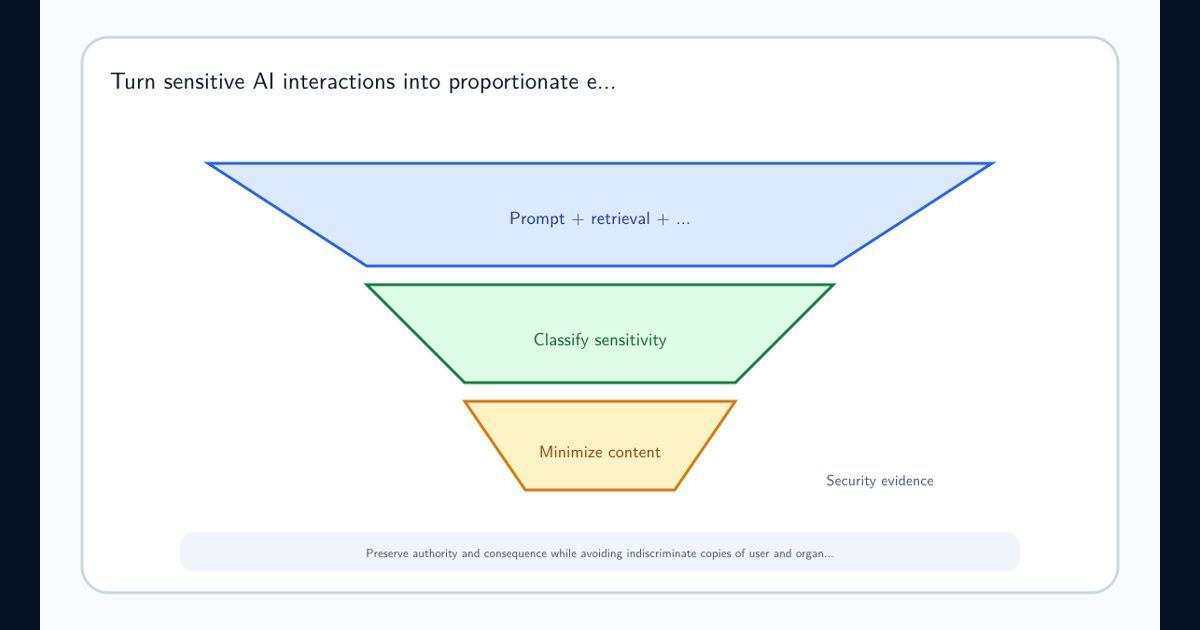
Minimization is not only field removal. You can narrow which users or systems are monitored, reduce content detail, shorten retention, lower location precision, collect only on a defined trigger, or keep sensitive data in a protected source with controlled retrieval.
Choose the representation that supports the claim. Domain and byte count may be sufficient for one network analytic; full content may be necessary for a tightly governed phishing investigation. A stable protected identifier may support relation without exposing a display value broadly.
Hashing does not automatically anonymize data. Small or guessable values can be reversed by enumeration, and stable hashes enable tracking. Document what remains linkable and who can resolve protected values.
Access to monitoring data is itself a security boundary
Telemetry can reveal communications, locations, work patterns, files, health information, customer relationships, and credentials. Centralizing it creates an attractive secondary dataset.
Separate platform administration, detection development, investigation, and bulk export permissions. Use least privilege, purpose-bound access, review logging, approval for sensitive retrieval, and monitoring of the monitoring system. Test whether redacted views support routine work while exceptional access remains controlled.
An alert should contain what the first decision needs, not every raw record the platform can fetch. Preserve a governed route to deeper evidence when escalation is justified.
Retention and reuse need explicit endings
Keep data only as long as the defined security purpose, investigation, assurance, and legal requirements justify it. A long retention period can improve slow-pattern detection while increasing exposure and the consequence of platform compromise.
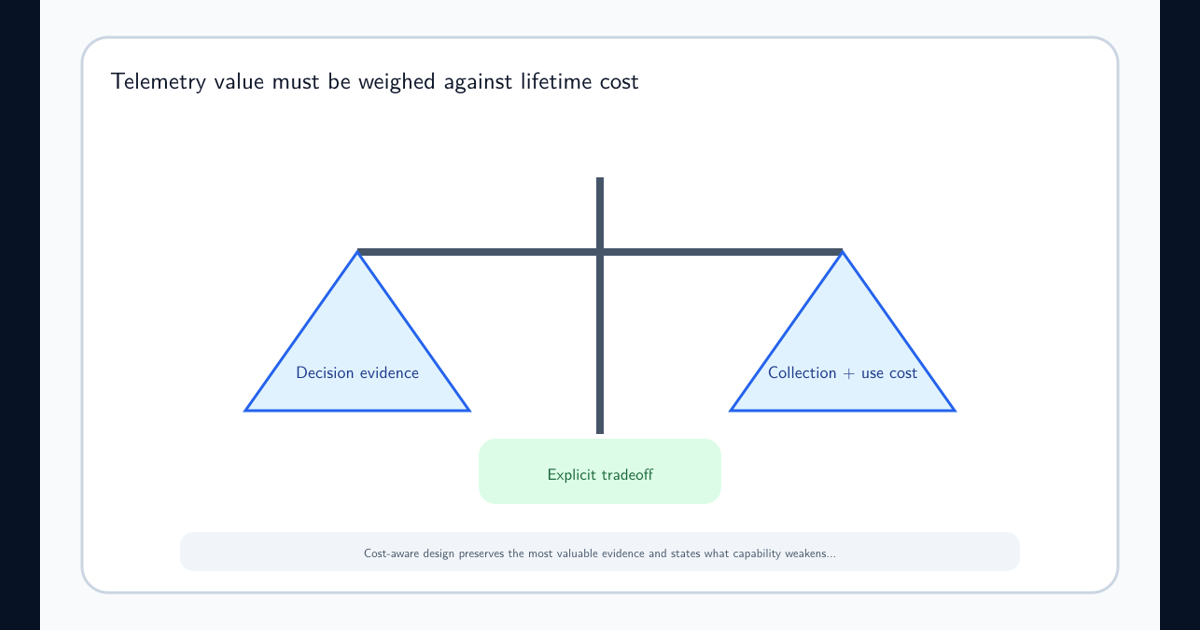
Use cost-aware telemetry design to identify hot, cold, and protected tiers, but do not let cost become the only retention decision. Record deletion behavior, backups, legal holds, derived datasets, and whether risk scores or enrichments persist after raw events expire.
Retirement should remove abandoned copies and revoke access. Data copied into analyst notebooks, exports, or model features can outlive the source policy unless lineage and deletion cover them.
Oversight keeps the original justification honest
Review whether the threat, evidence need, population, field use, access, retention, and observed outcomes still match the approved purpose. Include privacy, legal, workforce, security, and affected-system ownership where appropriate.
Measure useful decisions and harms, not collection volume. Track sensitive access, policy exceptions, overcollection findings, deletion failures, investigations supported, and cases where missing evidence prevented a decision. Encourage correction rather than rewarding teams for never reporting privacy problems.
A proportionate monitoring statement says what is collected, why it is necessary, who can use it, how long it remains, what alternatives were considered, and how people can challenge misuse. Governance strengthens detection because it forces the evidence claim to become precise.
Frequently asked questions
Does security monitoring automatically justify collecting all available data?
No. A security purpose should be specific, necessary, proportionate, governed, and limited in access and retention. Broad collection can create harm without improving the actual decision.