Privacy-Safe Logging for Prompts, Retrieval, Memory, and Outputs
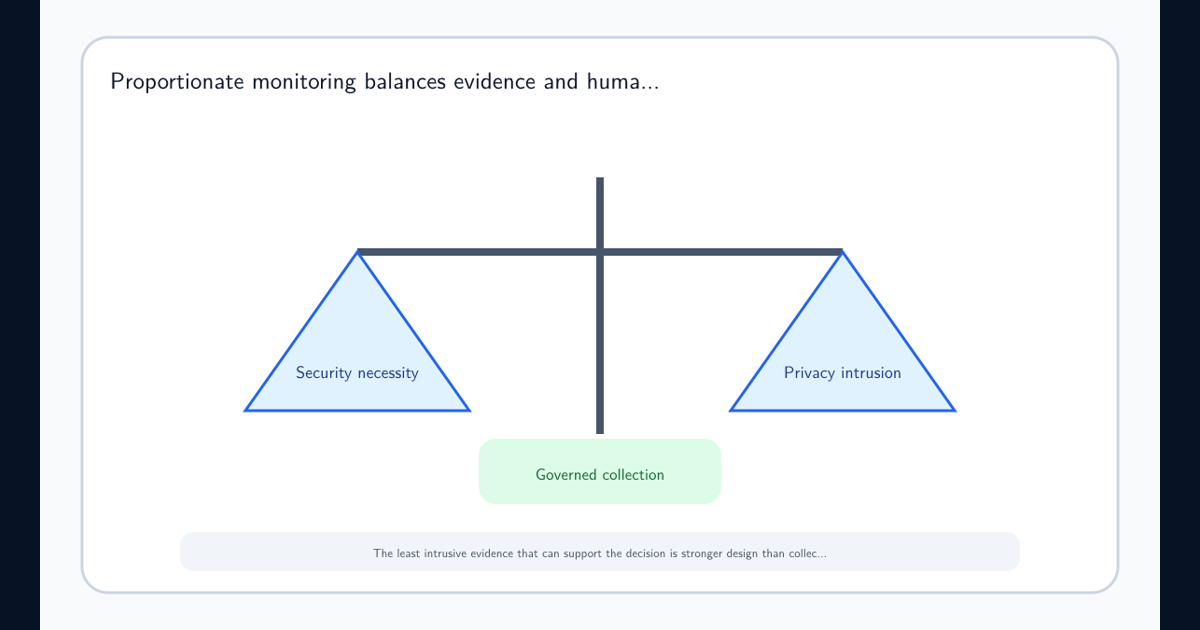
Design privacy-safe logging for prompts, retrieval, memory, model outputs, and tool actions by selecting the least sensitive evidence that can support a defined security decision.
AI logging combines several sensitive data planes
A single interaction can contain a user’s prompt, retrieved documents, conversation history, long-term memory, model output, tool arguments, tool results, classifier labels, and human feedback. Copying all of it into a security platform creates a second corpus that may contain secrets, personal data, legal material, health information, or customer records.
Separate these planes before choosing collection. A prompt is user-provided input. Retrieval is selected source content. Memory is retained state. Model output is generated content. Tool telemetry records attempted or completed action. Each has different evidential value and exposure.
Begin with the behavior and decision. A tool-abuse detection may need caller, tool, target, policy, argument categories, and outcome, not the entire conversation.
Represent content through structured security properties
Useful properties can include source class, trust level, sensitivity label, tenant, object identifier, content length, destination class, data category, policy result, and protected hash or token. These can reveal boundary crossing without exposing full text.
The representation must match the claim. A destination domain supports external-sharing detection but cannot show what content was sent. A sensitivity label supports policy comparison but depends on classification quality. A hash supports exact equality but cannot reveal semantic similarity.
Document what each abstraction preserves and loses. Do not call redacted content anonymous when surrounding identifiers still reveal the person or task.
Use tiered access instead of universal visibility
Routine detection can operate on structured metadata. A justified investigation may retrieve a redacted excerpt. A smaller set of authorized reviewers may access full content when consequence and purpose warrant it.
Separate roles for platform operation, detection engineering, model quality, investigation, and legal or privacy review. Log sensitive retrieval, prevent bulk export, restrict model training reuse, and define emergency access.
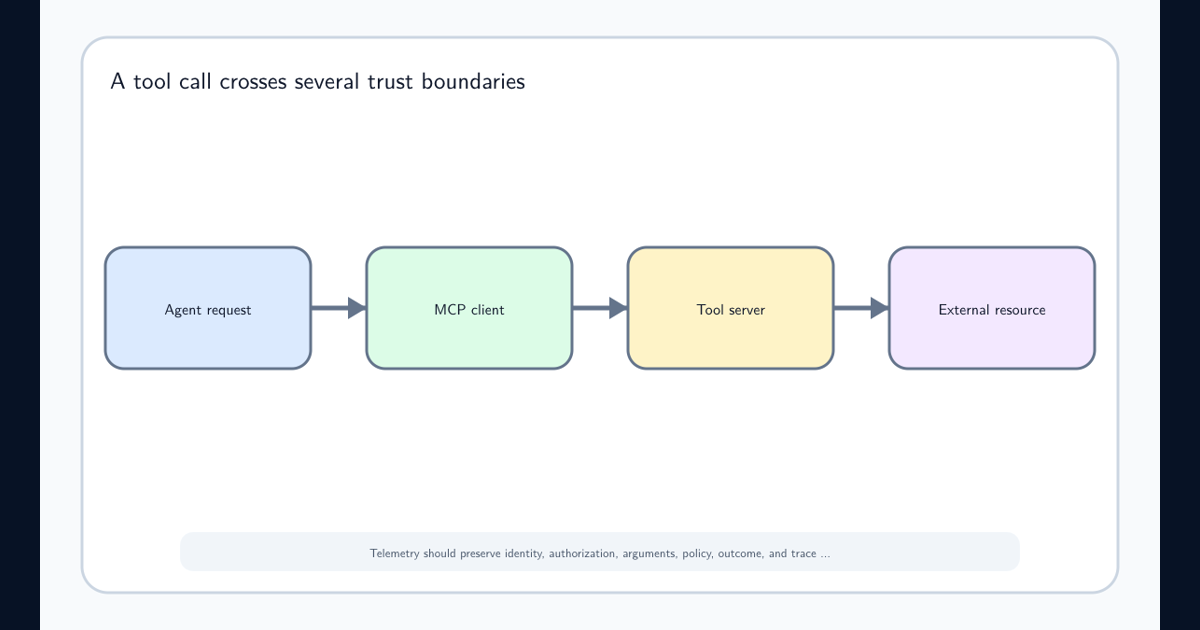
The AI tool-call and MCP telemetry should carry enough action evidence that investigators do not need full prompts merely to learn which resource changed.
Retention follows purpose and correction needs
Prompts and memory may remain sensitive longer than their security value. Tool outcomes and policy decisions may need longer retention for incident reconstruction. Set periods by plane and purpose rather than applying one global duration.
Track copies in indexes, caches, embeddings, backups, evaluation datasets, and analyst exports. Deleting the primary event does not remove derived vectors or copied transcripts. Lineage and deletion should cover every retained representation.
Consider correction and contestability. If a classifier labels content as sensitive or malicious, preserve the version and a way to review the source under proper authority. A derived label should not outlive all evidence needed to challenge it.
Privacy and detection quality can reinforce each other
Purpose limitation forces the team to name the exact security question. Minimization forces it to identify which fields carry evidence. Access control keeps highly sensitive data away from routine workflows. These disciplines reduce noise and make the detection claim easier to explain.
Measure both benefit and harm: investigations supported, boundary violations found, sensitive-content retrievals, access exceptions, overcollection, deletion failures, and cases where minimization removed necessary evidence. Adjust with accountable security and privacy owners.
A defensible design says which AI data plane is collected, in which representation, for which decision, under whose access, for how long, and with which known blind spot. “Log everything for security” is not an evidence strategy.
Frequently asked questions
Can AI security logging avoid retaining full prompts?
Often yes. Structured metadata about source, authority, target, sensitivity, policy, and outcome can support many detections. Full content should be purpose-bound, protected, retained briefly, and retrieved only when necessary.