Deception Telemetry and Chain of Custody
Preserve deception evidence from decoy creation through placement, trigger, collection, transformation, and investigation so a strong signal remains reproducible and defensible.
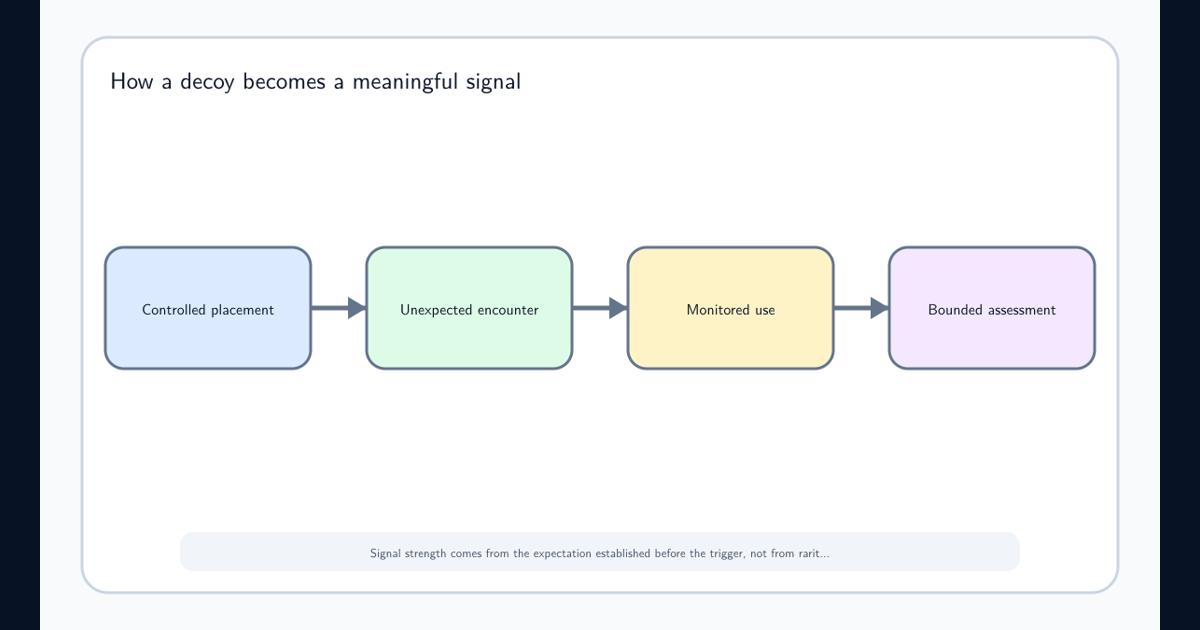
The trigger is only as strong as the history behind it
Suppose a monitored credential is used from an unfamiliar address. The authentication record is real, but its meaning depends on facts established earlier. Was the credential ever assigned to a legitimate process? Who could read its placement? Was it copied into another environment? Was the monitoring service healthy when the attempt occurred?
Lineage records where an object or record came from and how it changed. Chain of custody records who or what controlled evidence from collection through later use. In deception engineering, the two meet: the decoy’s history explains the expectation, and the trigger’s custody explains whether the evidence still supports it.
Treat the design record as part of the evidence. Preserve the intelligence question, decoy identifier, version, capability, placement, approved exposure, owner, activation time, and retirement condition before the first trigger occurs.
Give every decoy a stable identity and version
A visible label or credential string is not always a safe identifier. Values can be rotated, copied, redacted, or reused in testing. Assign a stable internal identity and record each material version separately. The record should connect the exact token, document, service configuration, or database row to its approved purpose.
Version changes matter when they alter believability, capability, placement, or trigger behavior. Moving a token from a restricted share to a developer workstation changes its exposure population. Changing a fake service from connection-only to accepting commands changes both risk and evidential meaning.
Investigators should be able to answer which version fired and which expectation applied at that time. Current configuration must not overwrite historical state.
Preserve the raw trigger before adding interpretation
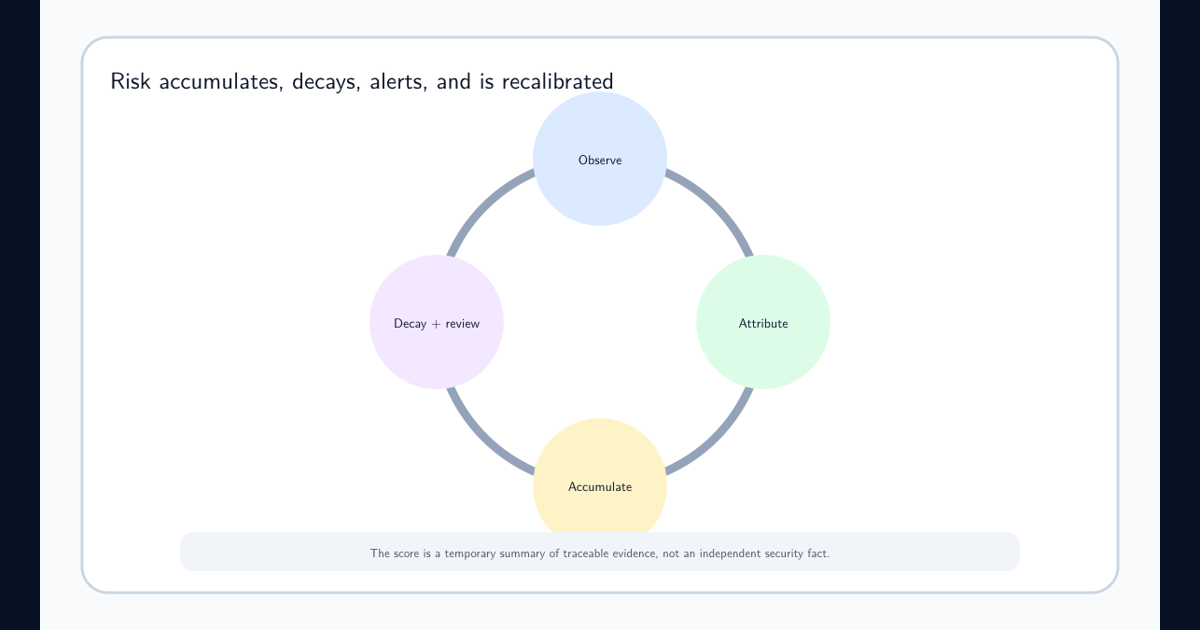
Keep the producer’s record, sensor identity, event and ingest times, source and destination context, operation, outcome, and integrity information. Then record transformations such as parsing, enrichment, correlation, redaction, or risk scoring with their versions.
An analyst may add an assessment that the interaction is inconsistent with authorized exposure. That assessment should not replace the raw fact. A risk score can change when enrichment changes; the authentication attempt should remain reproducible from the original record.
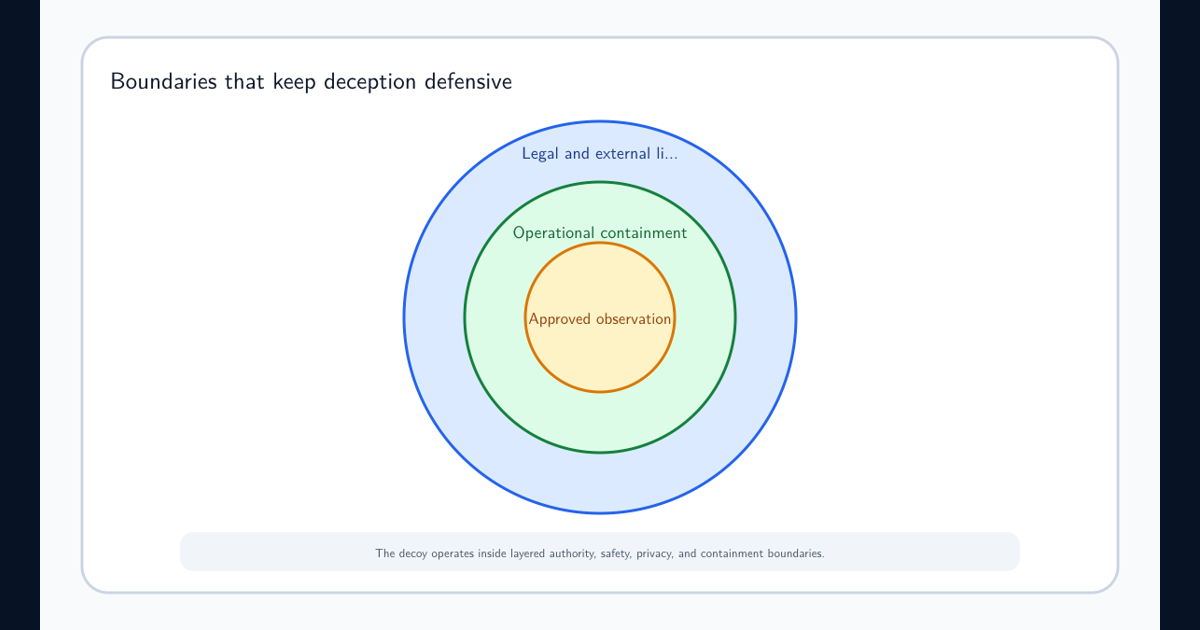
Access controls are part of custody. Deception records may contain employee, customer, researcher, or external network data. Record who viewed, exported, or modified the evidence, and retain only what the stated investigation purpose requires.
Use independent evidence to narrow attribution
A decoy trigger can show that someone or something interacted with the instrument. It rarely identifies the responsible person by itself. Network addresses can be shared or relayed. Service accounts can be used by several workflows. A document preview can fetch content without the viewer intending to open it.
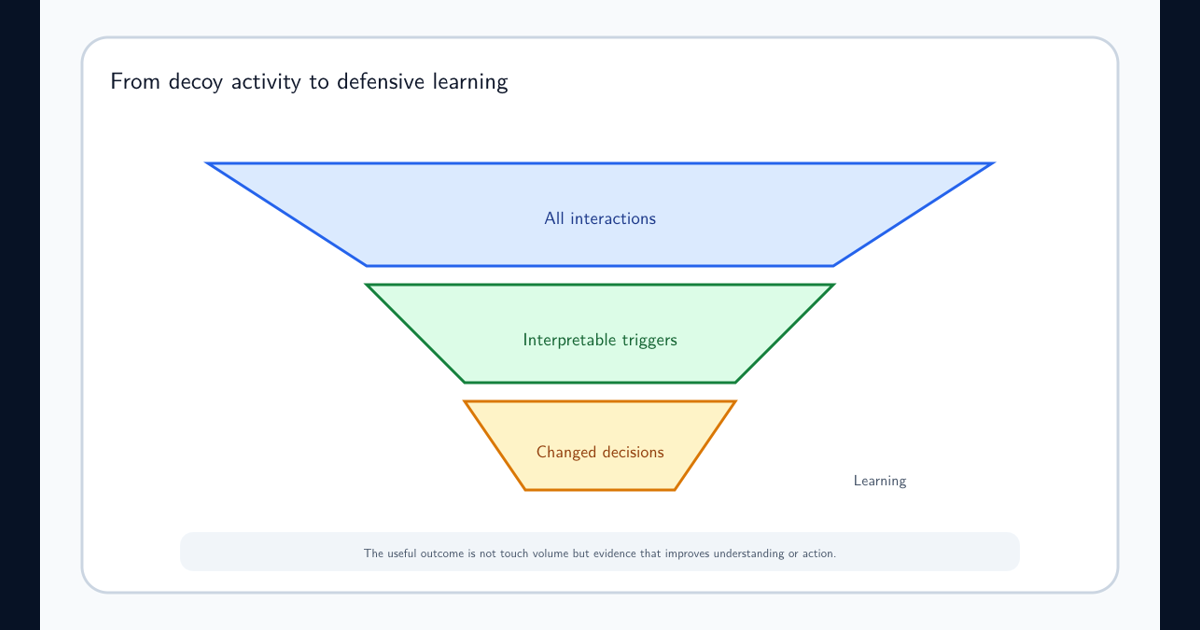
Relate the trigger to access logs, identity sessions, endpoint evidence, work records, and known automation. Record whether each relationship is directly observed or inferred through time and entity resolution. Avoid feeding the deception alert back into a risk model as if it were independent evidence.
The honeytokens and decoy resources design explains why the trigger is unusual. Independent evidence explains who or what may have caused it and which response is justified.
Retire the instrument without erasing its history
Retirement should revoke any capability, disable or update monitoring, remove every known placement, and record unresolved copies. Preserve enough metadata to interpret historical triggers and later discoveries. A retired credential found in an old archive may still reveal access, but its response path and confidence should be clear.
Close the custody record with the reason, owner, time, final exposure review, evidence retention decision, and replacement relationship. Do not reuse the stable identity for a new decoy whose assumptions differ.
Chain of custody is not courtroom theatre added after an incident. It is the practical record that lets a second analyst test whether the decoy was controlled, the trigger was genuine, and the resulting conclusion remained within the evidence.
Frequently asked questions
Why does deception telemetry need chain of custody?
Because a trigger derives meaning from the decoy's controlled history. If placement, exposure, sensor state, or evidence handling cannot be reconstructed, the analyst cannot know whether the original high-confidence assumption still held.