CTI Fundamentals
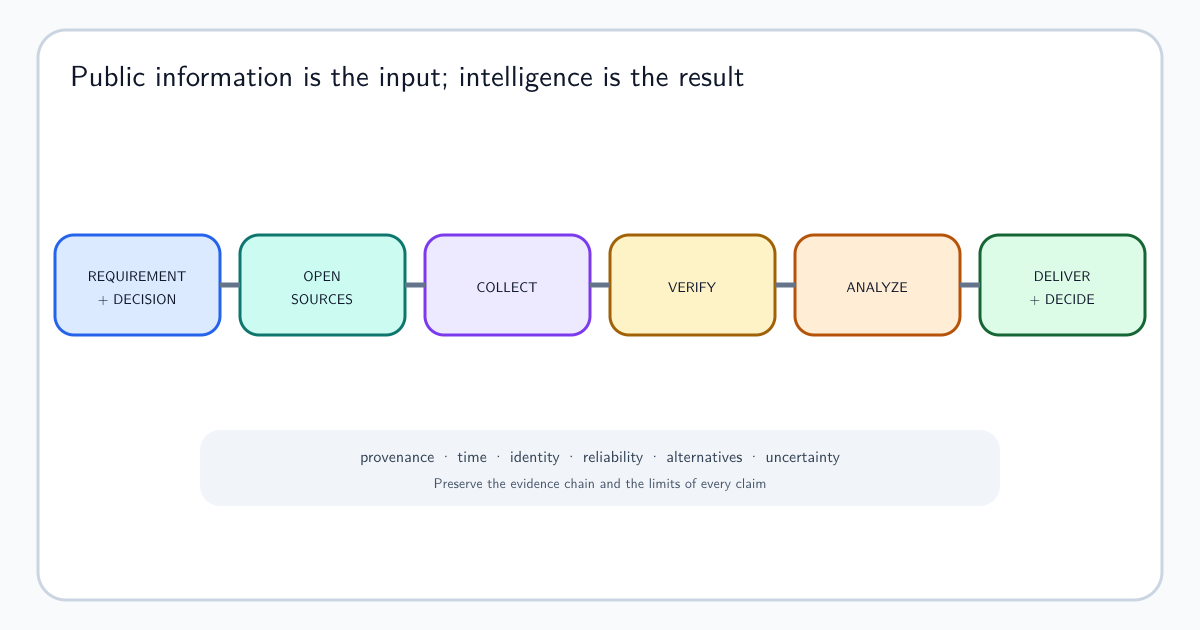
What Is OSINT? Meaning, Process, Sources, and Use Cases
Learn what OSINT means, how open-source intelligence turns public and commercial information into decisions, and how to collect, verify, and use it safely.
Clear, practical explanations of the core concepts, methods, evidence, and applications of Cyber Threat Intelligence.
11 resources
Learn what OSINT means, how open-source intelligence turns public and commercial information into decisions, and how to collect, verify, and use it safely.
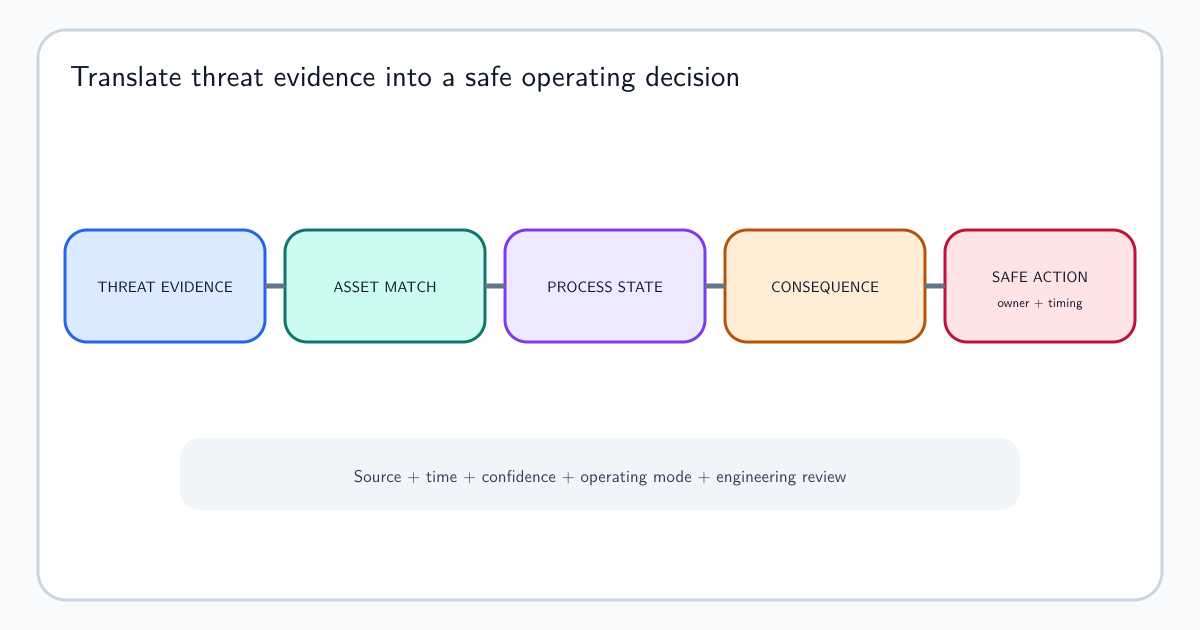
Build OT cyber threat intelligence that connects advisories, adversary behavior, asset and process context, safety, detection, and response.
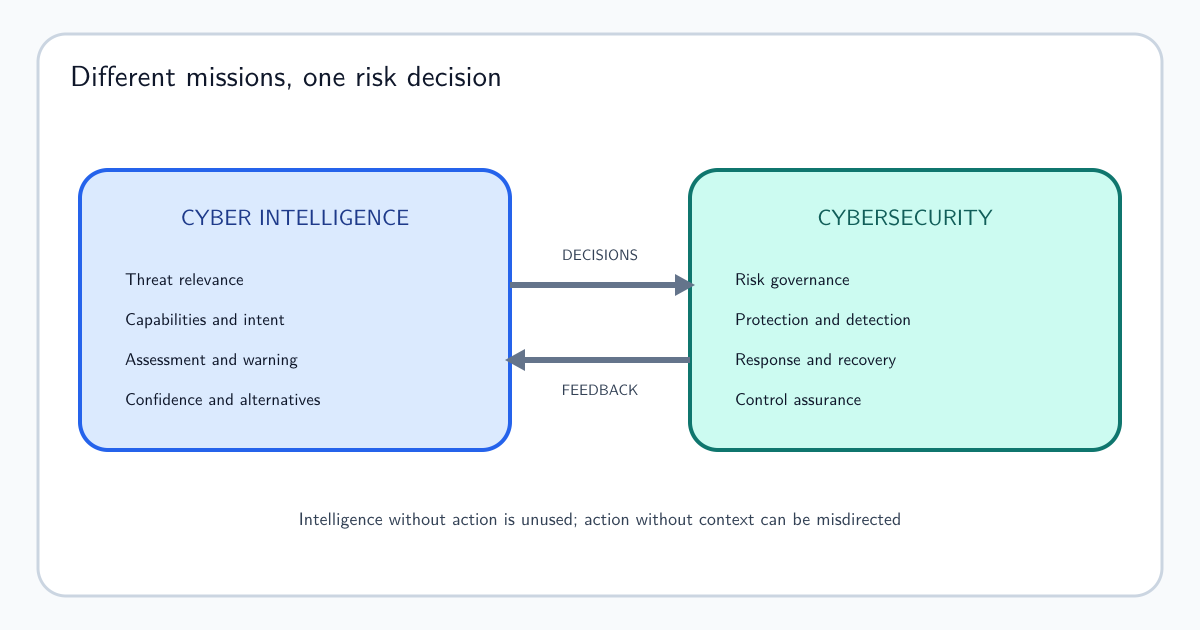
Compare cyber intelligence and cybersecurity by mission, workflow, evidence, outputs, tools, careers, and how both functions work together.
Understand what likelihood, analytic confidence, and business risk each mean so a threat assessment leads to a sound decision instead of a misleading score.
Decide whether a reported threat deserves attention by testing exposure, adversary intent, capability, opportunity, potential consequence, and the value of acting now.
Turn broad threat concerns into prioritized, answerable intelligence requirements with a named consumer, decision, scope, time horizon, collection questions, success criteria, and review tri...
Decide whether a security question belongs to Cyber Threat Intelligence, incident response, or a joint workflow—and design the handoffs that turn external context and incident evidence int...
Decide whether a security problem needs threat intelligence, threat hunting, or both by comparing their questions, evidence, workflows, outputs, staffing, and measures of success.
Choose the right level of Cyber Threat Intelligence by matching tactical, operational, and strategic products to the decision, audience, evidence, time horizon, and action required.
Follow the threat intelligence lifecycle from requirements and collection through processing, analysis, dissemination, feedback, and measurable decisions.