Likelihood, Confidence, and Risk in CTI: How to Read the Judgment Correctly
Understand what likelihood, analytic confidence, and business risk each mean so a threat assessment leads to a sound decision instead of a misleading score.
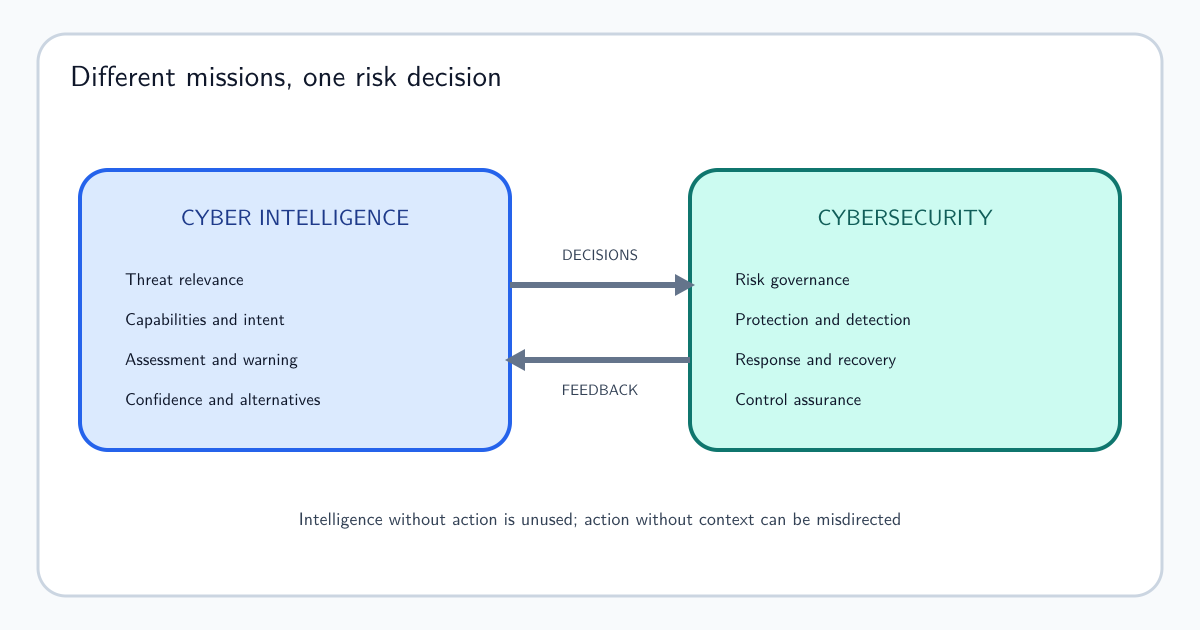
“We assess a ransomware disruption is likely, with low confidence, and could create high operational risk.” Each part says something different. Likelihood estimates whether the event may occur. Confidence expresses how strongly the evidence and reasoning support that estimate. Risk combines the threat with your exposure and potential consequence.
Mixing the three causes poor decisions. A leader may interpret low confidence as low danger, or an analyst may label a severe consequence “highly likely” simply because it is alarming. This guide gives readers a clean way to interpret and challenge an assessment.
Likelihood Is a Claim About an Outcome
A likelihood judgment needs a defined event, subject, and period: “A financially motivated actor is likely to exploit the exposed gateway to gain initial access during the next 30 days.” Without those boundaries, readers cannot know what the term applies to or when to revisit it.
Use an agreed scale, such as remote, unlikely, realistic possibility, likely, and highly likely. Publish the probability bands your organization associates with those words and use them consistently. Do not manufacture precision that the evidence cannot support.
Confidence Is About the Assessment, Not the Threat
Confidence rises when relevant sources are reliable, evidence is corroborated, gaps are understood, assumptions are reasonable, and alternative explanations have been tested. It falls when reporting is indirect, old, contradictory, easy to manipulate, or incomplete in a decision-critical area.
Low confidence does not mean “ignore this.” It tells the decision-maker how much weight to place on the assessment and whether a targeted collection step could improve it. State the reason: “Low confidence because we have one uncorroborated claim and no internal exposure data” is useful; a bare label is not.
Risk Belongs to the Organization
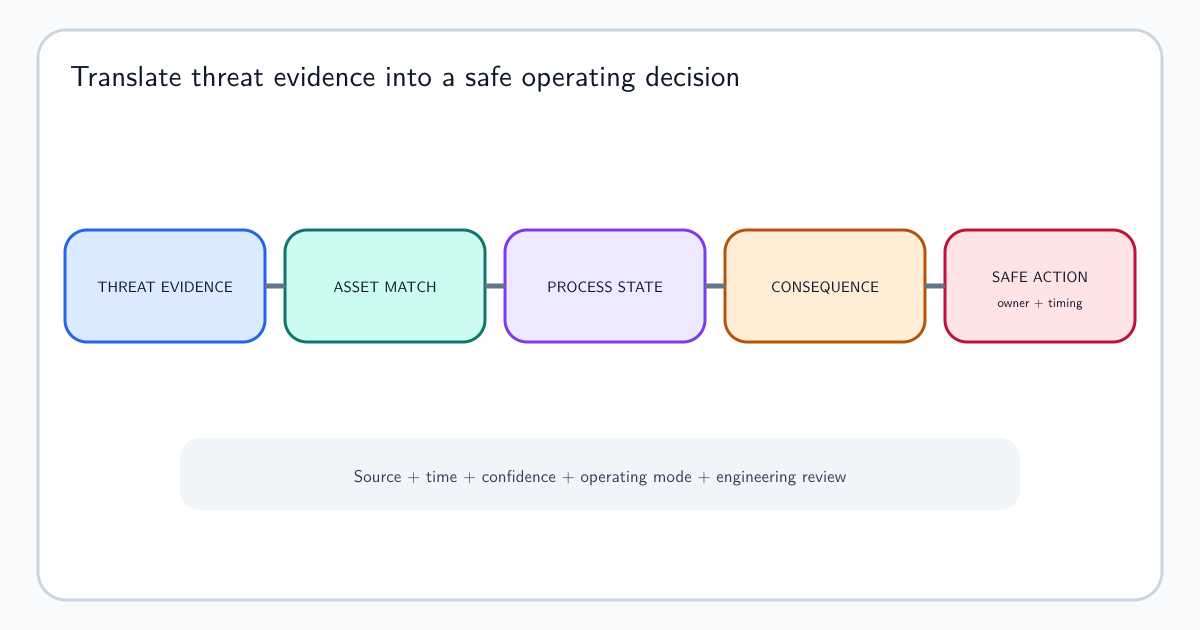
Threat intelligence informs risk; it does not determine risk alone. Risk owners add asset importance, control effectiveness, business dependency, safety, financial exposure, legal obligations, and risk tolerance. Two companies can receive the same threat assessment and make different rational choices.
Keep consequence separate from likelihood. A low-likelihood but intolerable safety event may require contingency planning. A frequently attempted nuisance that controls absorb may warrant monitoring rather than investment. When CTI lacks business-impact evidence, say so and ask the owner instead of guessing.
Read the Complete Sentence
Before acting, check five items:
- What exact outcome is being judged, for whom, and by when?
- Which likelihood term is used, and what range does it mean?
- What confidence level applies, and why?
- Which exposure and consequence assumptions create the risk view?
- What new evidence or date should trigger reassessment?
If one is missing, ask for it. A heat-map color or composite score cannot answer these questions. For guidance on evidence wording and caveats, see How to Write a CTI Report.
Compare Two Decisions
Assessment A: exploitation is likely, confidence is high, but the exposed service is a disposable test system with no sensitive access. The risk owner may isolate and repair it through normal operations.
Assessment B: exploitation is a realistic possibility, confidence is moderate, but the affected system controls a safety-critical process and has weak recovery options. The owner may approve an immediate workaround and contingency plan.
The examples show why likelihood does not rank decisions by itself. The decision depends on both the uncertainty of the event and the consequence of being wrong.
Make Uncertainty Usable
Good CTI does not eliminate uncertainty; it labels the right uncertainty clearly enough to support action. Keep likelihood, confidence, and risk distinct, explain the evidence behind each, and name the conditions that would change the view.
The reader should leave knowing both what the analysts judge and how firmly to rely on it. That is more valuable than a confident-sounding conclusion whose terms nobody shares.
Frequently asked questions
Does high confidence mean an event is highly likely?
No. Confidence describes trust in the assessment; likelihood describes the assessed chance of the event. An unlikely judgment can have high confidence.
Is a likely threat automatically a high risk?
No. Risk also depends on exposure, vulnerability, and consequence. A likely event with trivial impact can be lower risk than a less likely catastrophic event.
Should analysts use percentages for likelihood?
Use percentages only when your organization has defined ranges and users understand their limits. Consistent verbal terms with documented ranges are often easier to defend.
Is unknown the same as low likelihood?
No. Unknown means evidence is insufficient to estimate likelihood responsibly. Treating missing evidence as low likelihood creates false reassurance.
What should trigger an updated judgment?
New exposure data, changed adversary behavior, stronger corroboration, a passed deadline, or evidence that invalidates a key assumption should trigger review.