Tactical, Operational, or Strategic CTI: Which Type Does Your Decision Need?
Choose the right level of Cyber Threat Intelligence by matching tactical, operational, and strategic products to the decision, audience, evidence, time horizon, and action required.
Tactical, operational, and strategic intelligence are not quality grades. They are different answers for different decisions. A SOC analyst deciding whether to isolate a host needs observable evidence now. An incident lead needs to understand the campaign and likely next action. A business leader needs to know whether the threat should change investment, continuity, or market plans.
Choosing the wrong level creates predictable failure: leaders receive pages of indicators, responders receive abstract trend language, and analysts produce one oversized report that nobody can use quickly. This guide helps you select the right level and connect the outputs without duplicating the work.
Start With the Consumer’s Question
Use three questions before choosing a format:
- Who owns the decision? Name the person or function, not a broad audience such as “security.”
- What must they decide or do? Block, investigate, hunt, prepare, fund, accept, or change?
- When does the answer stop being useful? Minutes, days, months, or a planning cycle?
The CTI level follows from these answers. The same ransomware campaign can produce a tactical package for detection, an operational assessment for response, and a strategic scenario for continuity planning.
Choose Tactical CTI for Immediate Technical Action
Tactical CTI answers: What should defenders search for, enrich, detect, block, or investigate now?
Useful tactical content includes indicators with provenance and validity, observable procedures, detection ideas, affected platforms, false-positive considerations, triage steps, and expiration. Its consumers include SOC analysts, incident responders, detection engineers, automated controls, and security tools.
Choose tactical CTI when the action is time-sensitive and technically specific. Do not use it alone when the decision depends on actor intent, campaign scope, business consequence, or longer-term control choices. Indicators decay, shared infrastructure creates false positives, and one artifact rarely explains the intrusion.
Choose Operational CTI for Campaign and Response Decisions
Operational CTI answers: How is the activity working, who or what is being targeted, and what is likely to happen next?
It connects incidents, infrastructure, malware, identities, victimology, access methods, TTPs, timing, and objectives. It supports scoping, hunting, campaign tracking, playbook design, detection priorities, and readiness.
Choose it when a consumer must understand a sequence or relationship rather than one artifact. A strong operational product separates what was observed from what is assessed, states confidence, and shows which evidence would change the campaign or actor hypothesis.
Choose Strategic CTI for Business and Risk Decisions
Strategic CTI answers: Why does this threat matter to the organization, and which longer-term choice should change?
It connects threat drivers, capabilities, targeting, scenarios, and warning to markets, critical services, suppliers, people, technology, controls, and risk tolerance. Consumers include CISOs, executives, boards, enterprise risk, resilience, procurement, and business leaders.
Choose it for investment, market, acquisition, supplier, resilience, or preparedness decisions. Lead with key judgments, likelihood, impact, confidence, warning, and options. Put technical evidence in supporting material unless it changes the choice. The dedicated Strategic CTI guide explains the full method.
Build Connected Products, Not Three Separate Research Efforts
Use one evidence base with traceable transformations:
- tactical sightings update campaign knowledge;
- operational behavior tells detection teams which artifacts and telemetry matter;
- strategic requirements identify which campaigns deserve priority;
- leadership decisions create new collection needs;
- incidents test assumptions at every level.
Keep references between outputs so a leader can reach supporting analysis and a responder can see why a campaign matters. Do not copy every technical artifact into the strategic product or remove so much context from tactical data that defenders cannot judge a match.
The Selection Matrix
Use this shortcut:
| If the reader must decide… | Primary level |
|---|---|
| whether an event should be blocked or investigated | Tactical |
| how an intrusion works and what to search next | Operational |
| whether incidents belong to one campaign | Operational |
| which detection gap matters most | Operational with tactical output |
| whether a threat changes investment or continuity | Strategic |
| whether to enter a market or accept supplier exposure | Strategic |
When several decisions exist, produce several linked outputs. The right level is the one that lets the intended consumer act without translating the report themselves.
Before You Publish
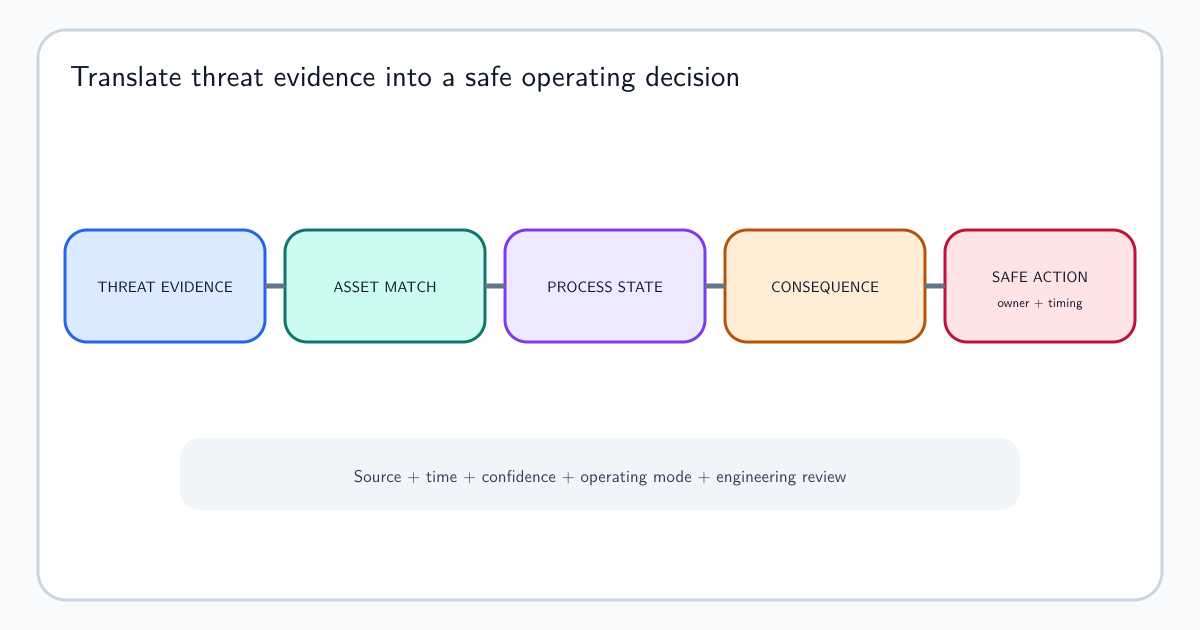
Confirm that the product names its consumer, decision, deadline, scope, and expected action. Check that technical detail is sufficient but not misplaced, campaign claims are supported, business implications use internal context, and confidence sits beside each judgment.
If the answer does not fit any level clearly, the requirement may contain several questions. Split it before adding more pages. For the complete foundation, return to What Is Cyber Threat Intelligence?.
Frequently asked questions
Can one intelligence product serve all three CTI levels?
A shared evidence base can support all three levels, but one product rarely serves every audience well. Create connected outputs that give each consumer the detail, timing, language, and implications needed for their decision.
Is tactical intelligence only a list of IOCs?
No. It can include observable procedures, detection logic, enrichment, validity, confidence, and response guidance. A bare list of values is threat data until context makes it usable.
Who normally uses operational threat intelligence?
CTI analysts, incident responders, threat hunters, detection engineers, SOC leaders, and security managers use it to understand campaigns, adversary behavior, targeting, likely next actions, and defensive gaps.
Does strategic CTI need technical evidence?
Yes. Strategic judgments still need defensible evidence, but technical details are summarized or placed in supporting material unless they change the leadership decision.
How do I choose the correct CTI level?
Start with who must decide what and by when. Immediate technical action points toward tactical CTI, campaign and response decisions toward operational CTI, and business risk or investment choices toward strategic CTI.