Exception, Suppression, and Allowlist Governance
Govern exceptions, suppressions, and allowlists as expiring changes to detection scope, with evidence, ownership, review, and visible residual risk.
Three similar controls change different parts of the service
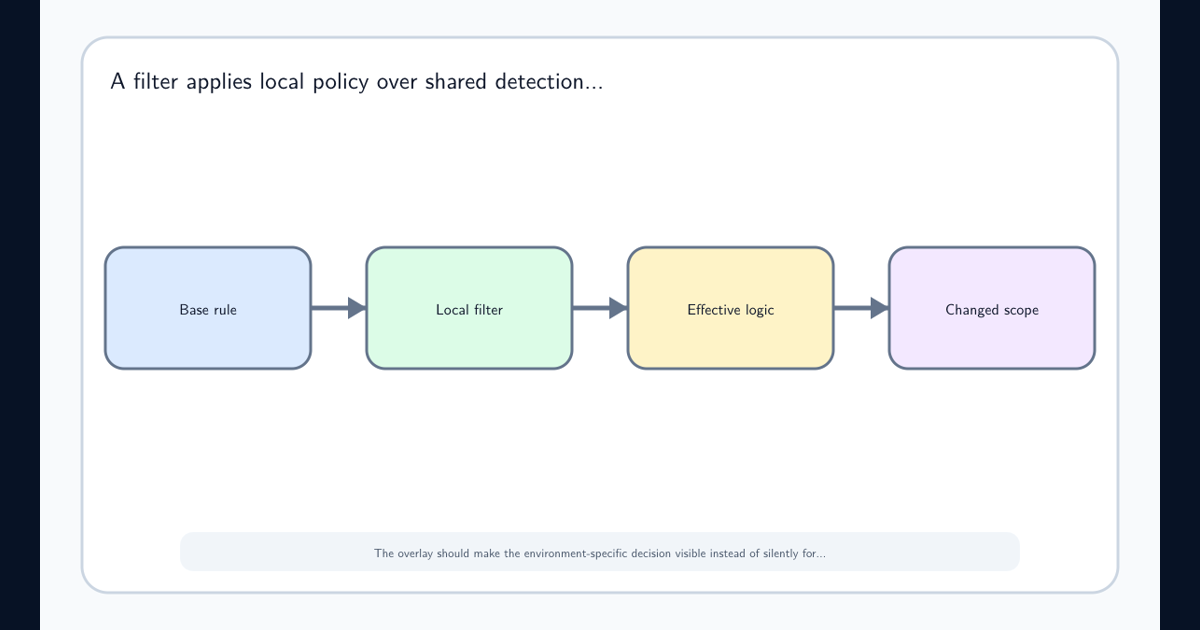
An exception changes evaluation for a defined condition, such as excluding an approved service identity from one behavioral hypothesis. A suppression changes notification, often by delaying, grouping, or withholding repeated alerts. An allowlist records entities or patterns treated as expected within a stated context.
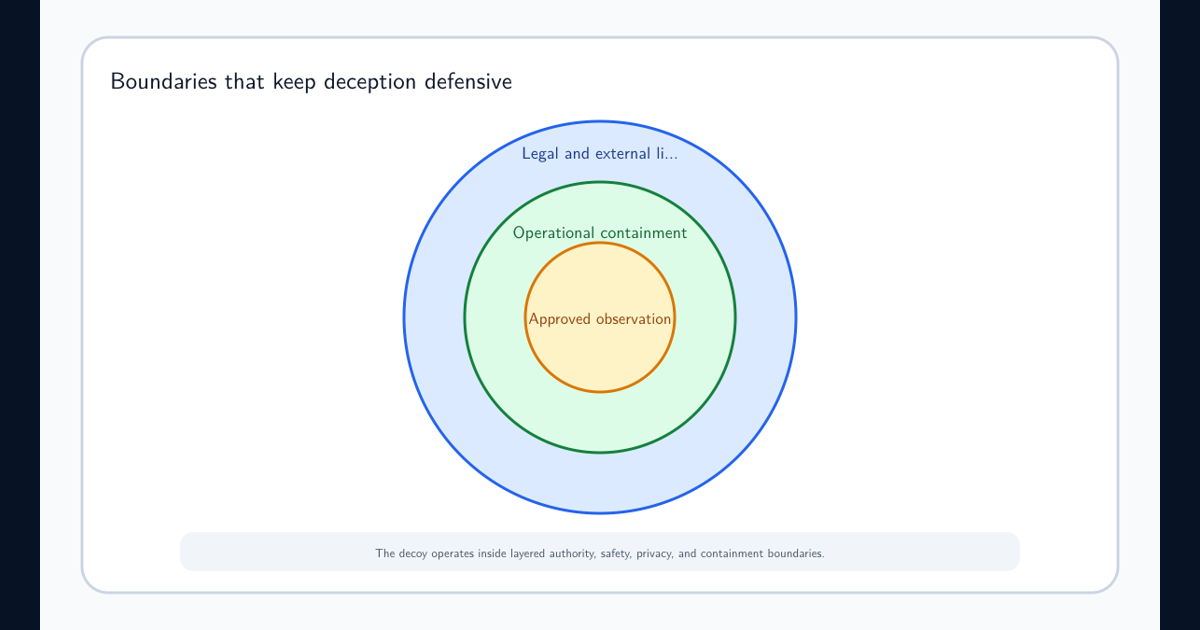
These are not declarations that activity is harmless forever. They are policy decisions made from current evidence. A trusted tool can be abused, an approved identity can be compromised, and a notification suppressed for volume can still represent real risk.
Name which layer changes. Otherwise a routing decision can silently become a gap in observation, or an analytic exclusion can be mistaken for harmless alert deduplication.
A request needs evidence and the narrowest predicate
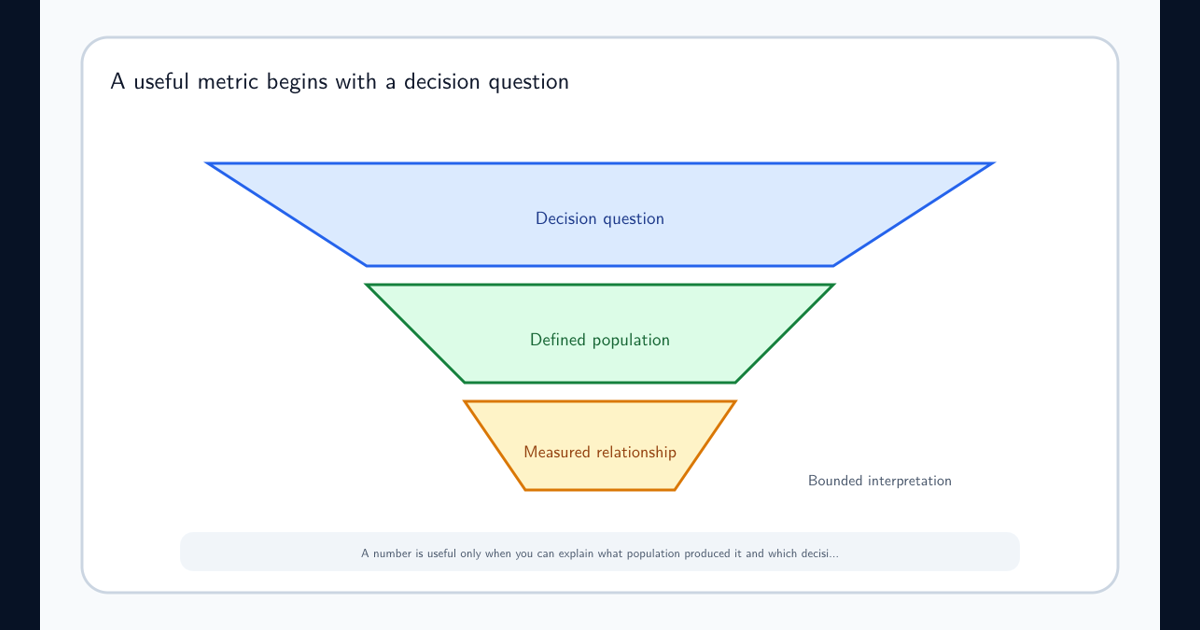
Begin with the observed friction: which records matched, why they represent expected behavior, who authorized that behavior, how often it occurs, and which decision is being impaired. “Too noisy” is a symptom, not a rationale.
Express the condition with the smallest stable attributes. Broad user, domain, process-name, or IP exclusions are easy to create and easy for an adversary to inherit. Combine role, resource, operation, environment, time, and provenance where they truly distinguish the approved case.
Test the predicate against plausible abuse and neighboring legitimate activity in theory. The question is what the control would also hide, not merely whether it removes the current examples.
Approval accepts residual risk for a limited time
The record should name requester, owner, approver, rationale, affected analytic and population, evidence, alternative controls, residual risk, creation time, review date, and expiry. Higher-consequence gaps deserve stronger approval.
An expiry is a forced decision point, not automatic renewal. Conditions may have changed: a migration may be complete, the source may expose better fields, or the supposedly stable process may now run under a different identity.
Make the coverage impact visible to intelligence and operations consumers. A map that still presents the excluded behavior as fully covered misrepresents the accepted risk.
Monitoring must include what the control hides
Track match volume before and after the control, affected entities, unexpected growth, source changes, and attempts that nearly satisfy the predicate. Preserve a shadow count or sampled evidence where policy and privacy permit so the excluded population does not become unknowable.
Alert on scope drift. An allowlisted service account appearing in a new environment or using a new operation is evidence that the original rationale may no longer apply. A sudden rise in suppressed results can indicate abuse or upstream change.
The control itself needs versioning and provenance. Investigators should be able to determine whether an event was evaluated, suppressed, excluded, or never observed.
Removal should restore coverage without surprise
Before expiry or removal, estimate the alert and workflow effect. If the underlying condition persists, repair the analytic, enrichment, process, or routing rather than renewing by inertia. Notify owners when restored visibility changes their operating assumptions.
Separate facts from assessment. Facts show which activity met the control. The assessment says why it was expected and whether residual risk remains acceptable. Uncertainty includes activity that the chosen attributes cannot distinguish.
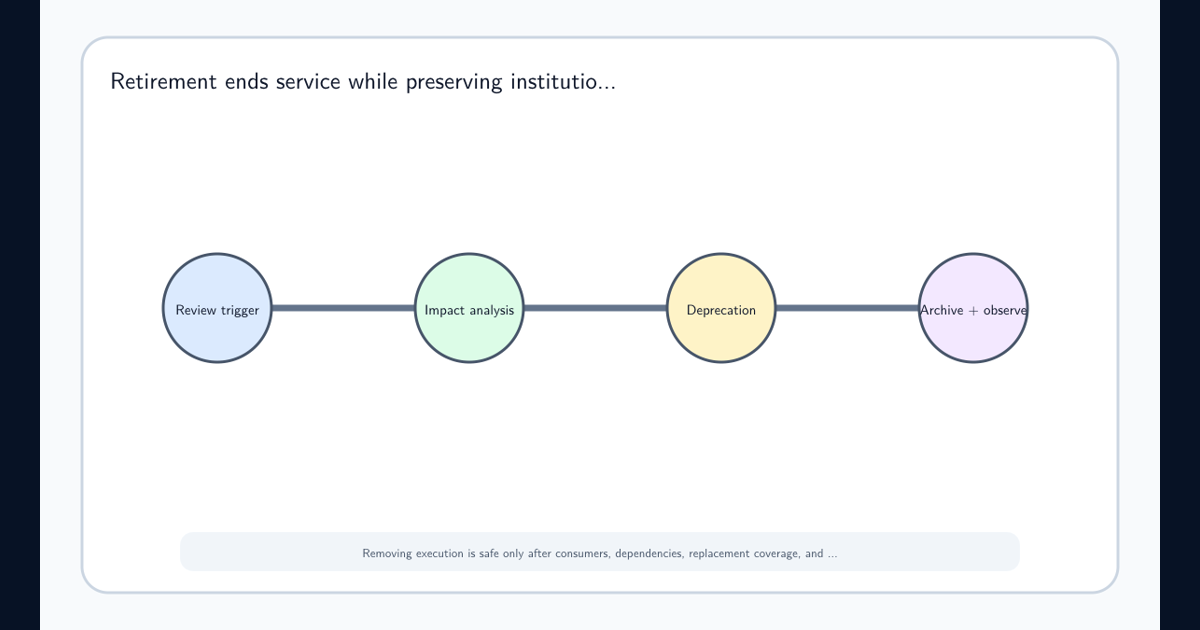
When a control no longer has a valid purpose, remove it through the same governed lifecycle used for detection retirement, preserving the decision record for later investigations.
Frequently asked questions
What is the difference between an exception, suppression, and allowlist?
An exception changes how defined activity is evaluated, a suppression withholds or combines notifications under stated conditions, and an allowlist identifies trusted entities or patterns. All three can hide threats and therefore require bounded scope and lifecycle governance.