Passive OT Network Monitoring and Protocol Semantics
Interpret passive OT network evidence through protocol operations, asset roles, direction, operating mode, and sensor position without confusing an observed request with a completed physical effect.
Passive means observing without initiating traffic
Many OT environments avoid unplanned probing because some devices are fragile, safety-critical, or certified for tightly controlled communication. Passive monitoring observes traffic crossing a network point without sending discovery or interrogation requests to the monitored equipment.
This reduces the risk introduced by the sensor, but it also limits what the sensor can learn. It sees only traffic that crosses its position. Devices communicating on another switch, serial link, local bus, or encrypted tunnel may be absent. Silence can mean no activity or no visibility.
Document the tap or span position, covered zones, expected directions, packet loss, time source, protocol support, and unavailable paths. Sensor placement is part of every conclusion drawn from its records.
Protocol semantics turn packets into engineering actions
An address pair and byte count reveal communication, but not whether one device read a measurement, wrote a setpoint, changed mode, acknowledged an alarm, or transferred logic. A protocol-aware parser interprets function codes, objects, addresses, flags, and responses according to the industrial protocol.
Meaning also depends on direction and role. A workstation reading a controller is different from a controller issuing a command to a field device. Asset inventory should describe expected roles without becoming unquestioned truth; addresses can be reused, gateways can represent downstream devices, and inventory can lag plant change.
Preserve the source packet or a defensible route to it, parser version, protocol operation, raw values needed for verification, and any ambiguity. Normalized labels should not erase provider or protocol distinctions that affect consequence.
A request, response, and physical result are separate facts
A network request can show that a source attempted an operation. A protocol response may show acceptance, rejection, or an error. Neither necessarily proves that the physical process changed as expected. Controllers can queue actions, enforce interlocks, or accept configuration that takes effect later.
Use precise language: request observed, response observed, operation accepted according to protocol, controller state changed, or process variable changed. Each statement requires a different source.
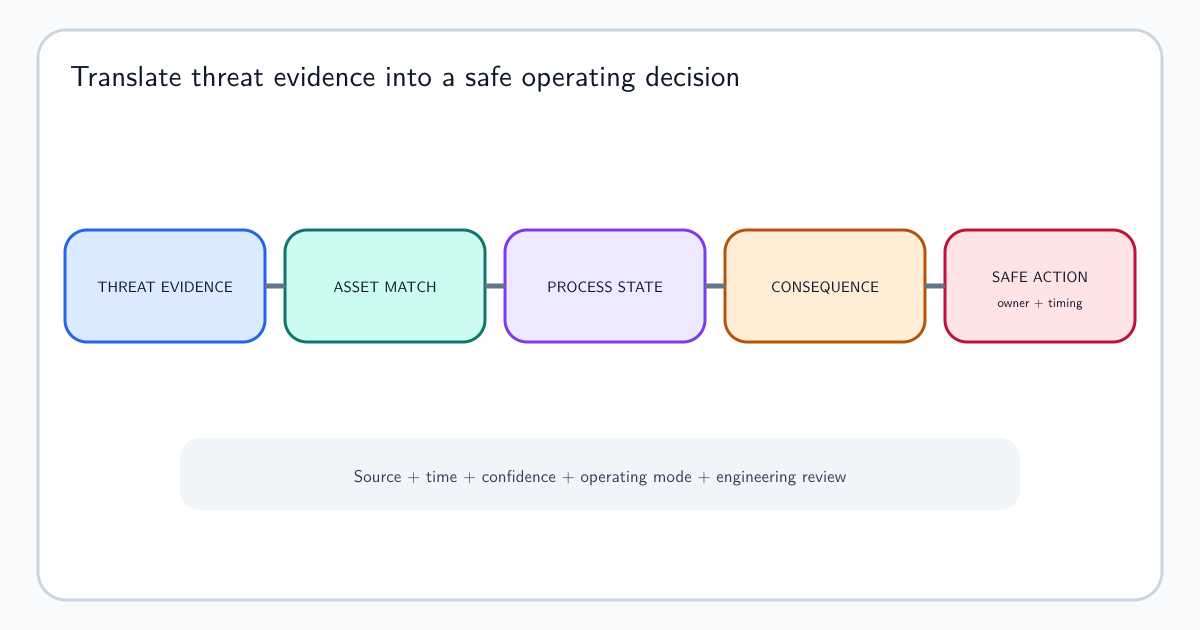
When consequence matters, relate network evidence to controller audit, engineering project history, historian values, alarm state, and operator context. Preserve time uncertainty because these systems may use different clocks and sampling intervals.
Expected relationships are more useful than universal rarity
OT communication is often stable, but “new” can mean newly visible rather than newly created. A sensor deployment, routing change, maintenance device, or inventory correction can reveal an old relationship.
Build expectations around asset roles, zones, protocol operations, direction, operating mode, and approved work. A read from a historian to a controller may be common. A logic write from that same source may violate its role even if the address is familiar.
Test gateways, redundant paths, failover, maintenance windows, broadcast behavior, retries, and address changes. An allowlist of known pairs can hide misuse of an authorized workstation. The behavior and operation remain necessary context.
Report the observation boundary with the alert
An investigation-ready result identifies the monitoring point, source and target asset roles, protocol operation and response, event time and clock source, process mode, relevant work context, parser version, and missing evidence. It should say whether physical consequence is observed, inferred, or unknown.
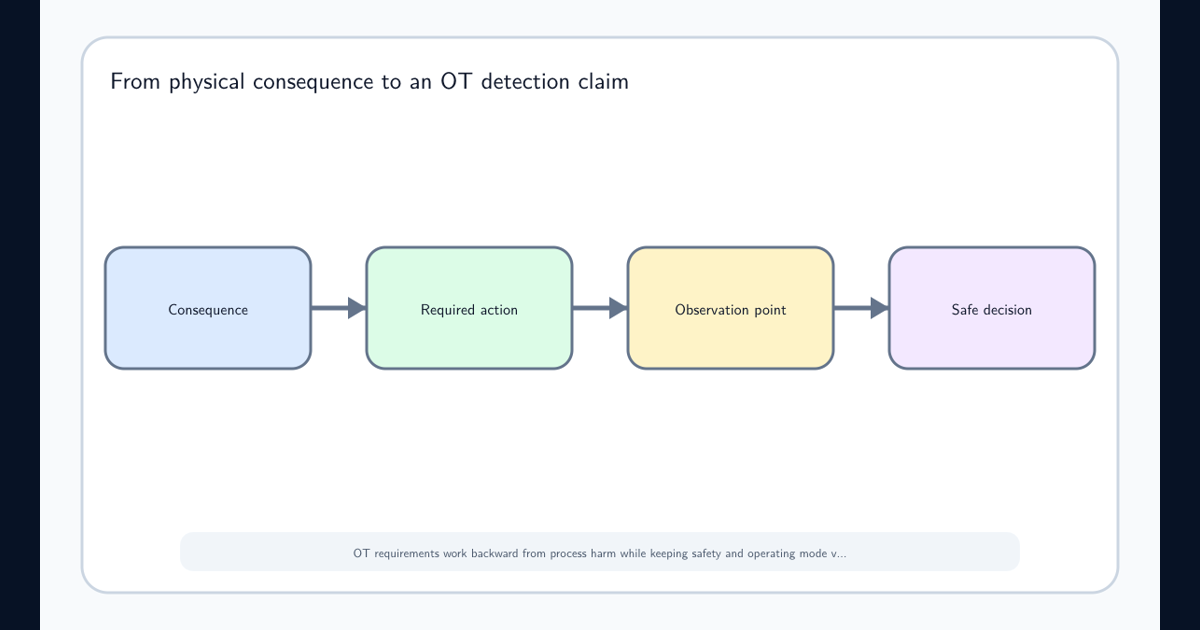
Connect the result to the OT detection requirements that define the equipment, mode, decision, and safe response. Use OT cyber threat intelligence to relate those observations to current advisories, adversary behavior, local applicability, and collection gaps. Without that relationship, protocol detail can overwhelm the analyst while leaving the operational question unanswered.
Passive monitoring is valuable because it can observe meaningful actions without interacting with equipment. Its strength comes from disciplined protocol interpretation and explicit visibility limits, not from pretending the network is the entire process.
Frequently asked questions
What can passive OT monitoring prove?
It can prove what the monitoring point observed on the network, sometimes including protocol operation and response. It may not prove who initiated the action, whether the device accepted it, or how the physical process changed.