Engineering Workstation and Remote Access Detection
Relate engineers, vendor access, jump hosts, workstations, privileged sessions, controller actions, and work authorization so OT remote access can be interpreted without treating identity success as legitimacy.
Remote access is a chain of delegated trust
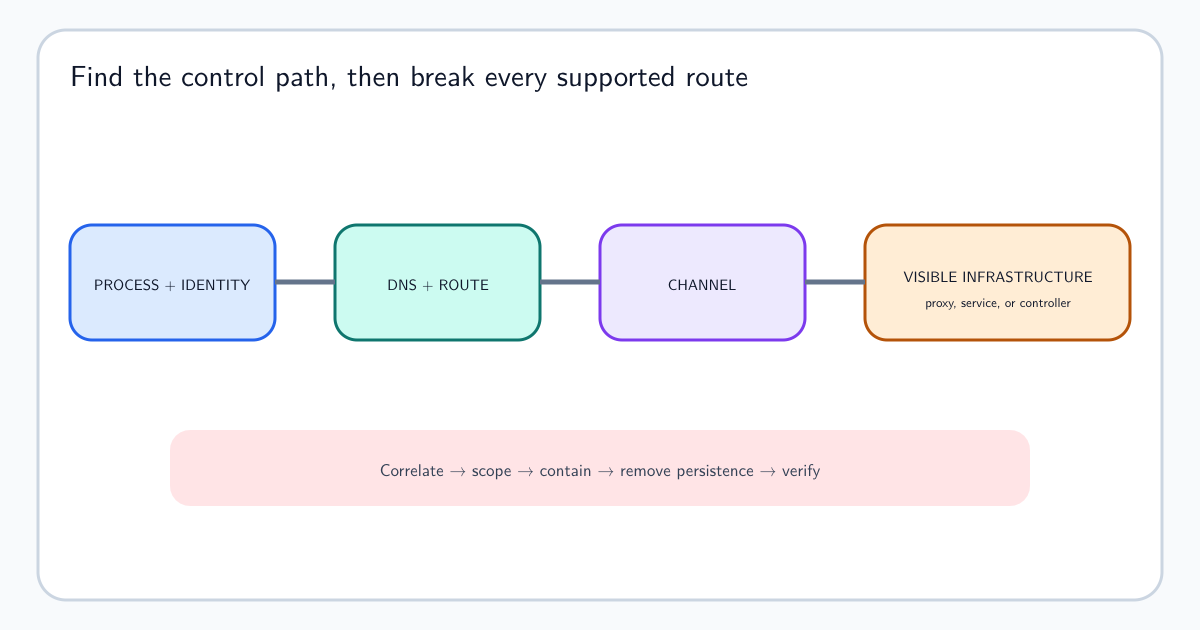
A vendor engineer signs into a remote-access service, reaches a jump host, opens an engineering workstation session, and changes controller logic. The controller may record only the workstation. The gateway may record only the vendor account. Neither source alone identifies the complete responsible path.
Model the human, employer or vendor, authentication, remote session, jump host, engineering workstation, application, privileged credential, target asset, and work authorization as separate entities. Record which system vouches for each handoff.
This prevents the immediate actor from replacing the initiating principal. It also exposes shared accounts, session brokering, credential injection, and local controller identities that would otherwise collapse several people into one technical user.
Approval has scope, time, and purpose
A valid work order should identify the organization, named or accountable personnel, time window, assets or zone, intended operations, change reference, approver, and emergency path. “Vendor maintenance” is too broad to explain why a logic download reached an unrelated controller at night.
Join the work context as event-time evidence. A ticket approved later should not make an earlier action appear preauthorized. An open-ended vendor account should not inherit every historical approval associated with that company.
Access outside the approved route, asset set, operation, or time can be relevant even when authentication succeeds. Report the deviation rather than declaring the engineer malicious. Incomplete scheduling and emergency work remain plausible alternatives.
Engineering actions need richer evidence than a login
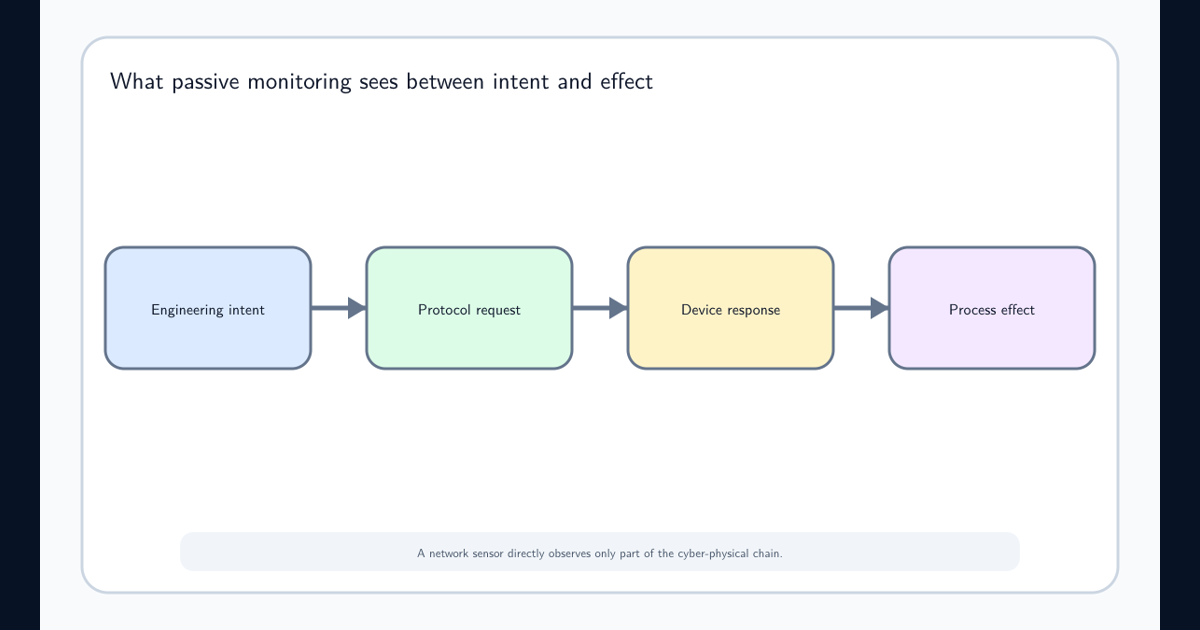
Remote login events can show entry to the path. They cannot show which project was opened, which controller was targeted, which logic changed, or whether the device accepted it. Relate session records to application audit, file or project revisions, protocol operations, controller state, and process response.
Stable session identifiers are ideal, but many environments lack them across products. Time, user, host, source, and target can support an inferred relation if uncertainty is stated. Concurrent engineers, shared workstations, and queued changes make time-only joins dangerous.
Preserve before-and-after project hashes or versions where available. A known project name is not enough; an attacker can modify content while retaining the label.
Watch for bypass and unexpected reach
High-value signals include direct access that bypasses the approved jump host, a workstation reaching a new zone, vendor identity use outside a work window, local accounts used after remote entry, changes to remote-access policy, and engineering operations inconsistent with the ticket.
Rarity alone is weak. A disaster-recovery exercise or emergency fault can create unusual routes. Strength grows when independent observations agree: no approved work, unexpected route, new target, consequential protocol operation, and project mismatch.
Asset inventory and network topology must be time-aware. A path first seen by the sensor may have existed before monitoring. Confirm changes with network and process owners before interpreting discovery as creation.
Response must protect access and process stability
A suspected session may justify preserving records, preventing new remote sessions, contacting the work approver, or requiring an operator to verify current process state. Terminating an active session or blocking a path can interrupt corrective work or leave equipment in an unsafe condition.
The result should carry the identity chain, target assets, observed operations, process mode, authorization comparison, current session state, and evidence limits. The qualified process owner decides whether and how to intervene in the physical operation.
The safe validation and response principle applies directly: contain the account or information-system path only when the expected physical consequences and recovery route are understood. Remote access detection improves a joint decision; it does not transfer process authority to the security platform.
Frequently asked questions
Why is a successful vendor login insufficient evidence of approved OT work?
Authentication shows that a credential satisfied a control. Approval also depends on the person, work order, time, route, target assets, operations, and process state—and the credential itself may be compromised.