Collaboration Sharing and Guest Access Detection
Reason about external sharing, guest access, links, invitations, and delegated collaboration authority through resource sensitivity, audience, lifetime, and observed use.
Sharing is an authorization change before it is data transfer
A user creates an anonymous link to a document. No file may have left the service yet, but the resource’s access boundary has changed. A guest invitation similarly creates a path that can be exercised later.
Separate exposure from use. Exposure is the new permission, link, guest relationship, or policy that makes access possible. Use is the later view, download, edit, synchronization, or onward share. Both matter, but they answer different questions and may require different urgency.
Describe the resource, owner, sensitivity, sharing method, audience, permission, expiration, requesting actor, approving policy, and tenant relationship. A generic “file shared” event hides the state transition the consumer needs to understand.
Audience identity determines what can be verified
A named guest, partner tenant, anyone-with-link audience, group, and federated identity provide different accountability. An anonymous link may carry a secret token in the URL but no durable viewer identity. A guest account can be attributable while still controlled by an external organization.
Preserve invitation identity, redemption identity, tenant, domain, authentication method, device or session context, and changes over time. The invited address may differ from the identity that redeems the invitation. Group membership can expand the audience after the original share.
Do not treat a familiar domain as trusted by itself. Partners can be compromised, consumer accounts can use corporate-looking names, and domain ownership can change. Trust comes from a governed relationship and current authorization, not string resemblance.
Resource context turns sharing into a security question
A public marketing asset and an unreleased acquisition document should not produce the same decision. Add event-time owner, classification, project, legal hold, regulated-data marker, and business purpose. State how current enrichment differs from the resource state when sharing occurred.
Watch for scope changes: folder or site sharing can expose future content, inherited permissions can reach many objects, and synchronization can copy data outside later revocation. A single API event may understate the effective audience.
Baselines can help identify new external domains or unusual volumes, but unusual does not mean unauthorized. The resource and approval relationship should remain visible beside rarity.
Follow durable cloud transfer paths
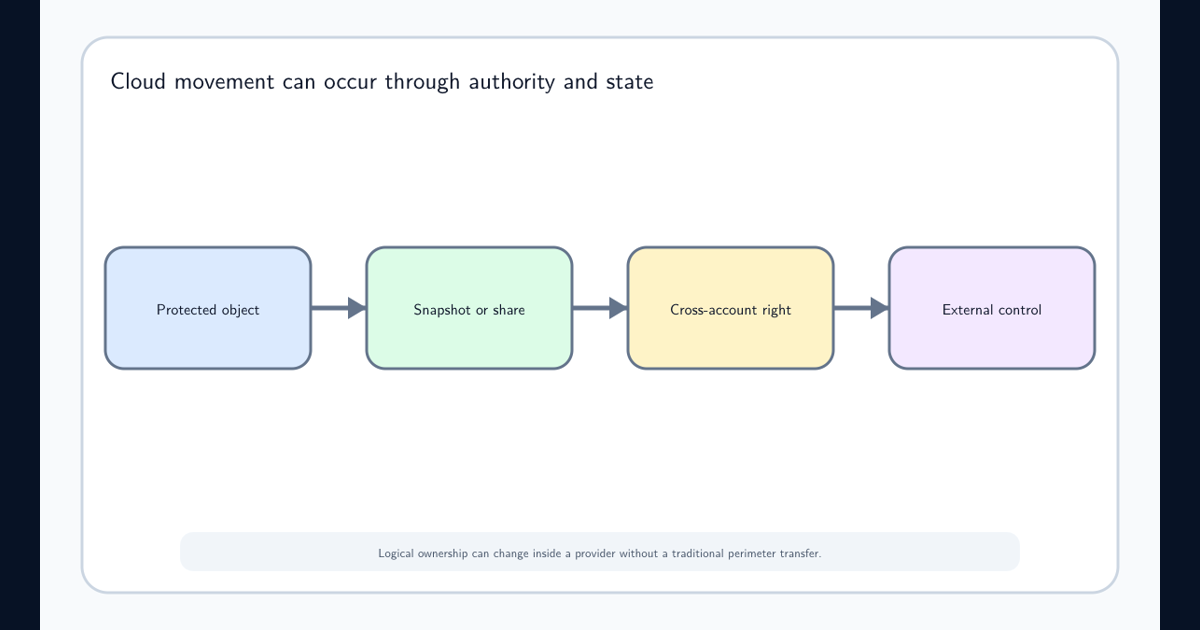
Collaboration platforms can create links, copies, exports, synchronized folders, guest memberships, and cross-tenant relationships. Revoking one link may not remove downloaded copies or another grant created from the same object.
Relate collaboration evidence to cloud sharing and cross-account transfer. Preserve object identity across rename, copy, snapshot, and export where the provider exposes it. Distinguish a permission inherited from a parent from one set directly on the object.
Sequence can strengthen concern: classification lowered, anonymous link created, bulk access observed, and link expiration extended. Each event is dual-use; their relationship to ownership and approval changes the assessment.
Respond to exposure, identity, and copies as separate problems
Removing a guest does not revoke an anonymous link. Disabling a link does not erase a downloaded copy. Restoring policy does not necessarily remove external synchronization. The response must identify every authority path and the data that may already have moved.
An alert should include the exact resource and parent scope, sensitivity, actor, audience, permission, expiration, policy evaluation, approval context, later use, and known copies or exports. State whether access was possible, observed, or confirmed to transfer content.
The strongest conclusion is rarely “data exfiltrated.” It is a bounded statement about a changed access boundary and any observed exercise. That precision helps the consumer revoke the right paths, assess exposure, and contact the right resource owner.
Frequently asked questions
Is every anonymous sharing link a security incident?
No. Some organizations permit them for defined content and periods. The detection question is whether the resource, audience, permission, lifetime, owner, and use fit the approved collaboration purpose.