Cyber Strategic Warning: Intelligence Requirements and Indicators
Build decision-led intelligence requirements, indicators, collection plans, thresholds, and warning judgments for cyber crisis and conflict.
Define warning by the decision it enables
Cyber strategic warning is an assessed notification that an important threat, opportunity, or operating condition may be changing, delivered early enough to support action. Its value is not perfect prediction. It creates time to harden, hunt, coordinate, protect continuity, adjust posture, brief partners, or reconsider an operation. A technically accurate report that arrives after the decision deadline is history, not warning.
Start with the decision owner, decision, deadline, and available actions. Ask what uncertainty prevents a choice. Convert that uncertainty into a bounded intelligence requirement. “What will Russia do?” is not answerable. “Is the observed access to regional energy operators shifting from collection toward disruption during the next 30 days, and should the sector raise defensive posture?” identifies actor, behavior, target, time horizon, and decision.
Separate likelihood, impact, and urgency. A low-likelihood but catastrophic scenario may justify low-regret preparation without a high-confidence attack prediction. State what actions are reversible and what costs they impose. Warning fails when analysts wait for certainty, when leaders cannot see the consequence of delay, or when every alert is communicated at the same priority.
Build indicators from competing hypotheses
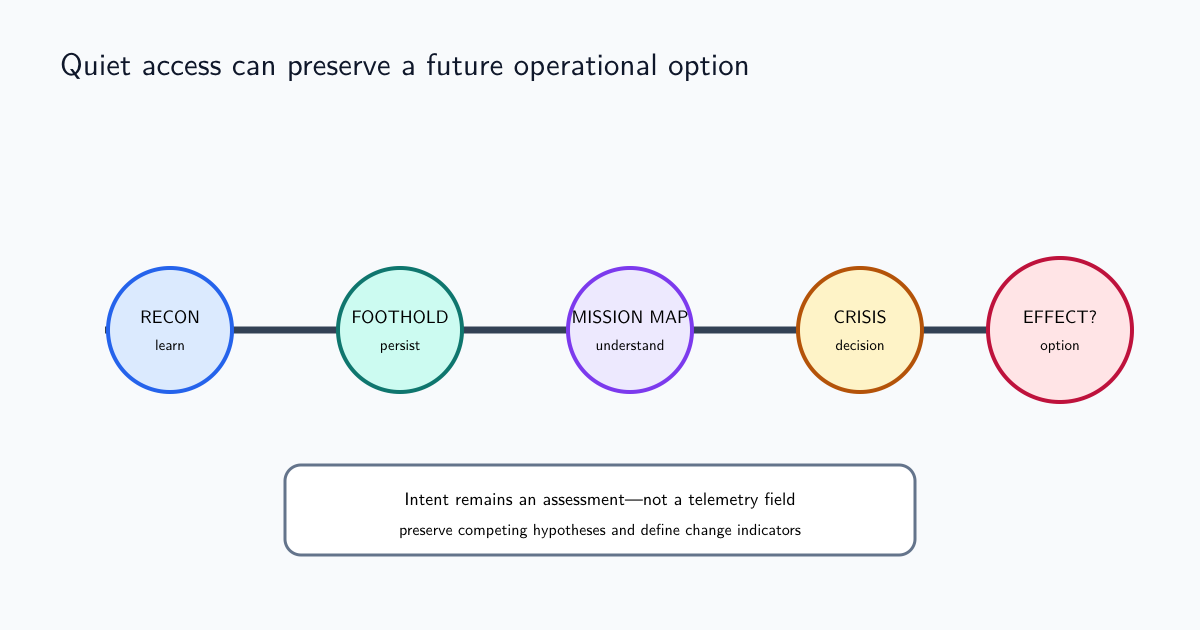
An observable is collectable: a login, route change, deployment, procurement, public statement, targeting shift, malware capability, or military movement. An indicator is the analytic meaning assigned to one or more observations relative to a hypothesis. Cyber pre-positioning provides a useful warning problem because the same increase in scanning could indicate attack preparation, routine research, a new vulnerability, or unrelated criminal activity. Context creates value.
Write a leading hypothesis and at least one credible alternative. For each, list expected observations, observations that weaken it, earliest collection point, normal baseline, threshold, time window, and possible deception. Combine technical, organizational, geopolitical, economic, and informational evidence. Indicators closer to leadership intent may be scarce; indicators of capability and opportunity are often more visible but less diagnostic.
Use an indicator matrix, not an unweighted checklist. Record whether indicators are independent or derive from the same underlying report. Define escalation thresholds before crisis but preserve analyst judgment: adversaries adapt, and a rigid count can create false precision. A strong warning explains the pattern, missing evidence, and why the alternative interpretations are currently less persuasive.
Design a collection matrix that exposes blind spots
For each indicator, specify the observable, source, collection method, owner, cadence, latency, retention, reliability, access restrictions, and fallback. Include internal security telemetry, incident evidence, malware and infrastructure analysis, vendor reporting, partner intelligence, vulnerability data, geopolitical events, military posture, procurement, policy statements, and target-system expertise. Collection must remain lawful, authorized, proportionate, and source-aware.
Grade source reliability separately from information credibility. Three reports repeating one vendor claim are one evidence lineage, not three independent confirmations. Preserve provenance and quotation boundaries. The NIST cyber threat information-sharing guide emphasizes context and metadata for indicators, including provenance, handling, interpretation, and relationships. Those fields are essential when warning travels across organizations.
Make blind spots visible. Missing identity logs, short edge-device retention, unavailable partner telemetry, collection delay, and uncertain normal behavior all constrain confidence. Link gaps to an action: enable a source, negotiate sharing, deploy a temporary sensor, interview an operator, or state that the question cannot be resolved before the deadline. Security telemetry quality determines what the analyst can responsibly claim.
Set thresholds and escalation paths before crisis
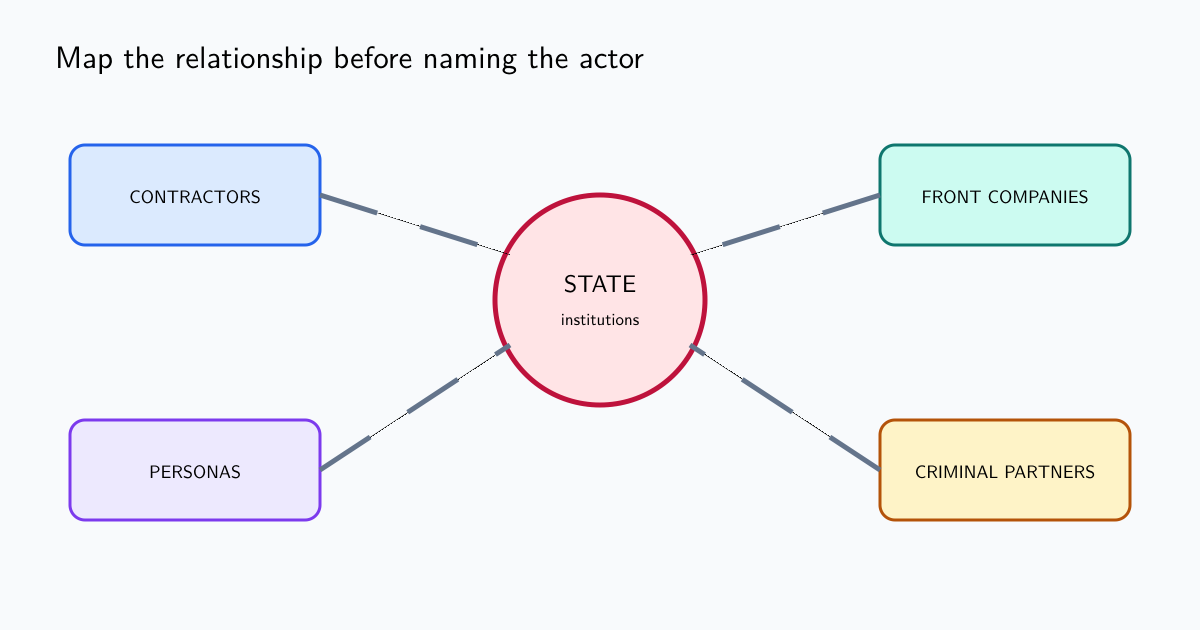
Define posture bands such as routine, concerned, heightened, and crisis, but attach observable criteria and authorized actions. A threshold might combine confirmed access to a priority service, movement toward cyber key terrain, geopolitical escalation, and loss of visibility. Avoid triggering solely on a country label or a high-volume indicator feed. Each band should identify who is notified, who decides, what is logged, and when the posture expires.
Select low-regret actions for ambiguous warning: validate backups, increase retention, confirm contacts, review privileged access, hunt a bounded hypothesis, and rehearse manual operation. More disruptive actions—isolating services, publicly attributing activity, exposing collection, or conducting counter-operations—require additional authority and consequence review. Warning supports the decision; it does not silently authorize it.
The UK NCSC’s 2026 severe cyber threat guidance emphasizes pre-established information-sharing governance, classification rules, accountable release decisions, rapid processes, and contingency arrangements. Build those mechanisms before a crisis compresses time and increases the cost of uncertainty.
Write a warning judgment leaders can use
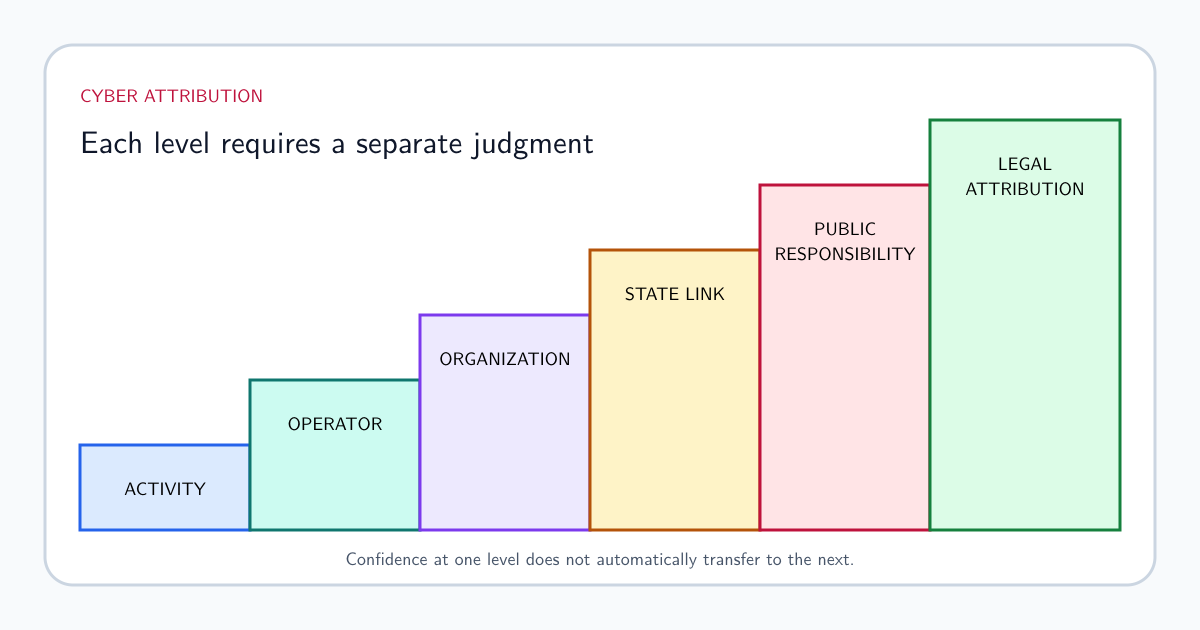
Lead with the assessed change and implication: “We assess with moderate confidence that the actor is expanding access from collection systems toward regional service-control dependencies; this increases its ability to disrupt restoration during the next crisis.” Then state evidence, time horizon, assumptions, alternatives, gaps, expected impact, and indicators that would raise or lower concern. Separate facts from inference and external attribution from your own cyber attribution.
Use calibrated probability language consistently. Confidence describes evidence quality and analytic agreement, not event likelihood. A high-impact event can remain unlikely; a likely event can have modest consequence. Do not conceal uncertainty in a color. Explain the causal model and specify why action is or is not warranted now.
End with decisions, not generic recommendations. Identify actions available today, their cost and reversibility, the latest useful decision time, and the next update trigger. Tailor detail: operators need observables and queries; executives need mission exposure and options; partners need releasable evidence, handling, and coordination requests. All should receive the same core judgment.
Measure whether warning changed readiness
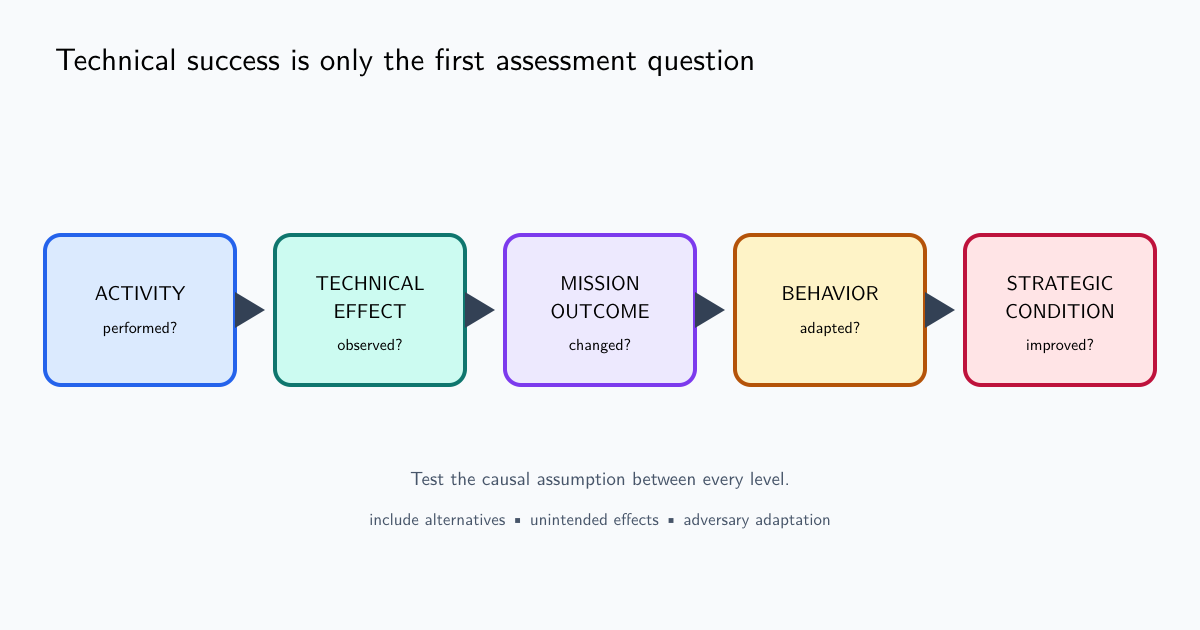
Review warning performance after exercises and events. Measure requirement-to-collection time, coverage of priority indicators, time from threshold crossing to notification, decision latency, false escalation, missed signals, partner reach, and whether the chosen action preserved the mission. Do not score analysts only on whether the predicted event occurred; warning can cause defenses that alter adversary behavior.
Examine cognitive and organizational failure modes. Did mirror imaging shape the indicators? Were technical artifacts overweighted because they were easy to count? Did classification prevent the warning from reaching operators? Did repeated low-quality alerts normalize concern? Did leaders understand the confidence and expiry? Did the team update its hypothesis when disconfirming evidence arrived?
Maintain a warning ledger containing judgment, issue time, horizon, recipients, evidence lineage, confidence, decision, action, updates, and retrospective findings. Feed lessons into sources, thresholds, playbooks, architecture, and exercises. A mature warning function is not a dashboard of threat volume. It is a disciplined bridge between uncertain evidence and timely, proportionate action.
Frequently asked questions
What is strategic warning in cyber operations?
Strategic warning communicates a consequential change in threat, intent, capability, opportunity, or operating context early enough for a decision-maker to act. It is not a prediction of an exact attack time and is not limited to technical indicators of compromise.
What is a priority intelligence requirement?
A priority intelligence requirement is a decision-linked question whose answer matters within a defined time window. It identifies the decision owner and deadline, then drives indicators, observables, sources, collection, analysis, and communication.
What is the difference between an indicator and an observable?
An observable is something that can be collected or measured. An indicator is an interpreted observation or combination of observations that supports or weakens a hypothesis. Indicators require context, thresholds, alternatives, and confidence.
How should warning confidence be communicated?
State the judgment, confidence, time horizon, evidence, assumptions, alternatives, implications, and indicators that would change it. Separate likelihood from impact and explain collection gaps. Warning should support proportionate decisions, not manufacture certainty.