Cyber-Enabled Targeting in the 2026 Iran War: Cameras, Telecoms, and Kinetic Effects
Examine how compromised cameras, telecommunications data, geolocation, and digital surveillance can support target development and battle-damage assessment in the 2026 Iran war—without confusing reported claims with verified fact.
A camera above a Tehran street enters the war
Evidence cutoff: 14 September 2026. Long before the first strike, cameras watched Tehran’s streets. They belonged to a surveillance environment intended to identify people, enforce rules and help the state see its capital. On 28 February, according to an Associated Press investigation, that gaze was reversed: Israel used data from Iranian street cameras while tracking Iran’s supreme leader. A system of domestic visibility had become foreign intelligence terrain.
The case forms part of the wider Iran–United States cyber conflict. AP drew on interviews, leaked data, public statements and other reporting. It also reported increased Iranian activity against cameras in Israel, Bahrain and the United Arab Emirates that researchers assessed could support monitoring and post-strike damage assessment. The AP investigation into Iranian cameras is substantial independent reporting, but it is not a complete operational record.
Earlier AP reporting on pro-Iranian cyber activity described attempts to penetrate regional cameras to improve Iranian missile targeting and claims by groups targeting closed-circuit television networks. These sources support a high-confidence judgment that surveillance systems were contested and a moderate judgment that actors sought targeting value. The contribution of a particular compromise to a particular weapon engagement is often unknown.
Use precise verbs: “accessed,” “viewed,” “exported,” “correlated,” “used to locate,” and “used to engage” are different claims. Preserve which source supports each verb. Do not elevate a researcher’s plausible-use assessment into proof that a military decision relied on the data.
How cyber access can support a targeting cycle
A camera or telecommunications system can expose location, identity, movement pattern, route, meeting, security posture or the condition of a site after attack. Analysts can correlate those observations with imagery, signals, human reporting and publicly available information. Decision-makers may then use the fused picture for surveillance, target validation, timing, weapon selection, warning, avoidance or battle-damage assessment.
Each link can fail. Device clocks drift; feeds are mislabeled; network addresses do not prove physical location; facial recognition produces false matches; a subscriber identifier can belong to a shared or displaced device; footage can be replayed; an adversary can stage activity; and collection latency can make an accurate observation operationally stale. Cross-domain fusion can reduce uncertainty or amplify a shared mistake.
The term cyber-enabled targeting should therefore describe a demonstrated support relationship, not merely the presence of cyber activity and a later strike. Evidence might include access logs, tasking, operator records, time-correlated imagery, decision documents, multiple independent sources or official acknowledgement. Sensitive evidence may remain unavailable publicly, requiring a narrower open-source judgment.
The surveillance system turns against its builder
Modern camera systems combine sensors, embedded operating systems, remote-management services, mobile applications, cloud storage, analytics, identity providers and third-party installers. Security weaknesses can exist in any layer. Deployment at city scale creates both coverage and systemic exposure: repeated vendors, shared credentials, public administration portals, centralized video management and internet-reachable devices.
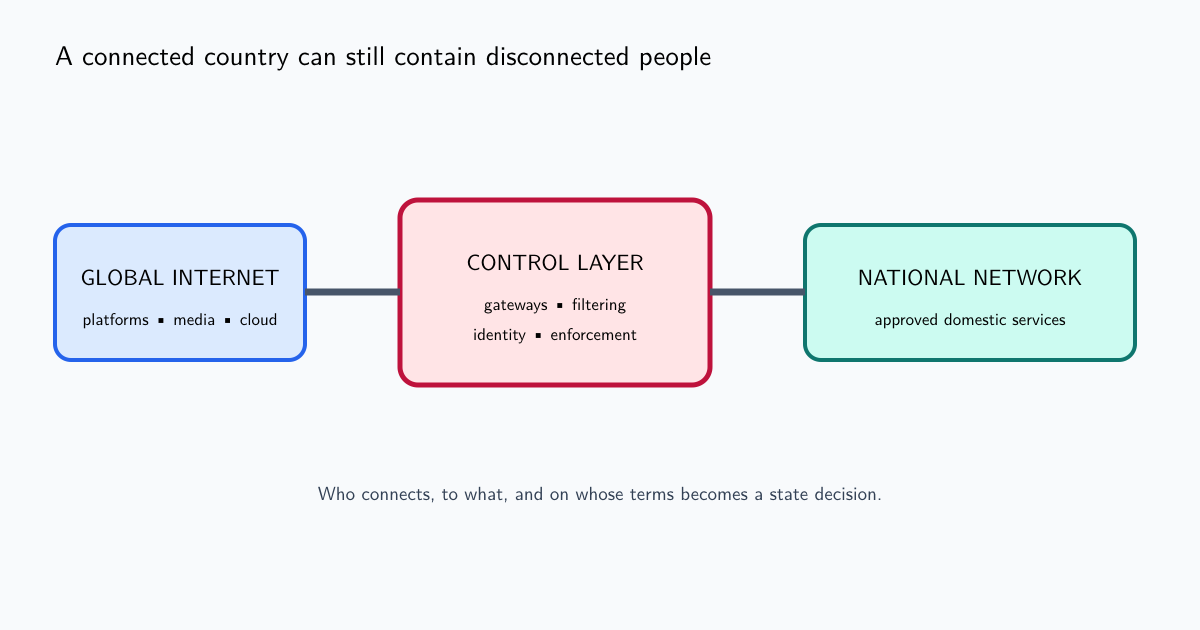
Iran expanded surveillance for policing and domestic control while the National Information Network and filtering apparatus narrowed what citizens could publish and reach. That created a paradox: the state accumulated observation at home while concentrating systems an adversary could seek to access. Infrastructure designed to make a population visible could make state movements visible too. The same dynamic applies to privately owned cameras facing roads, bases, ports, hotels and industrial sites.
This is not an invitation to treat all cameras as military systems. Most are civilian objects performing civilian functions. Their compromise can expose residents, workers, patients and bystanders, and publication can enable harassment or violence. ICRC digital-threat guidance emphasizes that digital operations in armed conflict can harm civilians and blur civilian and military roles.
Telecommunications and location evidence
Telecommunications networks produce signaling, subscriber, device, routing, billing and location-related data. Access to those systems can support pattern analysis and geolocation, while attacks on connectivity can deny command, warning or public communication. Public analysis of the 2026 conflict has discussed telecom exploitation, but the open record does not establish every claimed method, dataset or strike linkage.
Treat location evidence probabilistically. A cell site covers an area, not a precise point; sector, terrain, load and device behavior affect the estimate. A subscriber identity may not identify the current user. Roaming, forwarded calls, virtual services, shared accounts and deliberate deception complicate inference. Combining weak indicators can create false confidence if they share the same underlying source.
Analysts should document the requested precision, observation time, source reliability, uncertainty radius, identity confidence, alternative users and corroboration. A location adequate for intelligence cueing may be inadequate for a decision that risks human life. Technical possibility must never be written as evidence of actual collection or operational use.
Attribution and evidence verification
Begin with the artifact: device logs, authentication records, exported footage, malware, infrastructure, screenshots, claimant posts or victim statements. Establish provenance, acquisition time, integrity and whether the source had direct access. Check timezones and clock drift. Geolocate visual content through persistent features and compare weather, shadows, damage sequence and independent imagery where appropriate.
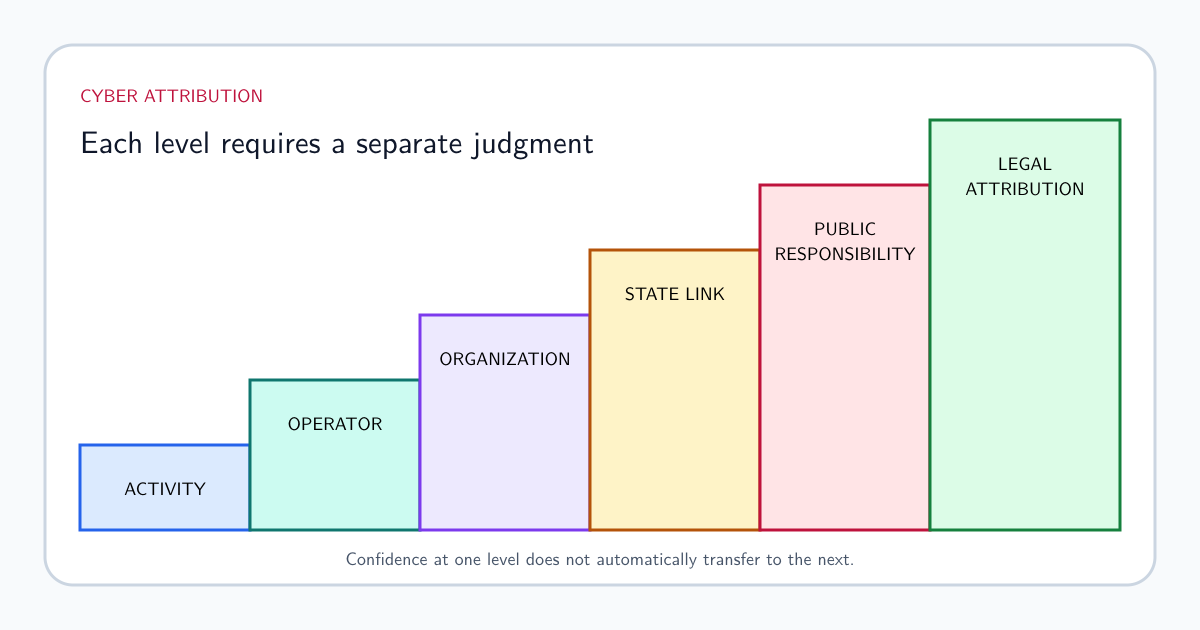
Then separate the activity cluster from operator identity, sponsor and state responsibility. Infrastructure overlap or a familiar persona may support linkage but can be copied. A claimant can possess access without causing a later strike, or publicize an operation performed by another unit. Use the full cyber attribution method and record competing hypotheses.
Write the conclusion at the level the evidence supports: “the feed was publicly reachable,” “an actor accessed the management service,” “data was exfiltrated,” “analysts assessed it could support targeting,” or “multiple sources report it informed the engagement.” Avoid the stronger formulation unless evidence closes each gap.
Defensive priorities without operational overreach
Owners should inventory cameras, recorders, video-management systems, cloud tenants, installer accounts, mobile applications and network paths. Remove unnecessary internet exposure, replace default and shared credentials, require strong authentication where supported, restrict management by network and role, patch supported products, disable unused services and monitor configuration, export and login events. Segment cameras from mission and enterprise networks.
Reduce intelligence value as well as compromise probability. Avoid views that unnecessarily expose sensitive entrances, work areas or neighboring homes. Control retention, analytics and third-party access. Protect maps and inventories that reveal sensor locations. Establish a process for government warnings and emergency isolation. When integrity is uncertain, label the feed, preserve evidence and switch to independently verified observation rather than silently continuing.
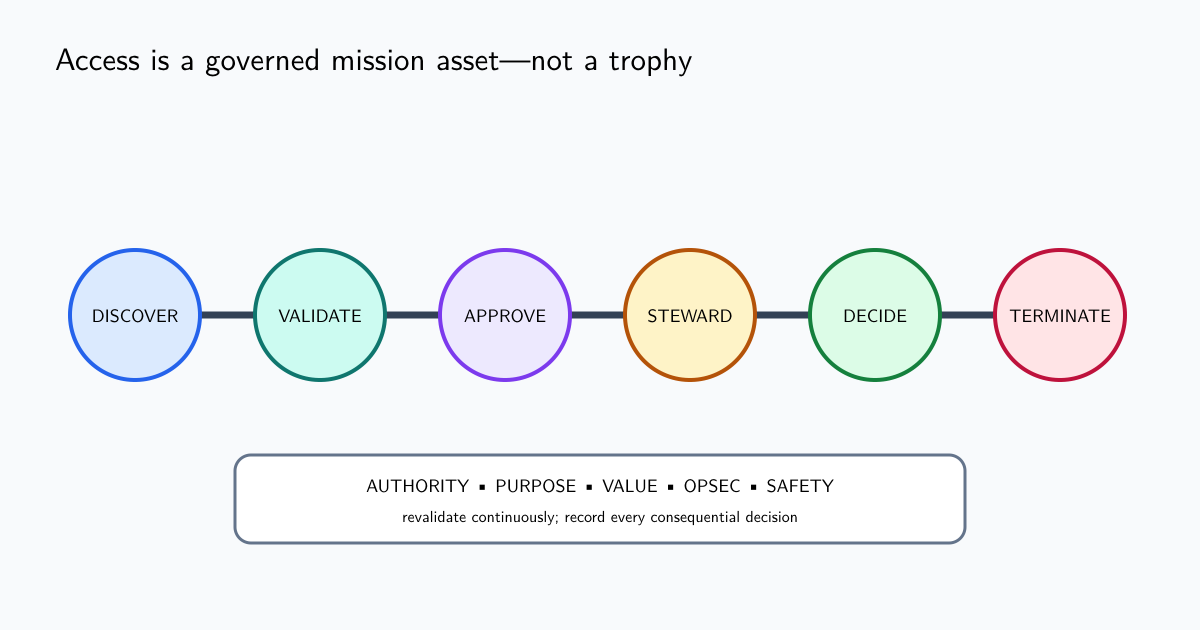
Cyber access stewardship matters for authorized friendly activity too. Collection should have a defined purpose, authority, minimization rule, retention period, dissemination boundary and termination condition. Operational urgency does not remove obligations toward civilians or eliminate the risk that exposed access will be copied, misused or turned into propaganda.
The enduring lesson of the Iran case
The Iran war demonstrates that ordinary connected devices can become intelligence terrain before and during physical hostilities. Scale, weak management and centralized analytics can turn dispersed civilian infrastructure into a collection opportunity. The resulting information may shorten decision time, but speed also compresses verification and increases the cost of error.
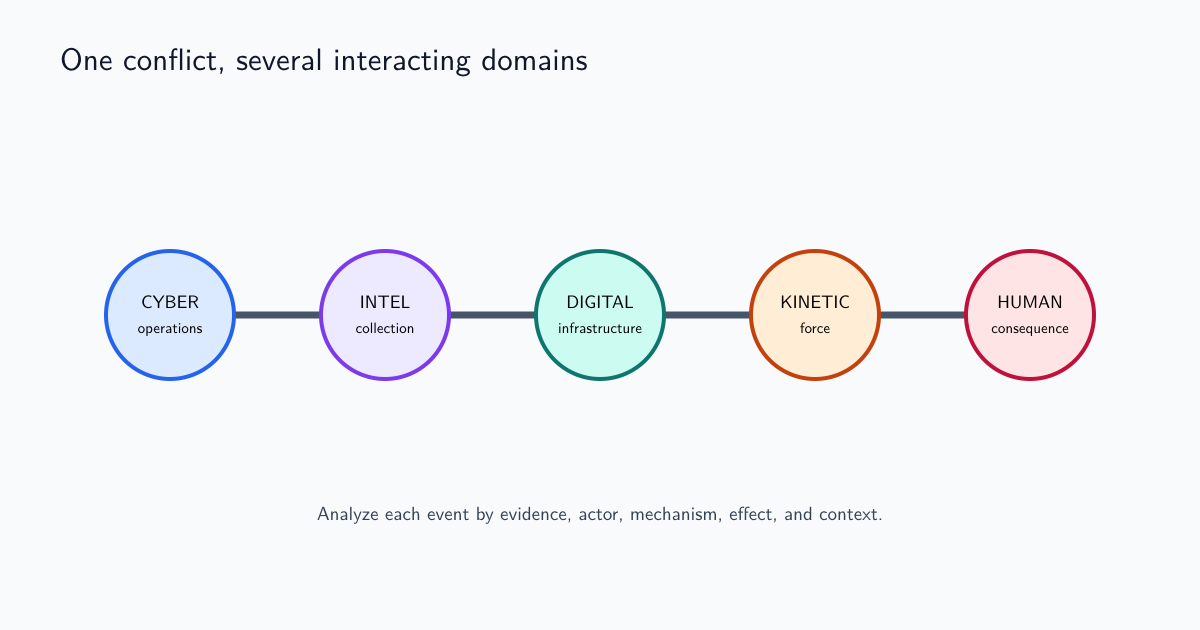
Analysts must resist a dramatic but unsupported narrative in which a single hack directly causes a strike. Real targeting is a chain of collection, fusion, validation, command decision, weapon employment and assessment. Public evidence may illuminate only some links. Report what is known, who says it, how they could know and what evidence would change the judgment.
The strategic issue is not merely camera security. It is the merger of digital surveillance, commercial infrastructure, intelligence operations and kinetic force—and the resulting exposure of people who never chose to participate. Analysis of civilian harm and reverberating effects must accompany technical and targeting analysis. That connection is a defining feature of contemporary cyber warfare and must be examined with rigor and civilian protection in view.
Frequently asked questions
Were hacked cameras used for targeting during the 2026 Iran war?
Associated Press reported evidence and interviews indicating that Israel used compromised Iranian street-camera data in locating Iran’s supreme leader, while researchers reported Iranian attempts against cameras in Israel and Gulf states. The contribution of any particular feed to a specific strike still requires case-level evidence.
Does compromising a camera make the later strike a cyberattack?
The compromise is a cyber operation; the strike is kinetic. Together they may form a cyber-enabled targeting sequence. Analysts should assess each action, authority, effect, and evidence separately.
Can camera footage prove who carried out a strike?
Usually not by itself. Footage can support time, location, direction, damage, and weapon analysis, but provenance, clock accuracy, editing, field of view, custody, and corroborating evidence must be examined.
How should defenders reduce cyber-enabled targeting risk?
Inventory externally reachable sensors, remove unnecessary exposure, replace default credentials, segment management networks, patch supported devices, restrict exports, monitor access, protect location data, and plan how to operate when feeds cannot be trusted.