How to Build a CTI Data Pipeline With Provenance and Quality Controls
Design ingestion, normalization, enrichment, curation, publication, expiry, and feedback around traceable evidence and defined intelligence uses.
A CTI pipeline should deliver trustworthy evidence to a defined use while preserving where it came from and what changed. Its purpose is not maximum ingestion. Unbounded feeds create storage cost, hidden duplication, stale artifacts, and automated decisions nobody can explain.
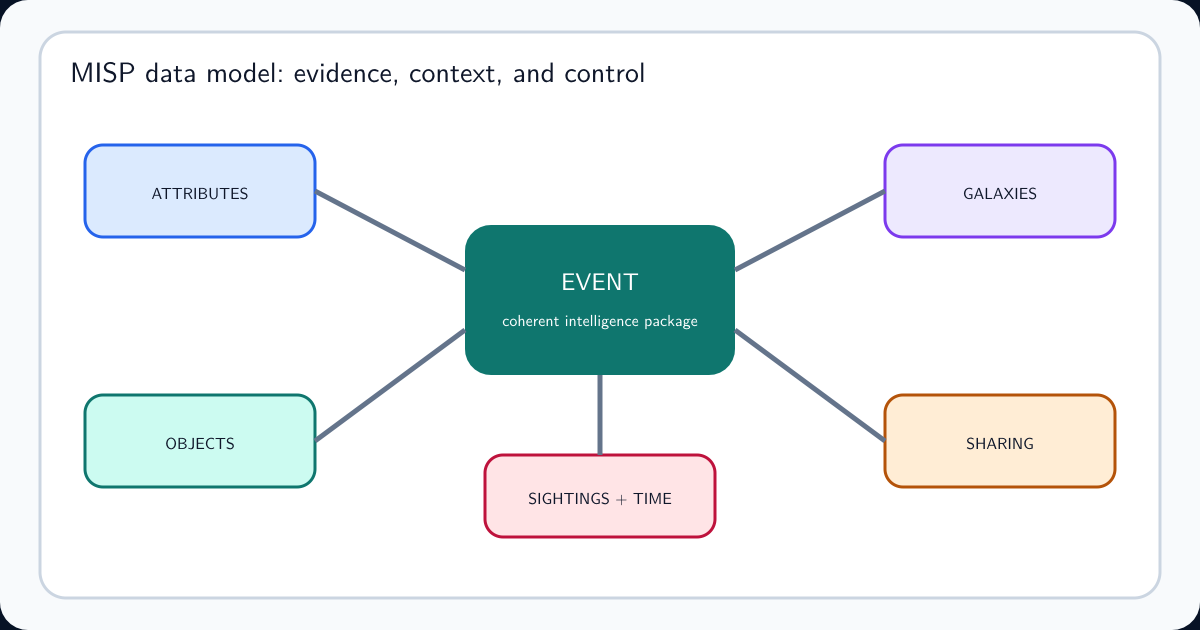
Choose one consumer workflow, define the required objects and latency, then design backward from the decision. When MISP is the intelligence layer, map the platform’s events, attributes, objects, and galaxies to each pipeline stage instead of treating every record as a flat indicator. Apply rights, handling, retention, and quality before the first connector is enabled.
Give Every Stage a Contract
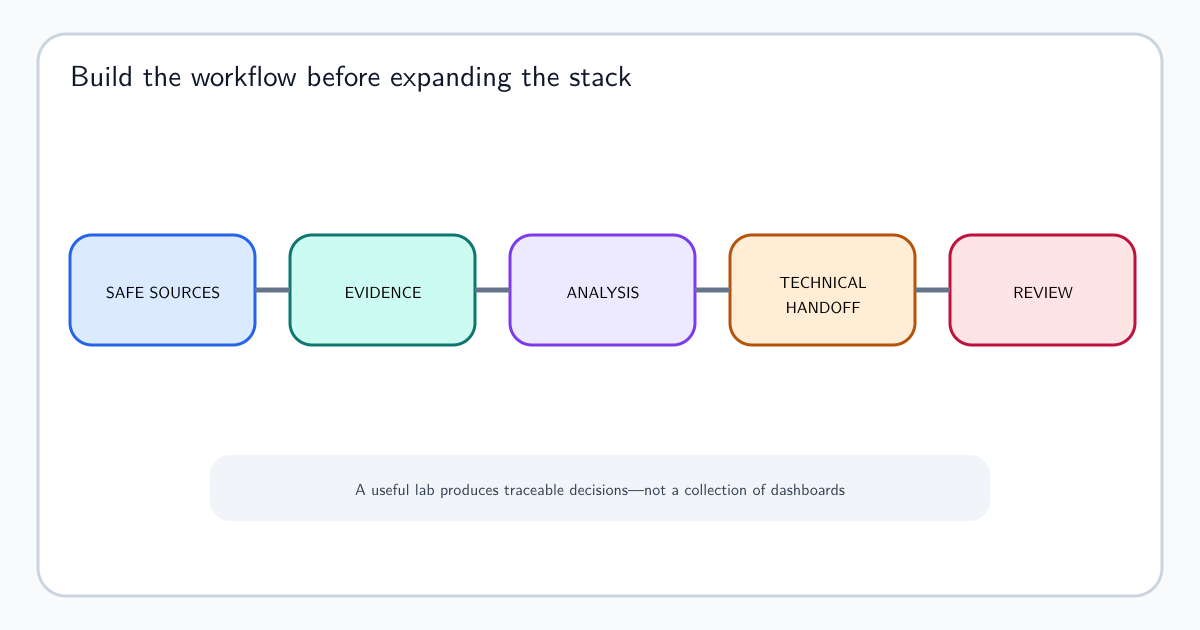
Ingest with source and retrieval metadata; validate schema and rights; normalize while preserving originals; enrich with independent lineage; curate relevance, confidence, and action; publish only to eligible consumers; expire and revoke; return feedback.
Assign an owner and failure behavior to each stage. Quarantine malformed data rather than passing partial records downstream.
Measure Quality by Use
Monitor completeness, validity, duplication, latency, provenance, freshness, revocation, false positives, and context loss. Set thresholds per use: discovery tolerates uncertainty that automatic blocking cannot.
Sample transformed records against originals. Version parsers, mappings, enrichment sources, and scoring rules so a result can be reproduced.
Operate for Correction and Replay
Design idempotent processing, dead-letter queues, alerts, rollback, backfill, deletion, revocation propagation, and safe replay. Test source outage, schema drift, volume spikes, and erroneous high-confidence data.
Connect pipeline controls to CTI integration architecture. The pipeline is reliable only when a bad input can be found, contained, corrected, and removed from downstream use.
Frequently asked questions
Should raw threat data be retained?
Retain what the use, rights, investigation, and audit needs justify; separate immutable raw evidence from transformed records and apply retention controls.
Does normalization improve data quality?
It improves consistency but can lose meaning. Preserve original values and transformation history so analysts can recover context.
Are duplicate indicators always redundant?
No. Duplicate observations can carry different source, time, context, or confidence; deduplicate objects without discarding evidence lineage.
Should the pipeline calculate one confidence score?
Avoid opaque composite scores. Keep source, evidence, relevance, freshness, and analytic confidence distinct or explain their combination.
What happens when a pipeline control fails?
Quarantine affected data, alert an owner, prevent unsafe downstream action, preserve logs, and replay only after correction.