CTI Integration Architecture: Connecting TIP, SIEM, SOAR, and EDR
Design intelligence flows around specific decisions, preserve context and expiry, and stop one unreliable artifact from causing action everywhere.
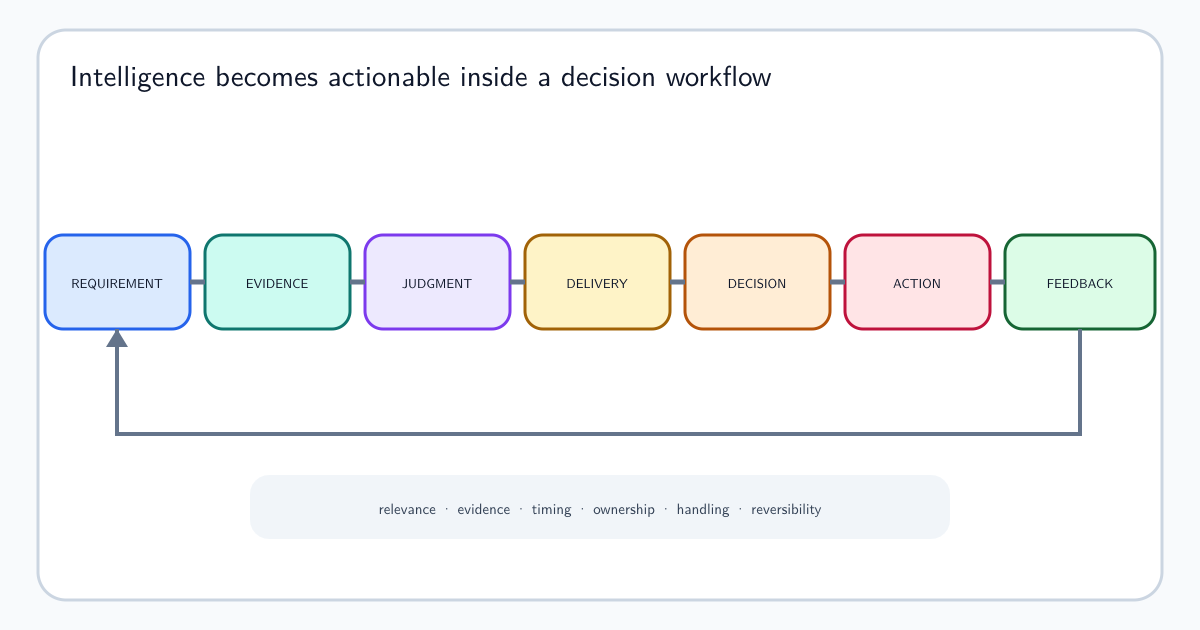
An integration architecture should explain how a decision-relevant item moves from source to validated intelligence, defensive action, observation, and reassessment. Product logos do not define that path. Start with the actionable threat intelligence framework to define the decision, consumer, owner, delivery point, and feedback needed before connecting platforms.
Choose one use case—such as enriching an incident, prioritizing a vulnerable asset, or deploying a high-confidence block—and map every object, owner, latency need, transformation, approval, and failure. Add more integrations only after the path works.
Separate Data, Intelligence, Workflow, and Control
Preserve raw evidence in a governed data layer; curate entities, relationships, provenance, confidence, and expiry in an intelligence layer; manage cases and approvals in workflow; send narrow actions to SIEM, SOAR, EDR, or other controls.
Assign system ownership by field and use stable identifiers to prevent circular enrichment and duplicate records.
Define a Data Contract
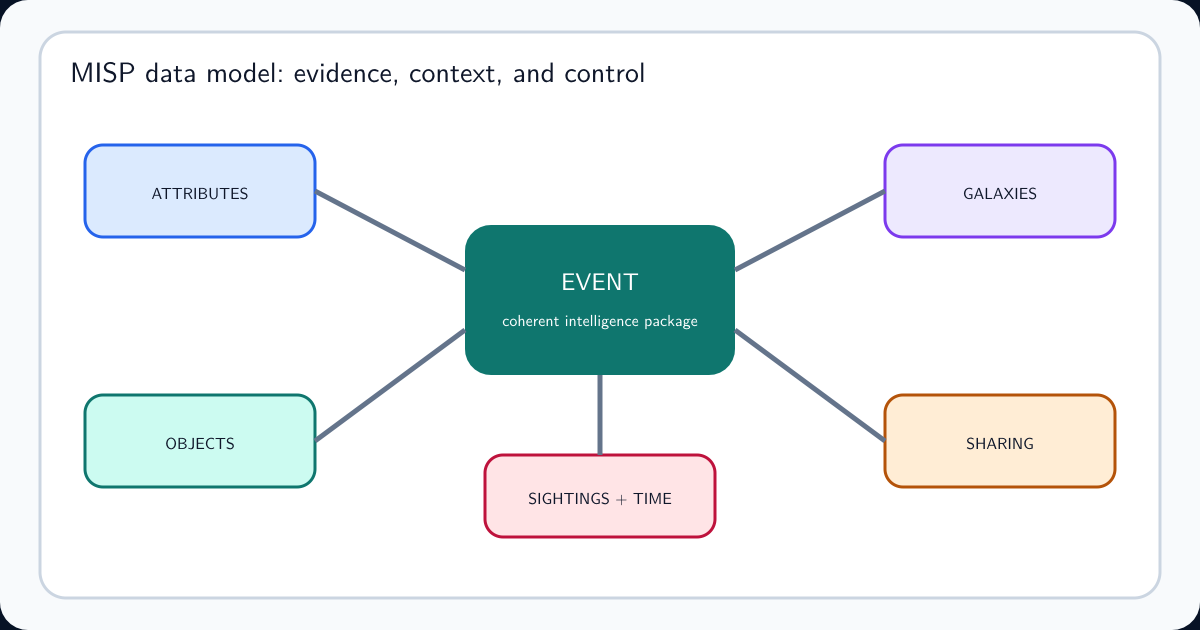
Require source, observation time, object type, confidence, handling, relevance, action, expiry, and transformation history where appropriate. For MISP implementations, use the MISP data model guide to map those requirements to events, attributes, objects, galaxies, sightings, and distribution controls. Validate schema and allowed values. Quarantine malformed or unproven data instead of silently dropping context.
Use allowlists, rate limits, approval thresholds, rollback, and monitoring for automated action. Never infer enforcement suitability from a source label alone.
Return Operational Evidence
Feed sightings, non-sightings with coverage, false positives, case outcomes, and analyst comments back to the curated record. Update confidence and expiry rather than leaving old artifacts active indefinitely.
Monitor latency, failure, duplicate rate, context loss, queue depth, and rollback. Use automation decision guidance to set safe action boundaries.
Frequently asked questions
Must a CTI architecture include a TIP?
No. A TIP helps when curation, provenance, sharing, workflow, and scale require it; smaller programs can use simpler governed components.
Should all indicators be pushed to every control?
No. Route only artifacts suited to a defined use with confidence, freshness, context, collateral checks, and expiry.
Which system is the source of truth?
Assign authoritative ownership by object and field; one system may own raw telemetry while another owns curated intelligence or case decisions.
Why is feedback from SIEM or EDR important?
Observations, false positives, and investigations refine confidence, relevance, expiry, and future collection.
Where should integration work start?
Start with one high-value use case and trace its data, decision, owner, failure modes, and feedback end to end.