Public Cloud Storage Exposure: Prevention and Response
Public cloud storage exposure detection evaluates effective policies, ACLs, access points, anonymous requests, sensitive objects, change actors, and recovery.
Evaluate effective access, not one configuration field
Public cloud storage exposure detection asks whether an unauthenticated or broadly external principal can reach an object through any supported path. Bucket policy, object ACL, access point, organization guardrail, account setting, CDN, website endpoint, identity policy, and temporary link can alter the answer.
Amazon S3 Block Public Access demonstrates the layered model: organization, account, bucket, and access-point controls can override policies and ACLs. Other providers use different names; model their effective authorization semantics explicitly.
Inventory data sensitivity, owners, and intended audiences
Record provider, account, region, bucket or container, object prefix, owner, data classification, intended audience, public-access justification, delivery path, encryption key, logging status, retention, and exception expiry. Scan object samples safely for credentials, PII attack paths, source code, exports, and backups.
Public website assets and private customer records need different policies. The durable control is explicit intent connected to enforceable configuration and an accountable owner.
Detect changes and continuously test anonymous reachability
Alert when organization or account public-access blocks are weakened; bucket policies, ACLs, website hosting, access points, or CDN origins change; anonymous principals gain actions; or exception expiry passes. Record actor, session, source, before-and-after policy, resource, ticket, and analyzer result.
From controlled egress, test a harmless canary object’s anonymous HEAD or equivalent only where authorized. Configuration analysis can miss alternate paths; reachability testing can miss sensitive prefixes. Use both.
Stop public access while preserving exposure evidence
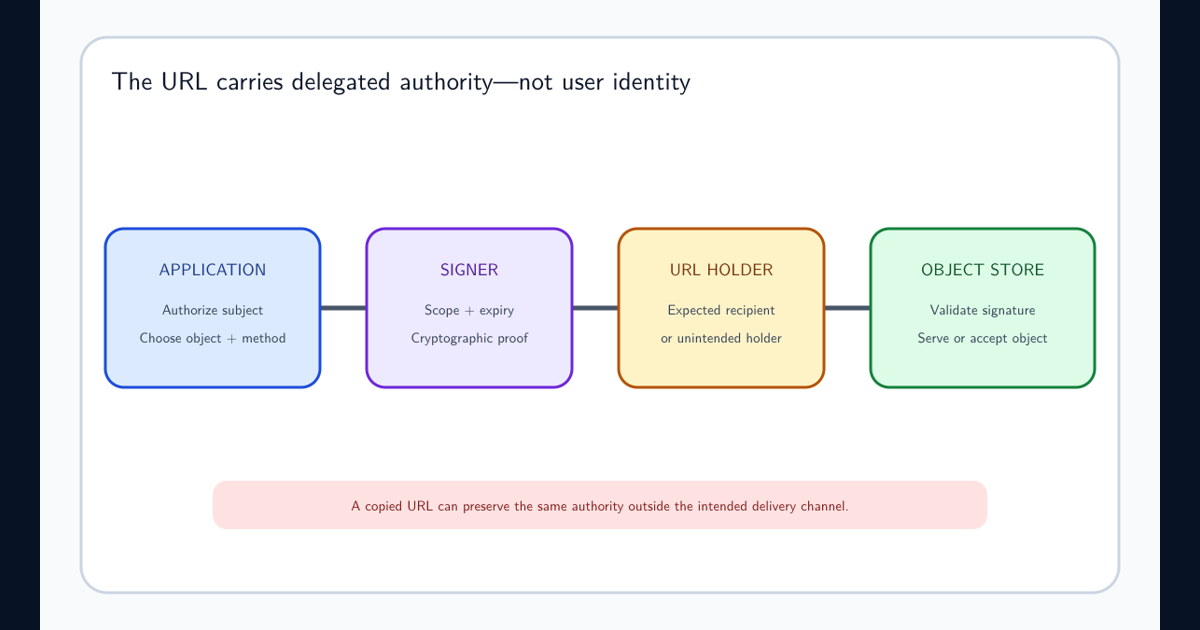
Capture effective policies, object inventory, audit history, access logs, CDN logs, and timestamps. Apply the narrowest fast block that stops access without destroying logs, then restore organization guardrails and remove unauthorized policies, ACLs, access points, website delivery, or signed URL leakage.
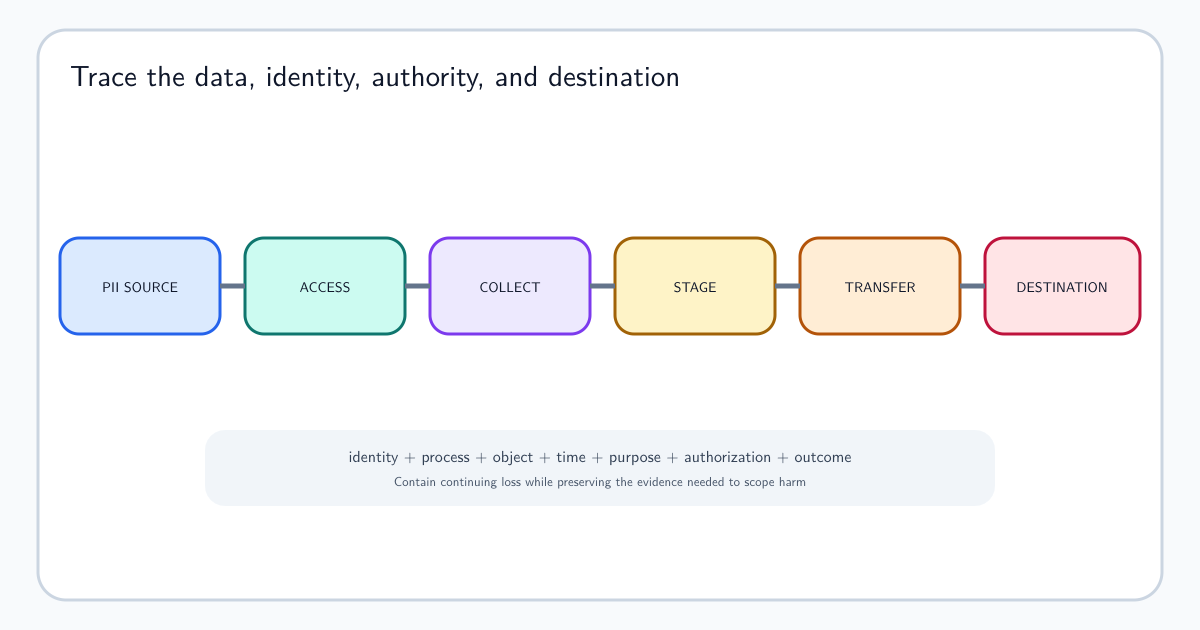
Determine exposure start, accessible objects, sensitivity, observed anonymous requests, downloads, cache copies, and credentials contained in data. Rotate exposed secrets and keys, invalidate caches, notify data owners, and follow legal or privacy processes. Lack of access logs limits certainty; state that gap.
Enforce private defaults at the organization boundary
Apply organization-level public-access blocks, disable ACLs where supported, require approved delivery services for public content, separate public and private accounts, constrain policy changes, and alert independently. This is part of cloud shared responsibility: providers supply controls; customers define audience and govern exceptions.
Prove one sensitive bucket cannot be reached anonymously
Next step: choose one non-production private bucket. Map every policy layer and delivery path, add an inert canary object, verify anonymous denial from controlled egress, make an authorized temporary exposure in a sandbox, confirm alerting, then restore the guardrail. Never probe storage you do not own.
Frequently asked questions
Does a public bucket prove that data was downloaded?
No. It proves exposure potential. Access logs, provider audit, CDN logs, object sensitivity, and retention determine whether access can be confirmed.
Is checking bucket ACLs enough?
No. Effective access can also depend on bucket policies, access points, organization controls, identity policy, signed URLs, CDN origins, and provider-specific mechanisms.