Microsoft Purview Communication Compliance: Policy Detection, Review, and Remediation
Learn how Communication Compliance evaluates messages across supported channels, how classifiers and sampling shape review, and how privacy-aware workflows turn policy matches into proportionate action.
Define the Communication Harm Before You Choose a Classifier
Organizations may need to identify regulated financial language, sharing of sensitive information, conflicts of interest, threats, harassment, discriminatory language, or other conduct risks. These problems differ in evidence, consequence, legal basis, reviewer expertise, and appropriate remediation.
Microsoft Purview Communication Compliance provides policies and review workflows for supported communication channels. The Communication Compliance documentation includes templates for common concerns and conditions based on sensitive information types, keywords, dictionaries, and Microsoft-provided classifiers.
Start with the policy obligation and decision. Define the communication behavior, included population, business context, supported channels, review threshold, authorized reviewers, and possible actions. A template can accelerate configuration, but its title does not define what your organization may lawfully monitor or what a match means in local policy.
Channel Coverage Shapes the Conclusion
Communication Compliance can analyze selected sources such as Exchange email, Microsoft Teams, Viva Engage, supported generative AI experiences, and configured non-Microsoft sources. The exact records and context vary by channel. An email has recipients, subject, body, and attachments. A chat can be edited, deleted, threaded, or surrounded by a conversation. An AI interaction can contain a prompt, response, referenced data, and agent context.
The supported Communication Compliance channels documentation should be treated as a data contract. Confirm prerequisites, direction, attachment behavior, limits, licensing, capture path, and processing time for each source.
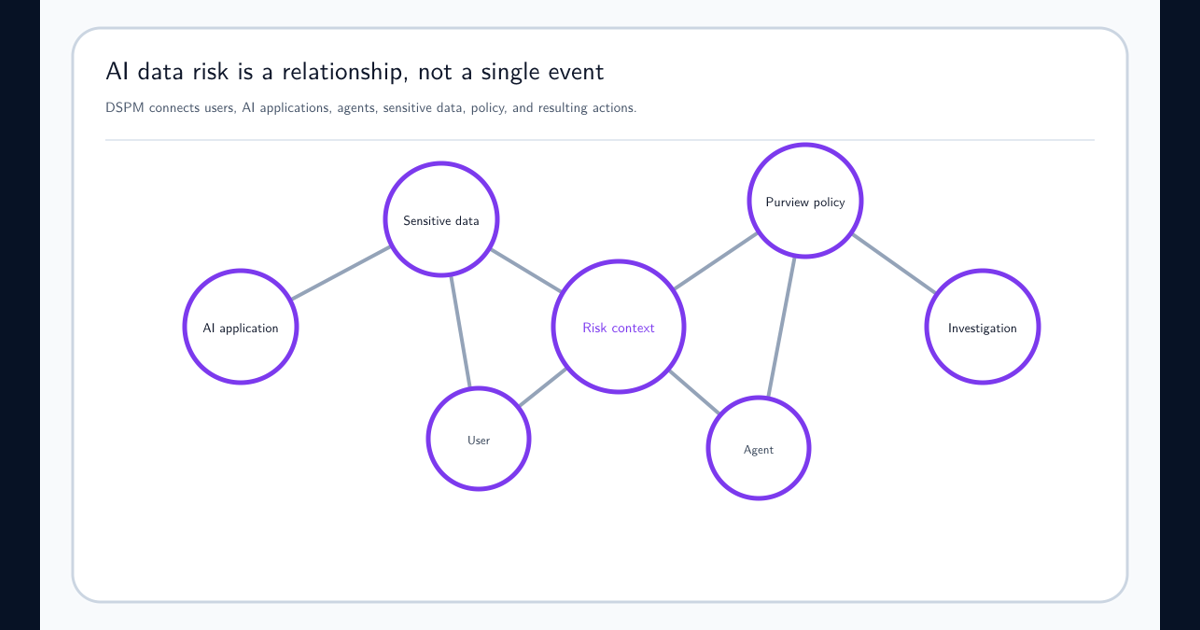
Do not generalize beyond observed channels. A policy covering corporate Teams does not establish conduct in private messaging applications. A connected enterprise AI source does not prove visibility into every browser-based AI tool. DSPM for AI can provide a wider posture view, but its evidence paths must also be named precisely.
Use Conditions as Screening Evidence, Not Automatic Meaning
Keywords are transparent but can be ambiguous. Sensitive information types can recognize structured data, but a match does not establish that sharing was unauthorized. Classifiers can identify language resembling threats, harassment, discrimination, profanity, adult content, or other categories, but context, quotation, reclamation, dialect, and translation can alter meaning.
Combine conditions only when the combination represents the policy. A financial term between two restricted groups may support a conflict-of-interest review. A sensitive information type sent externally may support a data-handling review. Adding conditions merely to reduce volume can create unexplained blind spots.
Microsoft’s Communication Compliance configuration guidance includes condition testing. Use representative examples, near misses, different languages, quoted material, benign business phrases, and intentionally difficult boundaries. Testing a few sentences confirms condition behavior; it does not predict the complete production distribution.
Sampling Is a Deliberate Coverage Decision
Policies can review a configured percentage of communications that meet their conditions. Sampling can make a high-volume program operationally possible, but it changes the strength of every conclusion. Reviewing ten percent of matches does not support a claim that the remaining ninety percent were compliant.
Choose the percentage from risk, volume, reviewer capacity, legal requirements, and the expected rarity of the behavior. High-consequence, low-volume scenarios may justify complete review. Broad conduct monitoring may require sampling and trend analysis. Document whether selection is random or affected by policy logic and whether repeated users or messages can appear differently.
Report the denominator. Review count, confirmed issue count, sampled match count, total policy matches, and total in-scope communications answer different questions. A rising number of reviewed violations might reflect more concerning behavior, a larger population, a changed condition, or increased sampling.
Build Privacy Into Roles, Identity, and Review Behavior
Communication review exposes human language, relationships, emotions, mistakes, health information, legal advice, and other deeply contextual material. Microsoft pseudonymizes users by default, uses role-based access, and records administrative and reviewer activity. Those controls need an organizational purpose and operating model around them.
Separate policy administration, initial review, investigation, and remediation where appropriate. Reviewers should reveal identity only when necessary for an authorized decision. Limit which policies and administrative units each reviewer can access. Audit who searched, viewed, exported, resolved, or escalated content.
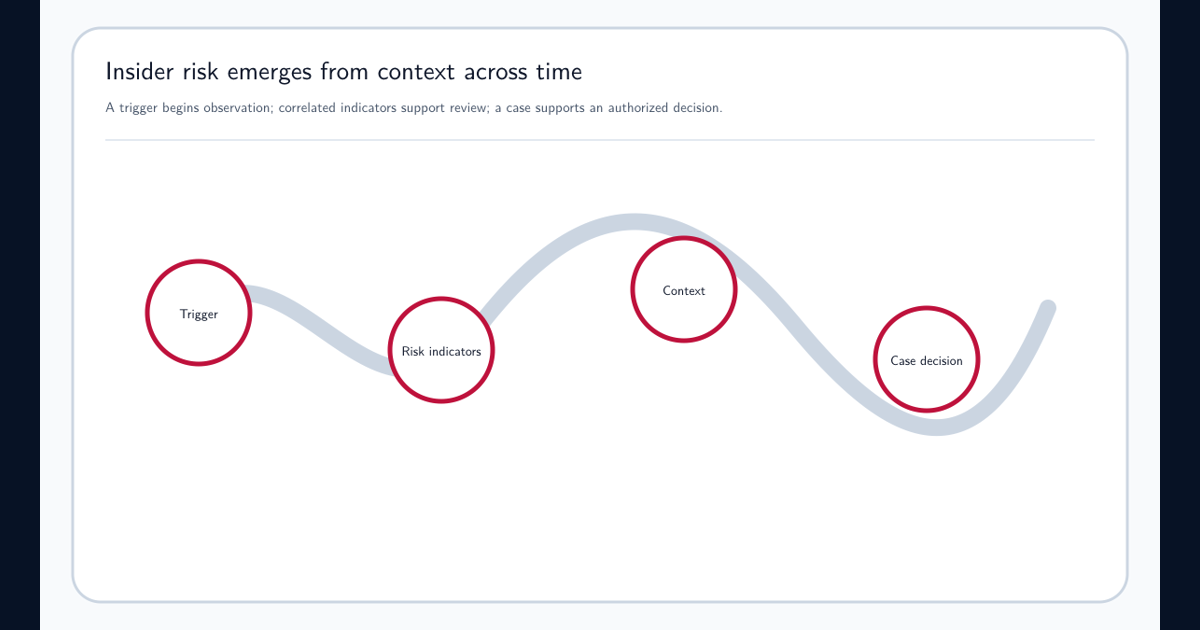
The same privacy reasoning applies in Insider Risk Management, but communication content can be more intimate than activity metadata. Establish legal review, employee notice, works-council consultation where applicable, retention, reviewer support, and a route for correcting misuse before production monitoring begins.
Review the Conversation, Not Just the Highlighted Phrase
A matched phrase can be misleading without nearby messages, participants, direction, time, attachment context, and communication history. Review enough context to understand the exchange while avoiding unrelated exploration. Distinguish the exact text or image that matched from the reviewer’s interpretation of policy meaning.
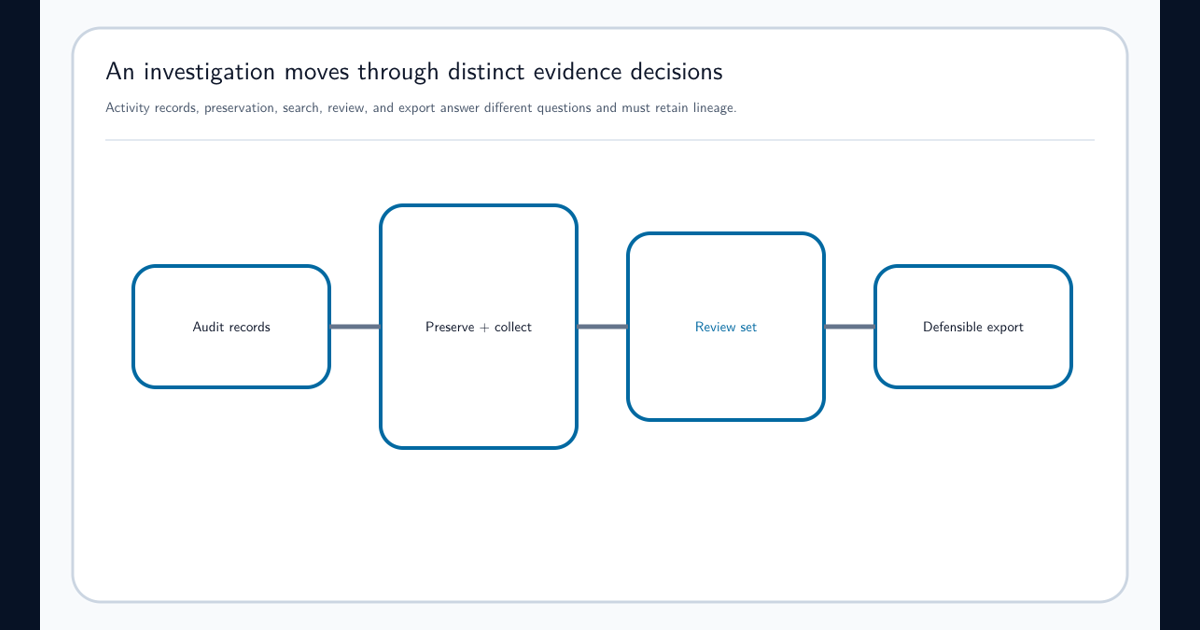
Use consistent statuses and notes. Separate confirmed policy issue, benign context, duplicate, insufficient context, and technical misclassification. A resolved alert should preserve why the reviewer reached that outcome. Where a matter requires broader preservation or legal collection, the Audit and eDiscovery process should establish its own scope.
Remediation can include notifying the user, escalating to another authorized team, tagging, documenting, or resolving the item. The action should match the harm and organizational policy. A classifier match alone should not trigger a severe employment action without independent investigation and the required human process.
Connect Communication Risk to Data Protection Without Collapsing the Two
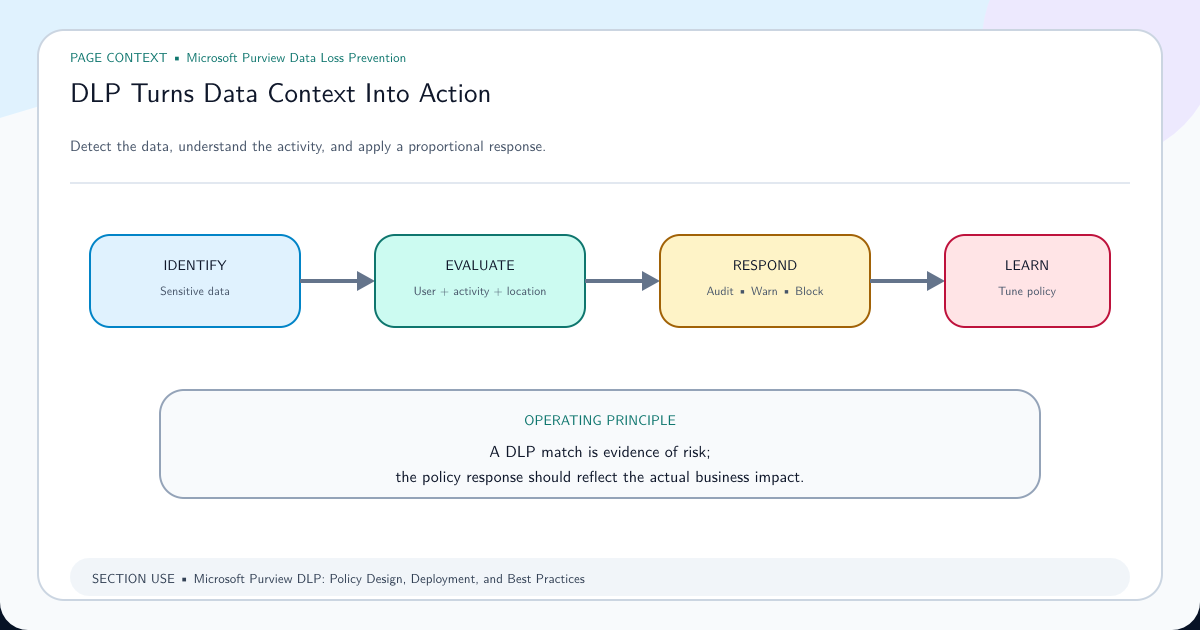
Communication Compliance and Data Loss Prevention can both use sensitive information types, but they serve different decisions. DLP focuses on handling and movement of sensitive data and can warn or restrict an action. Communication Compliance supports review of policy-relevant communications and conduct.
A message containing a customer identifier might create a DLP event because of its destination and a Communication Compliance match because the policy reviews sensitive information. These are related observations, not independent proof of two violations. Correlate them without double-counting confidence.
Decide which control should prevent, which should monitor, and which should investigate. Overlapping policies can overwhelm users and reviewers if each sends a separate message or creates a separate case. Shared classification should create consistent meaning, not duplicate workflow.
Tune for Review Quality and Trust, Not Merely Fewer Alerts
Measure policy coverage, processing health, match and review volume, sampling rate, time to review, outcomes, repeated benign contexts, identity reveals, escalations, user notices, and reviewer disagreement. Segment results by policy and channel because one healthy source can hide another source’s loss.
Tune keywords, classifiers, scope, and sampling when evidence shows a mismatch with the policy purpose. Do not suppress a difficult population merely because its language creates review work. Improve reviewer guidance, add context, narrow the concern, or obtain expertise. Conversely, do not retain intrusive monitoring that no longer supports a real obligation.
The program succeeds when it can identify a bounded communication concern, explain how it selected messages, protect uninvolved users, give reviewers enough context, apply proportionate remediation, and show where sampling or channel limits leave uncertainty. Trust is an operating requirement, not a public-relations layer added after deployment.
Frequently asked questions
Does Communication Compliance monitor every message by default?
No. Policies define the included users, channels, conditions, direction, and percentage of matching communications to review. Supported channels and licensing also affect coverage.
Does a classifier match prove harassment or another violation?
No. A classifier or keyword match is a screening signal. Meaning depends on context, language, quotation, relationship, policy, and reviewer judgment.
Are usernames visible to every reviewer?
Communication Compliance pseudonymizes users by default and uses role-based access. Identity access and reviewer actions should be restricted, justified, and audited according to organizational policy and law.
Can Communication Compliance review AI interactions?
Microsoft documents support for selected generative AI channels, including Microsoft 365 Copilot experiences and configured enterprise AI sources. Exact availability, prerequisites, and captured content depend on the channel and configuration.