Cloud Audit Log Tampering: Detection and Recovery
Cloud audit log tampering detection covers configuration changes, delivery gaps, integrity validation, immutable storage, independent evidence, and recovery.
Audit-log tampering targets the evidence lifecycle
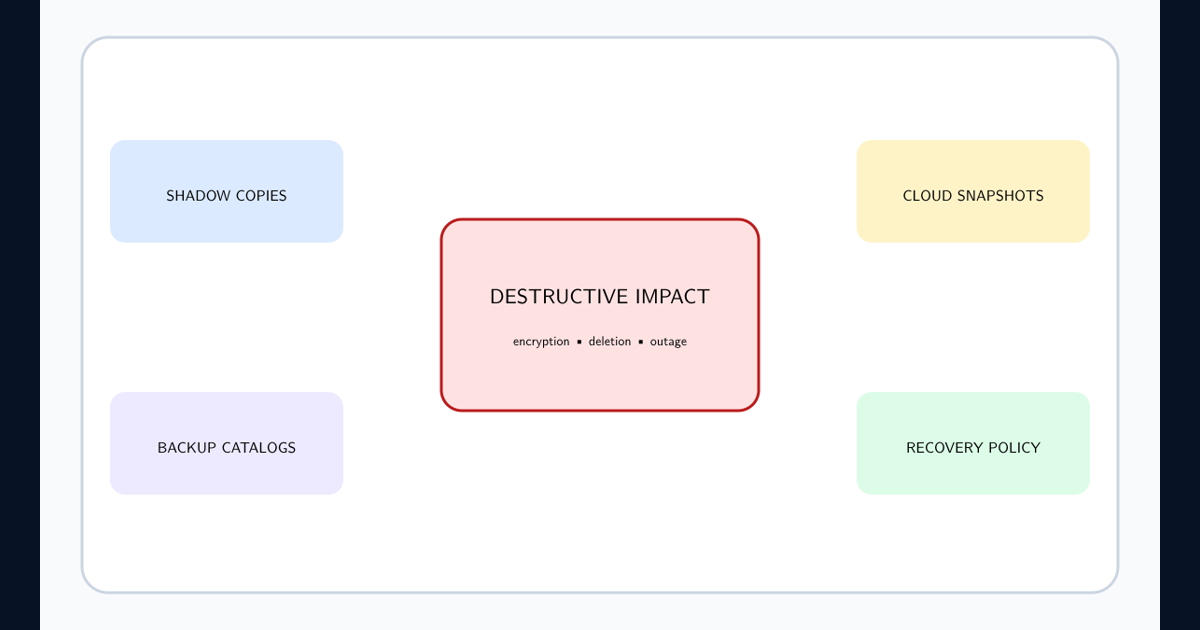
Cloud audit log tampering detection must cover more than deletion. An adversary can stop a trail, disable a sink, narrow event selectors, exclude data access, change retention, reroute delivery, revoke destination permissions, delete stored objects, alter queries, or compromise the identities and keys used to protect logs.
Separate provider-native event history, configured exports, security-lake copies, SIEM ingestion, immutable archives, and analyst views. Each has different latency, retention, permission, and integrity properties. A search returning no results is not proof that no action occurred.
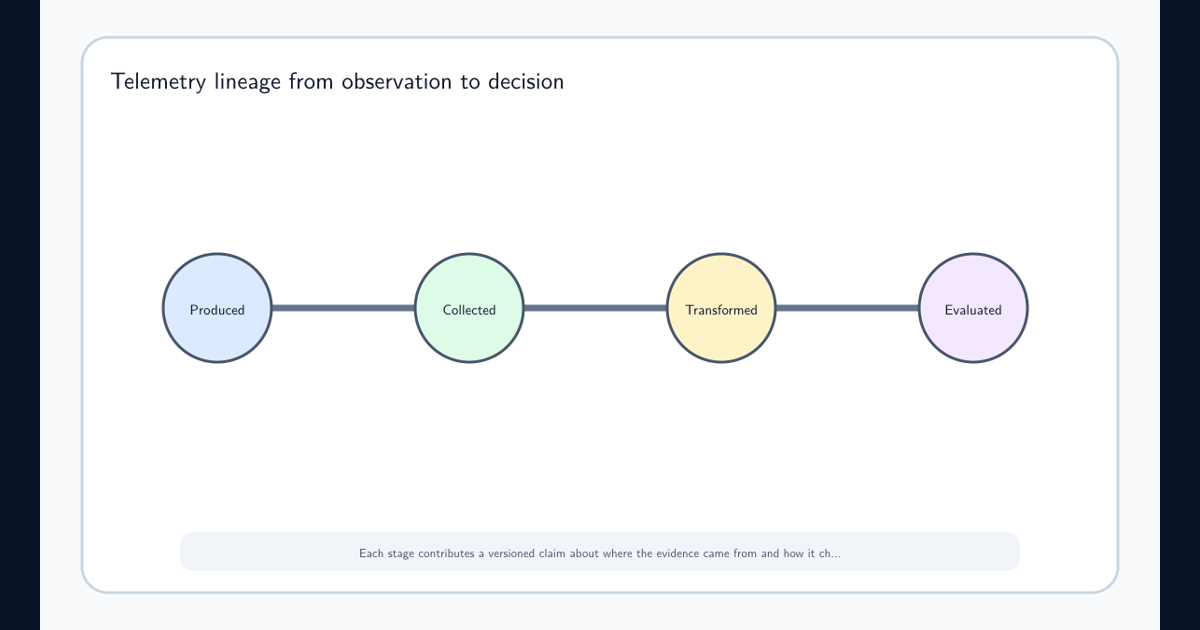
Use telemetry lineage and integrity to document producer, configuration, transport, transformation, storage, access, and validation. Log controls need their own independently observed audit trail.
Preserve configuration state and the evidence gap timeline
Capture organization and account hierarchy, trail or sink configuration, enabled categories and selectors, destination, retention, lock state, encryption keys, delivery identity, object-policy changes, ingestion health, provider incidents, timestamps, and the administrator or API caller behind every change.
This is an authored CloudTrail-style control event—not live telemetry:
{"eventTime":"2026-11-10T15:26:04Z","eventSource":"cloudtrail.amazonaws.com",
 "eventName":"StopLogging","userIdentity":{"arn":"arn:aws:iam::111122223333:role/ops-admin"},
 "requestParameters":{"name":"org-security-trail"},"sourceIPAddress":"198.51.100.24",
 "requestID":"7da9...","errorCode":null}
A control event may survive in provider event history even if the configured export stops. Preserve it immediately along with configuration snapshots and destination evidence. Normalize event time, ingest time, and observation time separately.
Detect control changes and independently measure delivery gaps
Alert on stopping or deleting trails, sinks, diagnostic settings, subscriptions, exporters, or agents; narrowing event categories or selectors; changing destinations, retention, lock state, encryption, exclusions, or access policy; disabling validation; deleting log objects; and repeated permission failures from delivery identities.
Independently measure heartbeat, expected volume, region and service coverage, sequence continuity, delivery latency, schema health, and cross-destination counts. Compare provider-native history with exported storage and SIEM. A privileged actor changing logging followed by sensitive API activity is higher confidence than a quiet period alone.
Provider delivery is asynchronous. Maintenance, new accounts, service adoption, and configuration rollout create benign changes. Link every expected modification to infrastructure-as-code, policy deployment, owner, and approved window; treat unexplained drift as an investigation.
Protect an independent copy and validate it continuously
Separate log administration from workload administration. Export organization-wide records to a security account or project with independent identities, keys, network paths, alerts, and break-glass governance. Use policy-as-code to deploy complete categories and prevent drift across new accounts and regions.
AWS CloudTrail log integrity validation uses signed digest files and hashes to detect modification or deletion after delivery. Azure Monitor diagnostic settings guidance recommends immutable storage for audit destinations. Google Cloud locked log bucket guidance warns that locking is irreversible and prevents bucket deletion until retention is fulfilled.
Immutability and signing create operational tradeoffs. Locks can make retention mistakes costly and irreversible; key or destination failures can halt delivery. Test configuration in a non-production destination, validate digests or locks on a schedule, monitor the validation job itself, and preserve results outside the monitored account.
Restore collection and reconstruct the missing interval
Preserve current configuration and provider-native evidence before remediation. Restore organization-wide collection through reviewed infrastructure-as-code, reestablish delivery permissions, enable validation, and protect the destination. Do not overwrite a compromised configuration without retaining a diff.
Bound the gap by last verified event, first missing heartbeat, configuration change, provider delay, and first restored delivery. Reconstruct from independent sources: identity-provider logs, resource histories, billing, network flow, object versions, workload telemetry, deployment systems, notifications, support records, and downstream service logs. Label reconstructed events and uncertainty; do not merge inference into native audit records.
Rotate compromised administrators, delivery identities, and keys; investigate activity during the gap; and verify the incident response lifecycle reaches durable collection and tested alerts. If evidence cannot be recovered, state that limitation explicitly in scope and notification decisions.
Run an authorized evidence-gap exercise
Next step: choose one non-production cloud account. Document enabled event categories, selectors, routing, destinations, retention, lock or digest validation, administrators, and expected heartbeat. Generate one harmless API action and trace it from provider event to protected archive and SIEM.
Simulate a delivery failure by using a supported test path or tabletop—do not disable production logging. Confirm that independent monitoring detects the gap, responders can preserve configuration, and reconstruction sources are known. The durable outcome is complete, independently protected evidence with measured delivery, validated integrity, and honest handling of uncertainty.
Frequently asked questions
Does a gap in cloud audit logs prove attacker tampering?
No. Delivery delay, selector changes, service outages, retention expiry, permission failures, and pipeline defects can create gaps. Correlate configuration and provider evidence before assigning intent.
Does immutable storage guarantee complete audit logging?
No. It protects records after delivery according to the configured retention boundary. It cannot recover events that were excluded, never produced, misrouted, or lost before the immutable destination.