Authentication, Authorization, and Sessions: How Digital Access Works
Understand how identities prove who they are, receive permissions, and carry reusable authority through sessions.
Identity begins before sign-in
Digital access starts with an identity record, its owner, and a lifecycle. Joiner, mover, and leaver processes determine whether the record still represents the right person or workload. A username alone is not proof; accountable ownership and timely removal matter just as much as the sign-in method.
Human identities, service accounts, devices, applications, and automation all need different lifecycle controls. A contractor account might require an end date and sponsor; a workload identity needs a named technical owner and a reason it cannot use short-lived credentials. Before evaluating a suspicious login, confirm what the principal represents, who controls it, when its role last changed, and whether it should still exist. An abandoned but valid account can satisfy authentication perfectly while violating the organization’s intent.
Authentication proves a claim
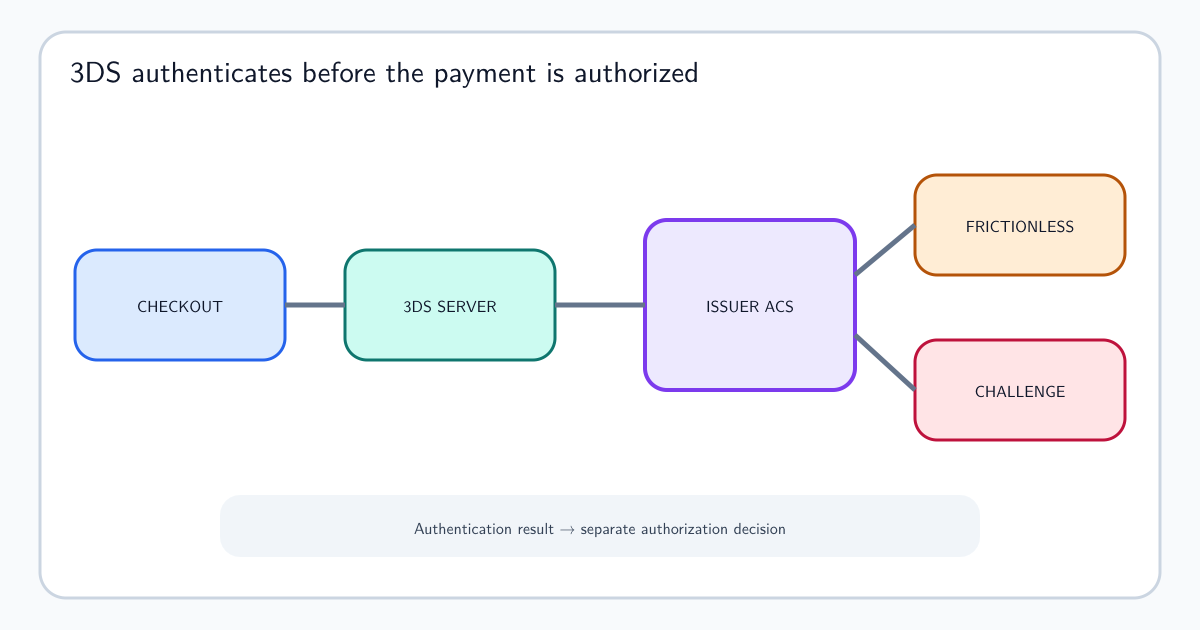
Authentication tests a claim using something known, held, or inherent. Strong design considers enrollment, recovery, device state, phishing resistance, and the route an attacker could use to bypass the primary factor. A successful event proves only that the configured test was satisfied. Payment authentication applies the same distinction: EMV 3-D Secure authenticates a cardholder transaction before a separate authorization decision.
The evidence produced depends on the method. A password event may show only that a secret matched; a passkey assertion can bind the proof to a specific relying party; a federated login may show that another identity provider authenticated the user. Record the method, provider, policy, device signals, challenge result, and recovery activity. Avoid translating “authentication succeeded” into “the legitimate employee acted,” because malware, session theft, coercion, and shared credentials remain possible explanations.
Authorization limits allowed action
Authorization decides what an authenticated principal may do. Roles, attributes, scopes, resource policies, and delegated grants should express least privilege and have an owner. Test effective permissions, because several individually reasonable rules can combine into an unintended access path.
Authorization is often evaluated at several layers: the identity provider issues claims, an application maps them to a role, and a resource enforces a final policy. Group nesting, inherited permissions, emergency roles, OAuth consent, and temporary exceptions can all widen access. Review the effective result from the resource’s perspective. For sensitive actions, log the principal, requested object, decision, policy or role used, and outcome so investigators can distinguish a denied attempt from a completed change.
Sessions carry reusable authority
A session converts a successful sign-in into reusable authority through a cookie or token. Bound its lifetime, audience, device context, and privileges. Re-evaluate sensitive actions and revoke sessions when identity risk changes instead of assuming a password reset ends every active path.
Access tokens, refresh tokens, browser cookies, API keys, and application sessions have different revocation and renewal behavior. A ten-minute access token backed by a month-long refresh token is not simply a ten-minute risk. Inventory which component issues each artifact, where it is stored, what it can call, and how it is invalidated. Require fresh authentication for consequential actions such as changing recovery details, exporting sensitive data, or creating another credential.
Investigate the complete access path
An investigation should connect the identity provider, application, device, network, control plane, and target resource. Preserve identifiers and time boundaries, distinguish authentication from local session creation, and compare the activity with the principal’s role. This same path helps cloud threat intelligence connect a login to meaningful consequence.
Build the timeline as a chain of claims: enrollment or recovery, authentication, token issuance, authorization, resource access, and any persistence created afterward. Note which events are direct observations and which relationships are inferred. A practical review asks: Was the identity expected? Was the proof method appropriate? Did policy grant the observed permission? Which session carried it? What changed? This prevents a familiar IP address or successful MFA result from ending the investigation too early.