Staging, Archiving, and Bulk Collection Detection
Recognize staging, archiving, transformation, and bulk collection as preparation for possible data movement while preserving legitimate backup, analytics, migration, and response explanations.
Staging changes the form or location of data
An identity reads many source objects, copies selected material into a temporary directory, compresses it, and later deletes the archive. The preparation may support exfiltration, but each step is also common in administration, backup, analytics, and incident response.
Collection gathers information from one or more sources. Staging places it into a location or form that makes later use or transfer easier. Transformation changes representation through compression, encoding, encryption, splitting, or conversion. Define which stage your evidence actually observes.
A file-creation event may show an archive path and process. It may not reveal every input object. A cloud export job may show logical collection without a local file. Build the claim around the observation point rather than one familiar archive extension.
Look for concentration and change of representation
Staging often reduces a broad object set into fewer artifacts. Useful evidence includes input count, output count, total size, compression ratio where known, archive members, encryption use, split volumes, temporary location, process ancestry, account, session, and deletion.
No single feature is universal. An attacker can stream data without a file, use ordinary application exports, place data in cloud storage, or split work across hosts. A large archive can be normal; a small archive can contain the most sensitive material.
Relate the output to the inputs where possible. Content hashes, object identifiers, export job IDs, filesystem provenance, or application audit can support lineage. Avoid claiming that similarly timed access caused an archive when the relation is inferred only from a shared user.
Location and ownership change the ordinary explanation
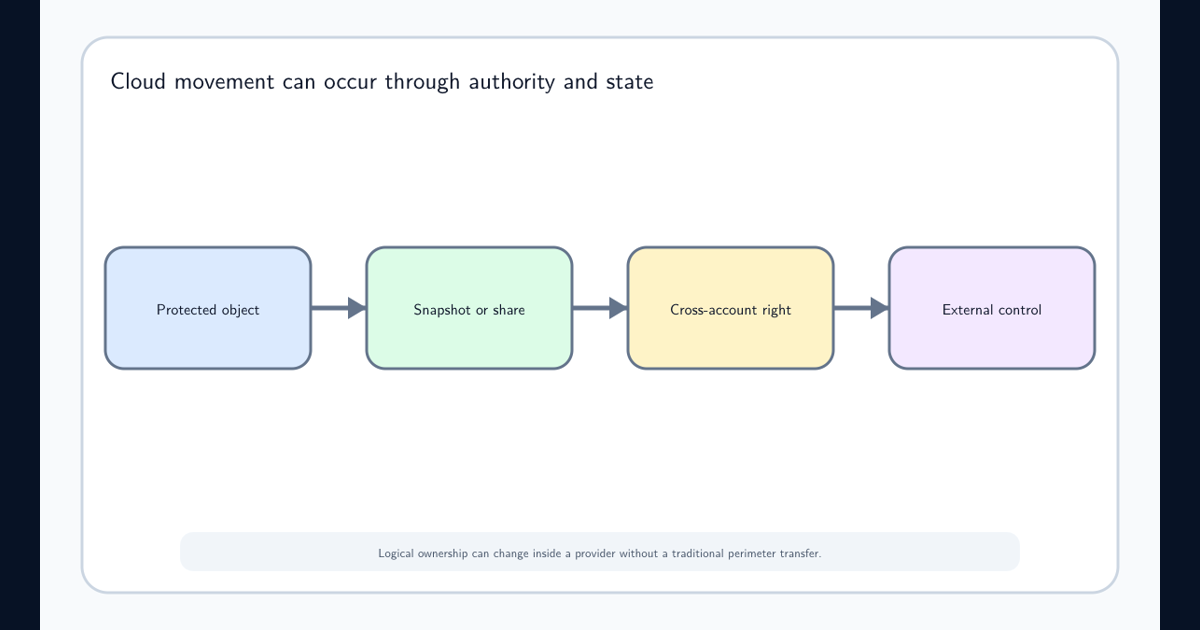
A backup service writing to its managed repository differs from an interactive user writing a password-protected archive into a web server directory. A data engineer exporting a governed dataset differs from a new service principal snapshotting an unrelated volume.
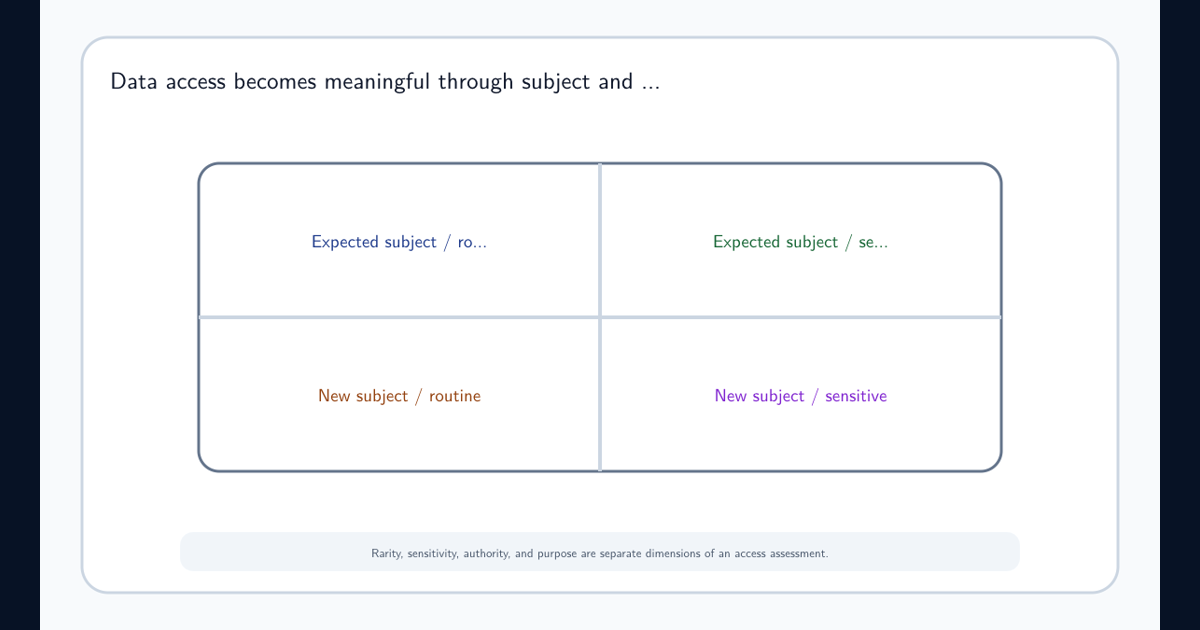
Add host or service role, path purpose, storage owner, data classification, initiating identity, approved job, destination permissions, and retention policy. Use event-time ownership and approval. A temporary directory may be ordinary for one application and exceptional for another.
Peer and history comparisons can surface novelty, but they should not replace purpose. A first-ever export can be an approved migration. A familiar backup account can be compromised.
Relate staging to a destination without assuming transfer
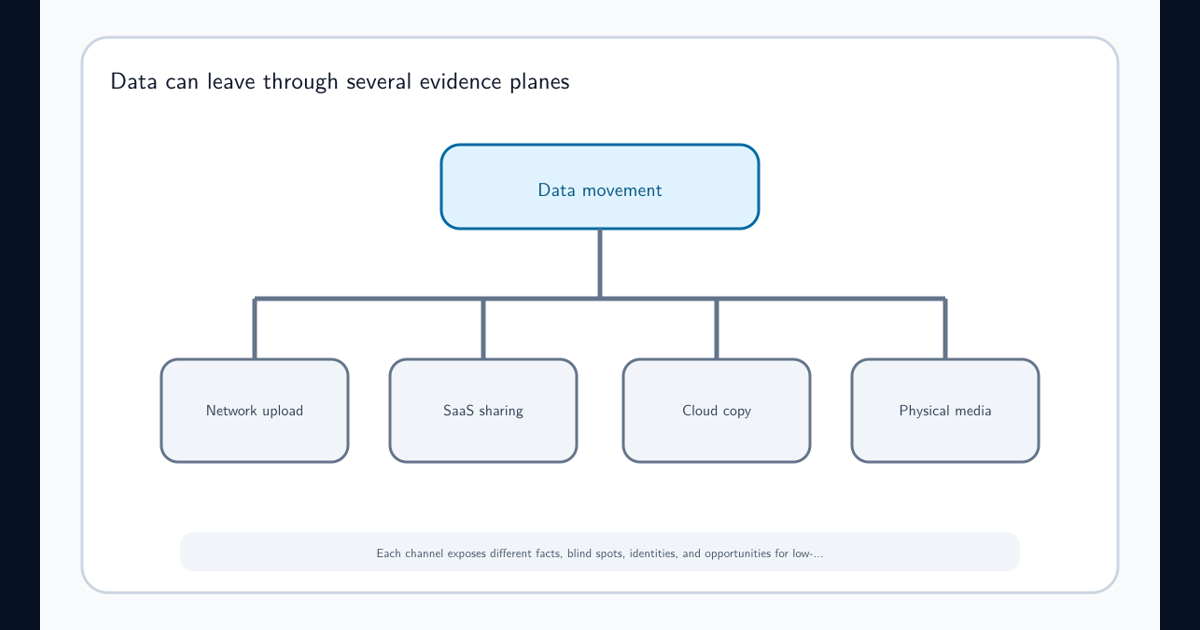
The next question is whether the staged set moved. Join archive, export, snapshot, or temporary object evidence to network sessions, uploads, sharing changes, cross-account copies, removable media, or message attachments. The exfiltration channels page explains why each channel exposes different evidence.
Preserve direction and outcome. A connection to cloud storage does not show which file was sent. An upload request may fail. A sharing link can create exposure without immediate bytes crossing a boundary.
When lineage is incomplete, report co-occurrence rather than confirmed movement. The staged artifact existed, and a related identity or process initiated a transfer-shaped action. Content equivalence remains unknown unless independent evidence supports it.
Keep preparation valuable even when no transfer follows
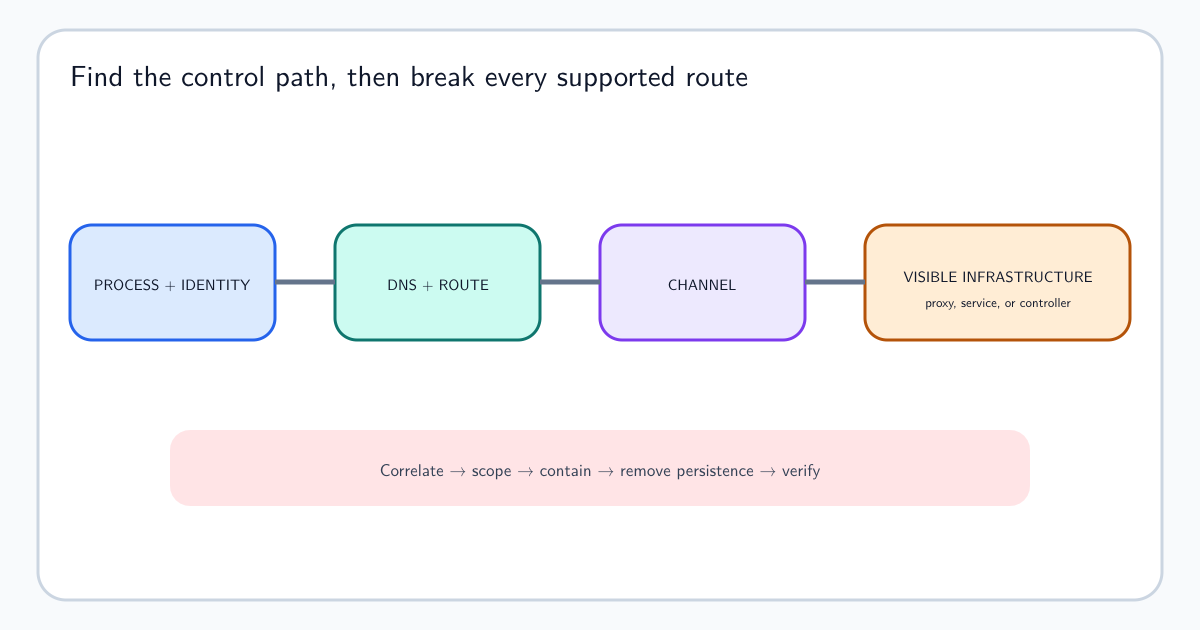
A staging alert can justify investigation before exfiltration completes when the collection is sensitive, the behavior is unauthorized, or the decision window is short. The response may preserve the artifact, verify the job, restrict the account, or monitor likely destinations.
The result should include source objects or population, staged output, transformation, actor and process, host or service role, time, approval context, related destinations, outcome, and source health. State whether content lineage is observed or inferred.
Do not weaken the alert by calling every archive exfiltration. Precision of language makes earlier intervention safer: suspicious preparation can matter greatly without pretending that the final harm is already proven.
Frequently asked questions
Does creation of an archive prove exfiltration?
No. It proves that data was packaged or transformed if the evidence is complete. Backup, deployment, legal discovery, and ordinary transfer workflows also create archives; later destination evidence is needed to assess exfiltration.