Detection Portfolio Prioritization
Prioritize detection work by threat relevance, consequence, evidential feasibility, decision value, maintenance cost, and current uncertainty instead of chasing rule counts or matrix color.
A backlog is not a strategy
Detection teams receive requests from threat reports, incidents, auditors, red teams, product owners, executives, and analysts. Every request can sound urgent in isolation. If the team accepts them in arrival order, the portfolio becomes a history of who asked most loudly rather than a reasoned allocation of limited attention.
A portfolio is the set of detection capabilities and their dependencies considered together. Prioritization decides which gap to address, improve, accept, or retire next. The unit is not merely a rule. It is a bounded security claim supported by evidence, delivery, ownership, validation, and maintenance.
Begin with the decision you want to improve. A behavior may be severe but poorly observable, already constrained by prevention, or irrelevant to the local environment. Another may have moderate consequence but sit on a common attack path where timely evidence can prevent broader harm. Priority is an argument about expected defensive value under constraints, not a universal ranking of techniques.
Separate relevance, consequence, and control gap
Relevance asks whether the behavior and affected technology exist in your environment and threat model. Consequence asks what could happen to missions, people, data, or operations if the behavior succeeds. Control gap asks what preventive, detective, and recovery measures already change that path.
These dimensions should not be collapsed too early. A technique can be common in public reporting but absent from your architecture. A rare action against a safety system can have exceptional consequence. A well-prevented behavior may still deserve detection because prevention can fail, but its marginal value differs from a path with no independent visibility.
Use evidence for each judgment. Threat intelligence, incidents, architecture, exposure, business impact analysis, and control assurance answer different parts. Record whether a statement is fact, assessment, or assumption. A high score built from undocumented impressions does not become objective merely because it has decimals.
Feasibility includes meaning and response
A log source can be available while the desired detection remains infeasible. The source may omit the target identity, arrive after the decision window, collapse several tenants, or record an attempt without its outcome. A platform may support the query while the alert lacks enough evidence for the consumer.
Assess the observation point, field meaning, entity resolution, timing, historical depth, health monitoring, and testability. Then assess whether a consumer can make a useful decision and whether an authorized response exists. A detection that reliably produces unactionable ambiguity consumes storage and analyst time without closing the gap it advertises.
Feasibility is not binary. You may deliver a hunt before an alert, narrow scope to one environment, improve telemetry first, or explicitly accept uncertainty. Those are portfolio decisions. They are more honest than marking the broad behavior covered because a partial query exists.
Account for lifetime cost and displacement
The initial build is only part of the cost. A detection consumes collection, retention, query capacity, validation effort, analyst attention, exception review, change management, and incident follow-up. It also creates an opportunity cost: maintaining one complex analytic can delay several simpler capabilities.
Estimate cost in ranges and expose uncertainty rather than pretending to know an exact monetary value. Consider whether shared telemetry or enrichment can support several requirements. Consider whether a high-volume analytic can run less often or produce risk rather than alerts. Consider whether the expected decision needs full content or a proportionate metadata representation.
Displacement matters when a request is urgent. State which planned work will move and what risk that leaves. This turns prioritization from a hidden queue operation into a security decision that accountable owners can review.
Review the portfolio as evidence changes
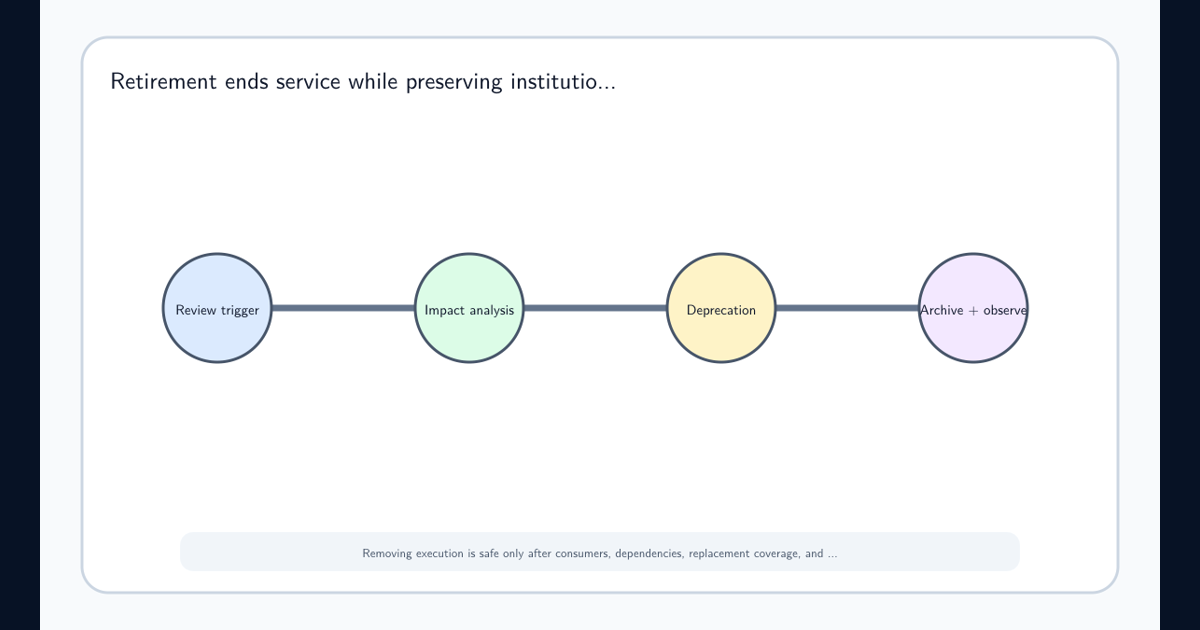
A priority is valid only under the information used to set it. New incidents can raise relevance. A provider can add a decisive audit event. A preventive control can lower exposure. A schema failure can degrade previously trusted coverage. Review should be triggered by those changes, not only by a calendar.
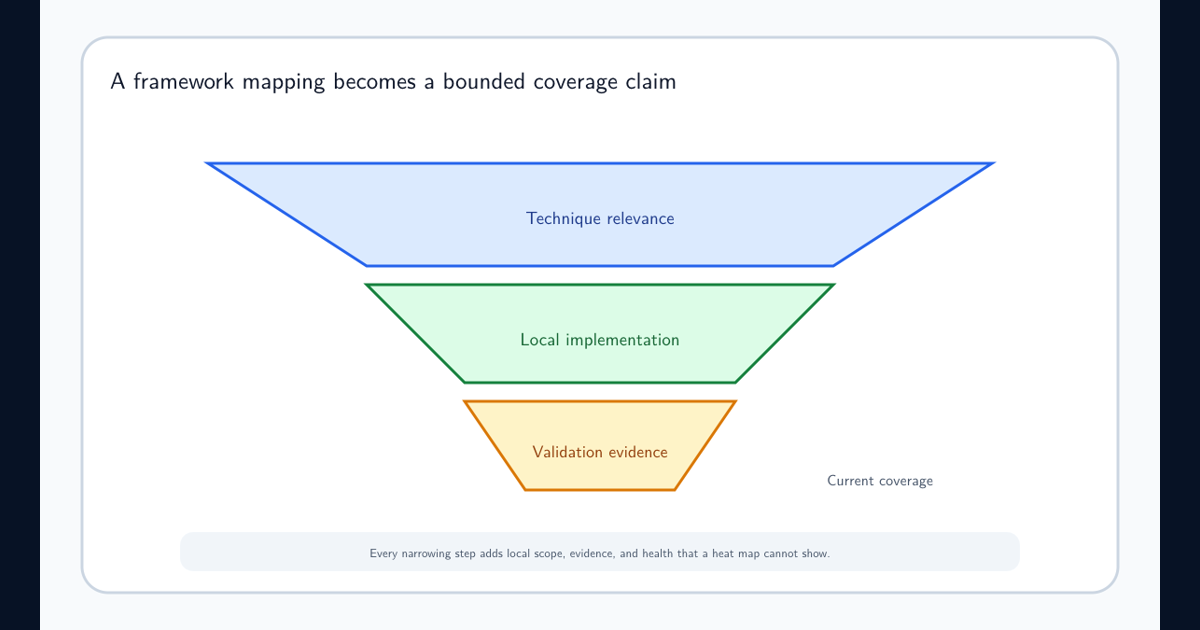
Avoid using ATT&CK technique coverage as the ranking. A technique label is useful for organizing threat knowledge, but one technique can contain many behaviors, platforms, and evidence paths. Coloring an uncovered square can encourage shallow content whose local value is unknown.
For every prioritized item, preserve the reason: behavior and scope, consequence, evidence opportunity, consumer decision, existing controls, expected value, cost, dependencies, confidence, and review trigger. For deferred work, record the residual risk and what would change the decision. A mature portfolio is not the one with the most rules. It is the one that can explain what it promises, why those promises matter, and where uncertainty still lives.
Frequently asked questions
Should the highest-risk threat always receive the next detection?
Not automatically. Priority also depends on whether useful evidence and a consumer decision exist, which controls already reduce the risk, how quickly the content can improve a decision, and what it will cost to operate honestly.