Artifact Provenance and Attestation as Detection Evidence
Use artifact provenance and attestations as signed statements about build relationships, then detect mismatches without treating presence, signature validity, or high assurance as proof that software is benign.
Provenance is a claim about how an artifact came to exist
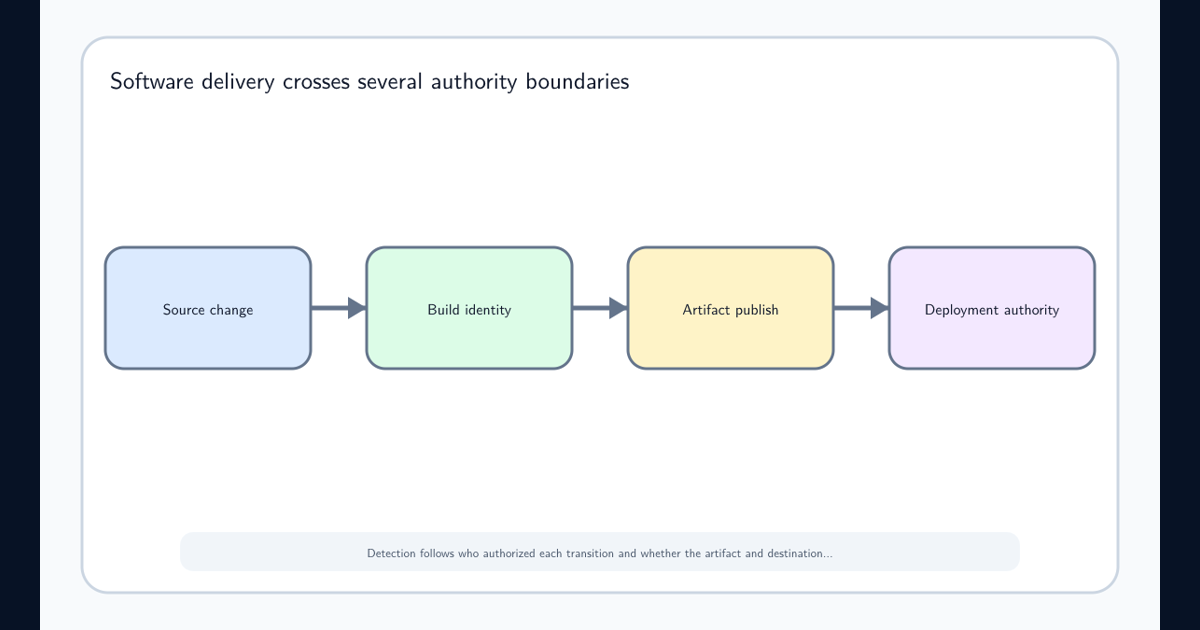
Artifact provenance is information describing the origin and production of an artifact: source inputs, build process, builder identity, parameters, dependencies, and resulting subject. An attestation is a signed statement about such facts using a defined predicate.
The subject should be identified by an immutable digest rather than a mutable tag. Otherwise the statement can remain valid while the name points to different bytes.
Provenance supports questions such as whether production received an artifact from the expected repository and builder. It does not inspect whether the source was malicious or the resulting program is safe.
Verification and policy are separate decisions
Verification checks signature integrity, signer identity, trust roots, statement structure, and subject relationship. Policy evaluation asks whether the verified facts meet organizational requirements, such as an approved builder, repository, branch, or build mode.
A valid signature from an unapproved workflow should fail policy. A missing attestation differs from an invalid one, and an unverifiable statement differs from a verified but disallowed statement. Preserve these outcomes separately.
Record verifier version, trust configuration, policy version, and evaluation time. Key rotation and identity federation can change later interpretation.
Assurance levels describe protections around production
Frameworks such as SLSA describe increasing guarantees around build provenance and build-system integrity. Read an assurance level as a bundle of requirements, not a universal quality score. Identify which version and requirements were evaluated.
Higher assurance can reduce opportunities to forge or tamper with provenance, but it cannot prove that maintainers, dependencies, or source logic are trustworthy. Threat models still include compromised accounts and legitimately produced malicious changes.
Detection should examine changes in assurance, builder identity, source location, invocation, and dependency lineage rather than merely checking that an attestation exists.
Mismatches are evidence with several explanations
Useful conditions include production artifacts lacking required provenance, digest mismatch, unexpected builder or repository, unapproved build parameters, non-monotonic assurance, identity changes, and attestations created outside expected release timing.
A mismatch can reflect attack, emergency process, migration, stale policy, verifier failure, or broken metadata propagation. The alert should include the verified subject, statement, expected policy, actual result, and deployment relationship.
Correlate with CI/CD detection to determine whether the pipeline path, approval, and deployment destination support one explanation over another.
Trust-chain health is part of detection health
Monitor attestation coverage by artifact population, verifier errors, trust-root changes, signer and builder inventory, policy deployment, timestamp and transparency dependencies, and the link from verified artifact to actual runtime deployment.
If verification is unavailable, do not silently treat artifacts as compliant. Mark the affected population unknown or degraded according to policy. A fail-open or fail-closed response has operational consequences that should be authorized in advance.
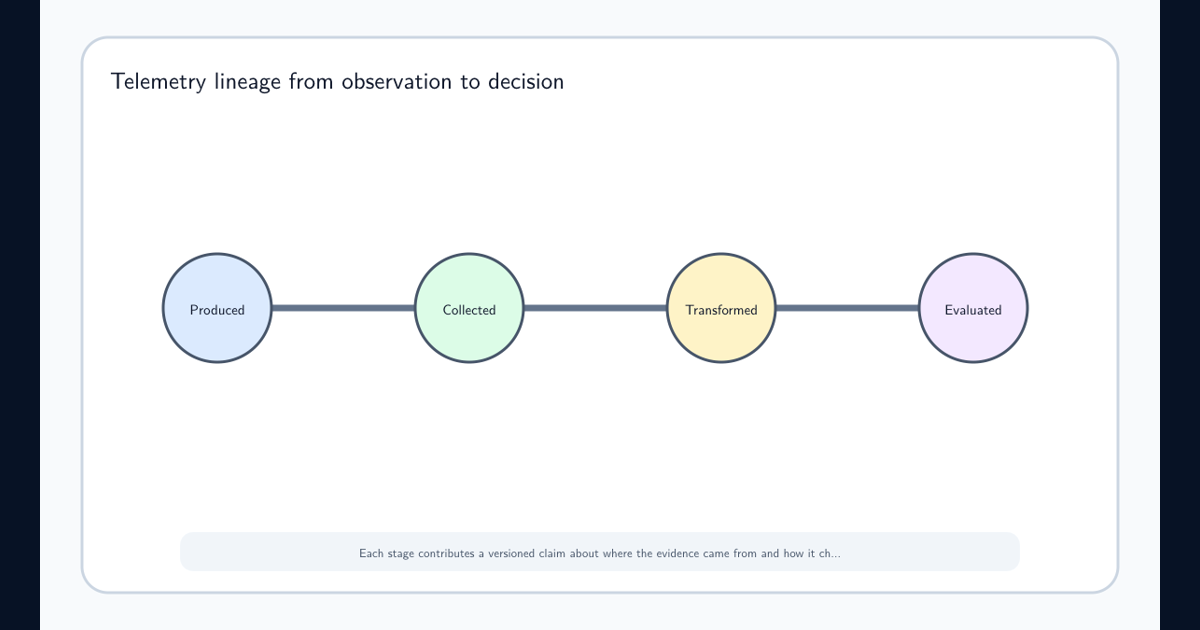
Retain statements and verification results with immutable identifiers and enough context for later review. Separate the observed cryptographic and policy facts from the security assessment and from uncertainty about source, dependencies, or runtime behavior.
Key and identity compromise remain central alternatives. A statement can verify correctly because an attacker used legitimate signing authority. Correlate unusual issuance, workflow changes, builder administration, and deployment timing before assessing cause. The attestation strengthens your account of what authority spoke; it does not make that authority incapable of misuse. Treat unexplained trust-root or verifier-policy changes as security evidence in their own right, because they can redefine which future statements appear acceptable.
Frequently asked questions
What can a provenance attestation prove?
It can support that an identified issuer made a signed statement linking defined subjects to build inputs and process metadata. Its strength depends on identity, key, builder, policy, and verification; it does not prove source code or behavior is safe.