Self-Hosted CI Runner Compromise: Defense Guide
Self-hosted CI runner compromise defense covers trust boundaries, job provenance, persistence, secret exposure, ephemeral isolation, and recovery.
A self-hosted runner is an execution boundary, not a passive agent
Self-hosted CI runner compromise occurs when workflow code, a dependency, an action, a user, or a prior job gains unauthorized control of the worker or its surrounding trust. The runner often combines repository-controlled input with organization-controlled credentials, network reach, build caches, signing tools, artifact stores, and cloud deployment authority.
GitHub Actions secure-use guidance warns that self-hosted runners lack the clean ephemeral guarantees of GitHub-hosted runners and can be persistently compromised by untrusted workflow code. The issue is architectural: a job is executable code, and the runner’s effective authority is every local and remote capability reachable during that job.
Define trust separately for public pull requests, internal branches, release tags, reusable workflows, third-party actions, and administrative maintenance. A repository collaborator is not automatically authorized to execute arbitrary code inside a production deployment network.
Preserve job provenance and runner state before recycling
Capture repository, immutable commit SHA, workflow file digest, workflow ref, triggering event and actor, approval record, runner ID and group, runner image digest, job and run IDs, actions and dependency versions, OIDC claims, secrets made available, network destinations, artifacts, cache keys, process tree, and teardown result.
This is an authored runner event—not live platform telemetry:
{"run_id":88421,"job":"release","runner_id":17,"ephemeral":true,
 "repository":"example/payments","sha":"4f9b...","event":"workflow_dispatch",
 "actor":"release-bot","image_digest":"sha256:91ad...",
 "oidc_sub":"repo:example/payments:environment:prod","teardown":"complete"}
Do not collect secret values into diagnostics. Record secret identifiers, injection time, and rotation status. A job log is attacker-influenced output; corroborate it with runner-control, cloud, artifact, network, and endpoint evidence.
Detect persistence, trust-boundary crossing, and artifact consequences
Detect changes to runner registration, group membership, labels, images, bootstrap scripts, service configuration, auto-update policy, and outbound destinations. On the host, watch for new services, scheduled tasks, users, SSH keys, containers, mounts, package changes, security-control impairment, credential-store access, and processes surviving the job.
Join runner activity to CI/CD detection opportunities: untrusted events scheduled onto privileged groups, workflow changes followed by production jobs, unexpected OIDC subjects, cache writes from low-trust contexts, artifacts published without matching provenance, or cloud API calls outside the job window.
Build systems are noisy and highly variable. Novel compilers, package downloads, and subprocess trees are weak alone. Strong findings connect an unauthorized input or runner change to persistence, credential use, artifact mutation, or downstream deployment.
Quarantine the runner and distrust its outputs
Remove the runner from scheduling, preserve proportional volatile and disk evidence, and revoke its registration. Identify every job executed during the exposure window. Rotate credentials available to those jobs using CI/CD secrets management, revoke federated sessions where supported, and review cloud actions.
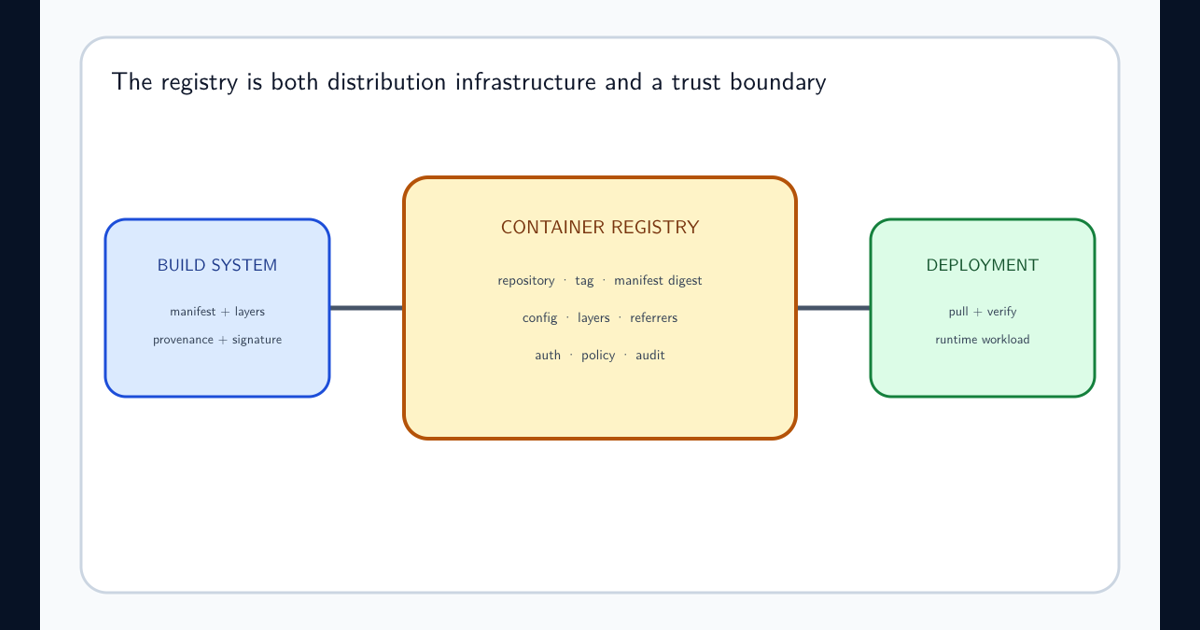
Quarantine artifacts, signatures, caches, test results, and deployment packages produced by the runner until they are reproduced in a trusted environment or independently verified. Roll back downstream releases when integrity cannot be established. Reimage from a known-good immutable source; cleaning a mutable worker cannot establish absence of persistence.
Recovery must fix the initiating trust path: unsafe pull-request scheduling, mutable action references, broad runner-group access, exposed control tokens, shared credentials, or flat network reach. Rebuilding alone leaves the compromise reproducible.
Prefer single-job workers with narrow, contextual authority
GitHub self-hosted runner reference recommends ephemeral runners for autoscaling rather than persistent workers. Provision one clean worker per job, forward logs before teardown, verify teardown, and prevent the worker from accepting another job. Separate runner groups by repository trust and environment.
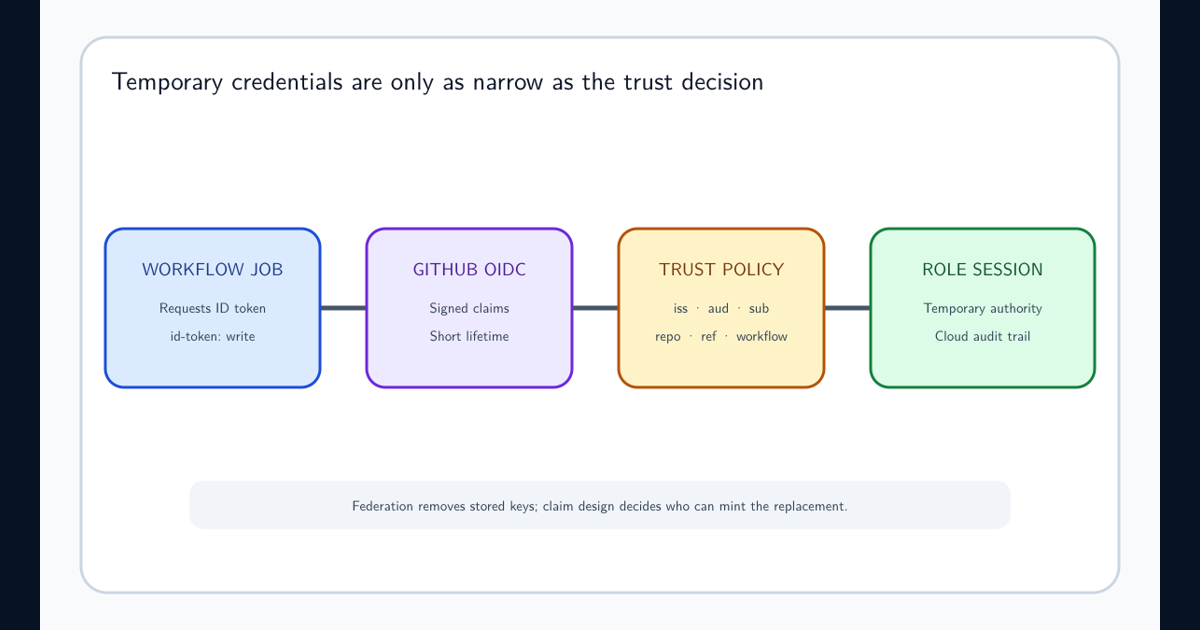
Minimize preinstalled secrets, block instance metadata unless required, restrict egress and deployment networks, use short-lived workload identity with bounded claims, and apply the GitHub Actions OIDC trust policy. Pin third-party actions and dependencies to reviewed immutable versions, protect workflow changes, and require environment approval for consequential deployment.
Ephemerality increases provisioning complexity and can expose gaps in log export or cache design. Pilot with one runner pool, measure job failures and teardown assurance, and keep caches read-only for low-trust jobs before broad enforcement.
Prove one runner pool can fail closed
Next step: map one production-capable runner pool from eligible workflow events through identity, network, caches, artifacts, and teardown. Run an authorized non-production job that creates a harmless marker process and file, then confirm teardown removes both and the worker never receives another job.
Verify that a pull request from an untrusted context cannot enter the pool or obtain production identity. The durable control is a runner whose trust class is explicit, authority is job-bound, evidence survives teardown, outputs are attributable, and compromise cannot silently persist into the next build.
Frequently asked questions
Does an ephemeral runner make untrusted workflow code safe?
No. Ephemerality limits persistence and cross-job contamination, but the job can still access credentials, networks, metadata services, caches, and artifacts exposed during its own execution.
Is rebuilding a compromised runner sufficient recovery?
No. Rebuild the worker, rotate exposed credentials, invalidate artifacts and caches whose integrity is uncertain, inspect downstream deployments, and correct the workflow or trust path that allowed compromise.