Cloud Control-Plane Detection Design
Design cloud detections around control-plane requests, identities, resources, policy decisions, and asynchronous effects while respecting provider-specific logging boundaries.
The control plane governs resources through APIs
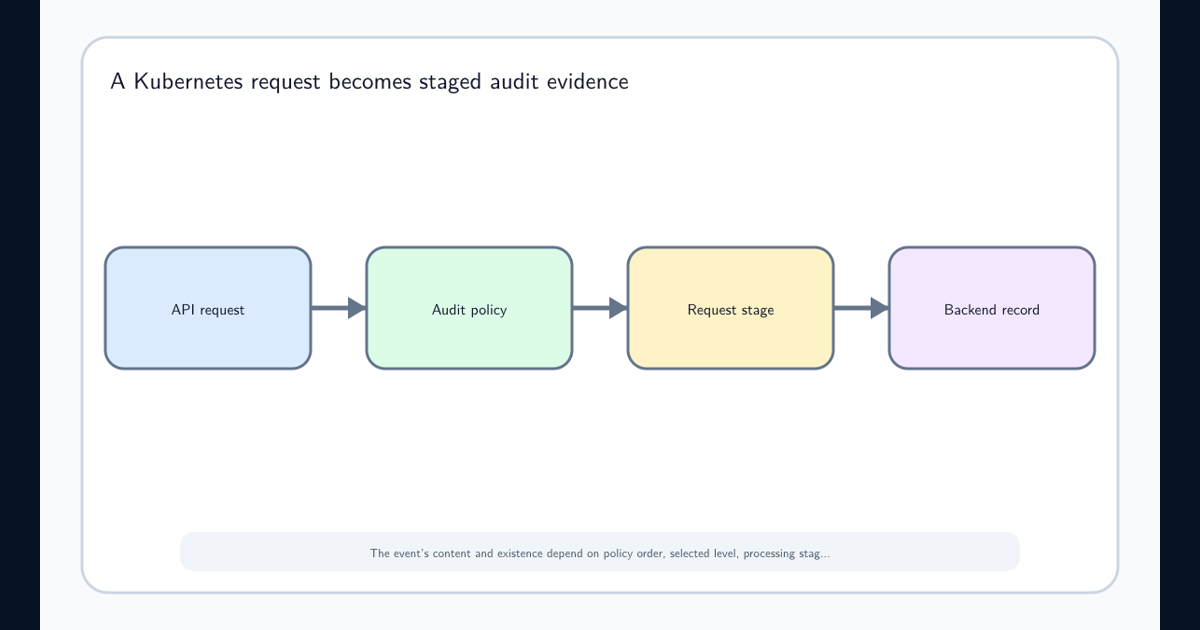
A cloud control plane is the provider-managed interface used to create, configure, authorize, and delete cloud resources. Its audit records commonly describe a principal, session, operation, parameters, target, source context, time, and result.
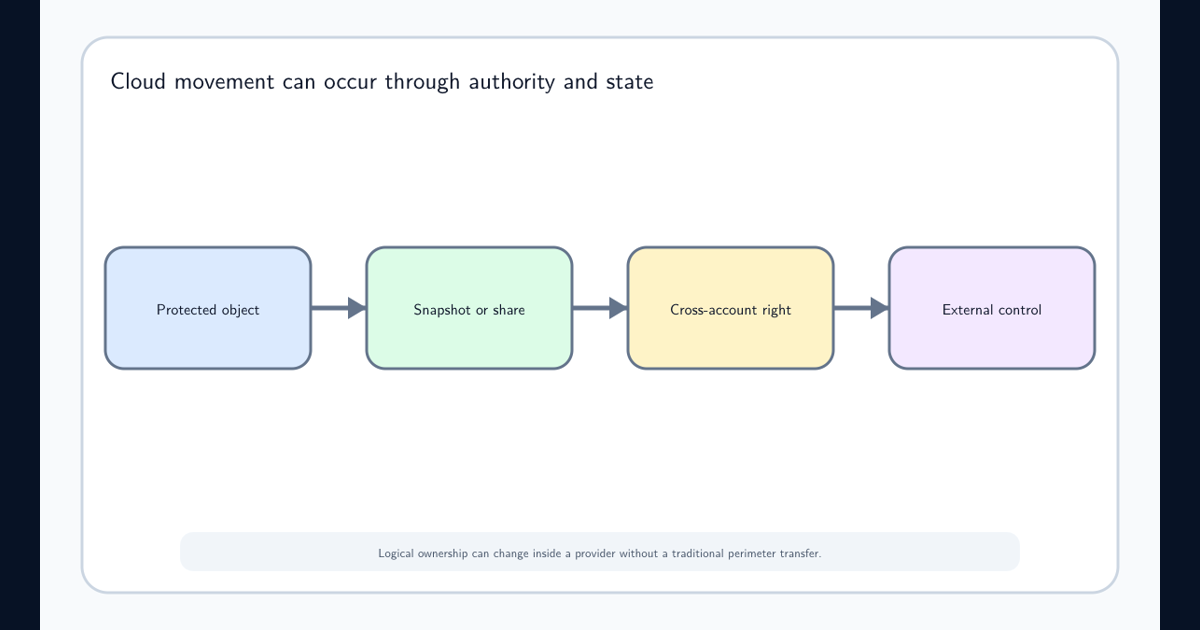
This is a powerful vantage point because administrative behavior crosses it. It is not the whole cloud. Data-plane reads, application actions, guest operating-system behavior, and provider-internal processes may use other evidence.
Begin each hypothesis by locating the security-relevant state change and asking whether the control plane necessarily observes it. That keeps the claim aligned with the vantage point.
Principal, session, and delegated role must stay distinct
Cloud identity is a chain. A human, workload, or service can authenticate, obtain a session, assume a role, use delegated authority, and call an API. The displayed principal at the final step may not explain who initiated the chain.
Preserve issuer, subject, session, role, client, tenant or account, source, and target relationships with time validity. Distinguish the actor that called the API from the resource or identity changed by it.
An assumed administrative role is not suspicious by itself. Detection asks whether the assumption and subsequent use fit the expected trust path, scope, device, workload, time, and resource sequence.
Request and outcome describe different facts
A request record shows attempted parameters. A response status shows how the control plane handled that request. The eventual resource state may change later through asynchronous processing, reconciliation, or another actor.
Detect denied reconnaissance and failed privilege attempts without describing them as completed changes. For successful operations, correlate resource-state or follow-on evidence when consequence matters. Handle retries and idempotent operations so one logical action does not become many incidents.
Provider naming and outcome semantics vary. Normalize common concepts while retaining the raw operation, API version, request identifier, and provider-specific reason.
High-value analytics reason about change and sequence
Single rare operations can be useful, but cloud administration is naturally diverse. Stronger hypotheses often combine a new trust relationship, privilege grant, logging change, credential creation, or public exposure with the identity and sequence that produced it.
Compare against infrastructure-as-code deployments, approved automation, break-glass process, and ordinary service behavior. Provenance reduces ambiguity but does not make authorized pipelines immune to compromise.
Use time windows that reflect eventual consistency and cross-region delivery. State which joins are exact and which are assessments based on incomplete entity or timing evidence.
Logging configuration is part of the coverage claim
Track enabled services, regions, accounts, tenants, event classes, exclusions, retention, latency, schema versions, and delivery destinations. Organization-level configuration does not guarantee every newly created account is included.
Use control events and expected administrative cadence to identify silence. Mark coverage degraded when a region, service, or data event class is missing rather than allowing a global status to remain green.
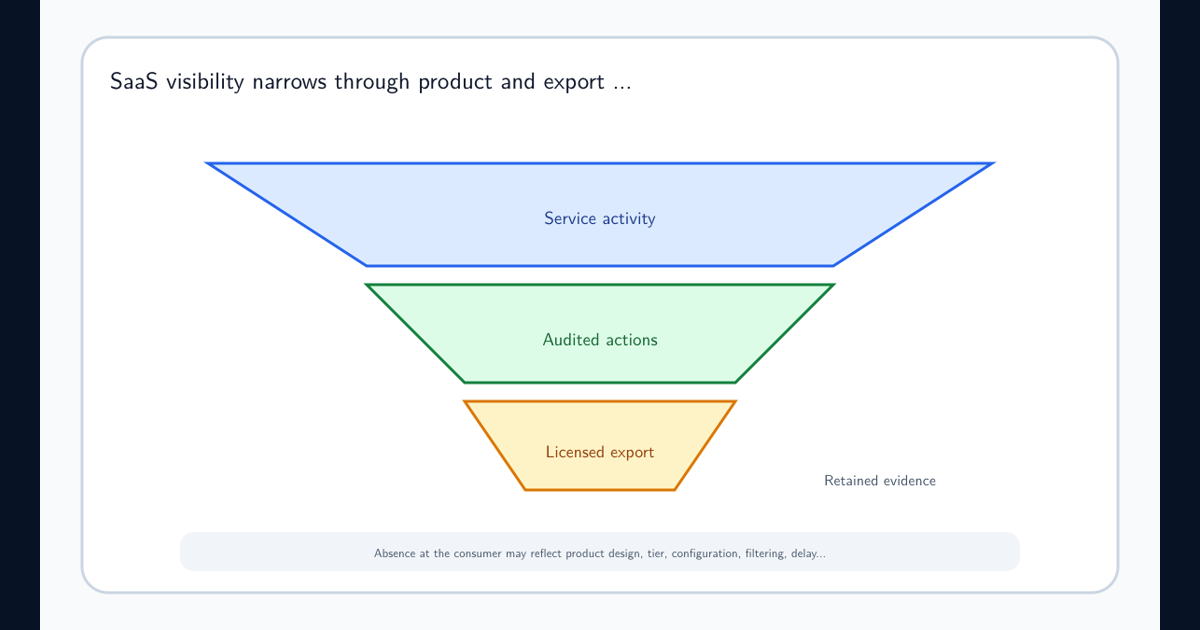
Provider documentation and SaaS audit log boundaries help identify source limits, but local contracts and health prove current availability. Report facts about recorded operations separately from assessments of intent and unknown data-plane effects.
Account creation deserves special attention because governance often applies asynchronously. Compare the provider organization inventory with the telemetry inventory and measure the interval until a new account produces expected evidence. This turns a vague assumption of inheritance into a testable population claim and exposes gaps before the first incident depends on them.
Frequently asked questions
What does a cloud control-plane event prove?
It can show that a provider control plane observed and processed an authenticated API operation with recorded parameters and outcome. It does not automatically prove user intent, workload execution, resource effect, or visibility into data-plane activity.