Canary Deployment and Rollback for Detection Content
Introduce detection changes to a bounded population, compare them with a known baseline, and preserve a rollback path that restores service rather than merely restoring a file.
A canary limits uncertainty, not just deployment size
A canary deployment exposes a new detection artifact to a deliberately limited slice of production before wider release. The artifact might be a query, model, parser mapping, threshold, enrichment, or routing rule. The point is to observe how the change behaves under real conditions while the possible harm remains bounded.
Small scope alone does not create safety. A canary drawn only from quiet tenants may miss high-volume failures, while one drawn from unusually clean data may hide schema diversity. Define why the chosen population represents the assumptions you need to test.
Treat the canary as a comparison. State the current baseline, the expected change, and the evidence that would support promotion, continued observation, or reversal.
Promotion criteria must describe meaning and operation
A candidate can execute successfully and still be wrong. Semantic criteria ask whether matches represent the intended behavior, entities keep their roles, grouping makes sense, and negative cases remain quiet. Operational criteria ask whether latency, cost, volume, delivery, and state remain within acceptable bounds.
Write thresholds before exposure so enthusiasm for a seemingly successful result does not move the goalposts. Include minimum observation time and sample size where variability matters. A zero-alert result is not automatically good; it could mean the behavior was absent or the path was broken.
Analyst impact belongs beside system health. Compare evidence completeness, duplicate work, triage time, and disposition patterns, because a technically healthy change can still make the service less useful.
Shadow and dual-run modes answer different questions
In shadow mode, the candidate evaluates production evidence without sending normal alerts to consumers. This reveals match volume, cost, timing, and many logic differences without duplicating analyst work. It cannot fully prove routing, case creation, or the human effect of the alert.
In a dual run, old and new versions both complete more of the service path. You can compare alert evidence and dispositions, but must prevent two versions from creating conflicting cases or automated responses. Tag every result with its version and mode.
Choose the mode from the unresolved assumption. If your concern is query cost, shadowing may be sufficient. If your concern is investigation readiness, a tightly controlled dual run exposes more of the necessary path.
Rollback restores a compatible service state
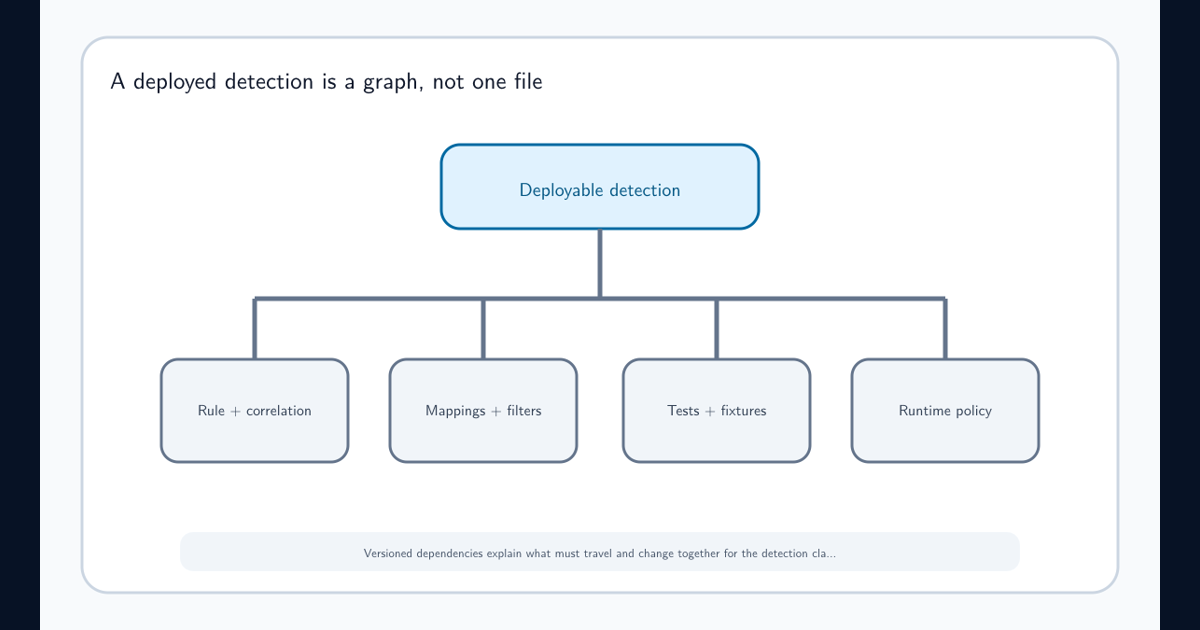
Rollback is the controlled return to a previously acceptable service state. Replacing the query file is only one part. The older artifact may depend on a prior schema, enrichment version, correlation state, schedule, exception set, or downstream contract.
Define the rollback unit before deployment and verify that retained artifacts are immutable and deployable. Identify who can order reversal, which guardrail can trigger it automatically, and how you will confirm recovery. State created during the canary may need isolation or migration rather than deletion.
Practice the reasoning through change records and compatibility analysis. A rollback plan that has never accounted for dependencies is a hope, not a control.
The deployment record preserves a bounded conclusion
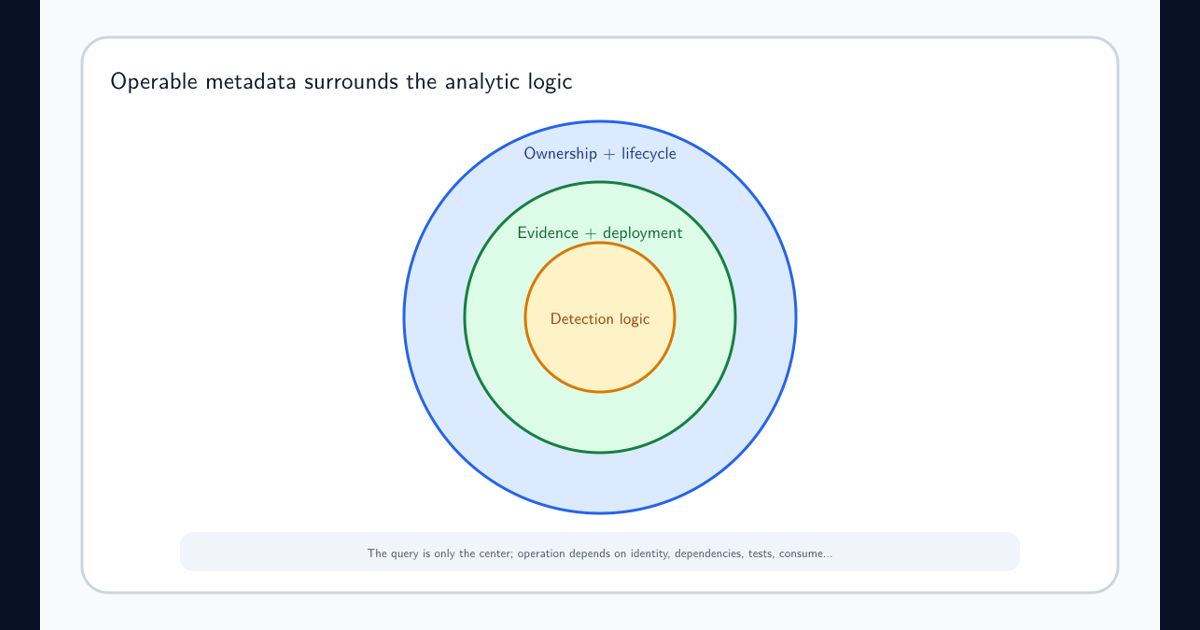
Retain the candidate and baseline versions, selected population, selection rationale, expected effects, observation interval, criteria, actual results, approvals, and any rollback evidence. These are facts about the deployment. The assessment is whether those facts justify broader exposure.
Keep uncertainty visible. A short canary may miss weekly behavior; a narrow tenant sample may miss another provider configuration; low incident volume may limit conclusions about precision. Promotion therefore means the residual uncertainty is acceptable, not that the detection is proven universally correct.
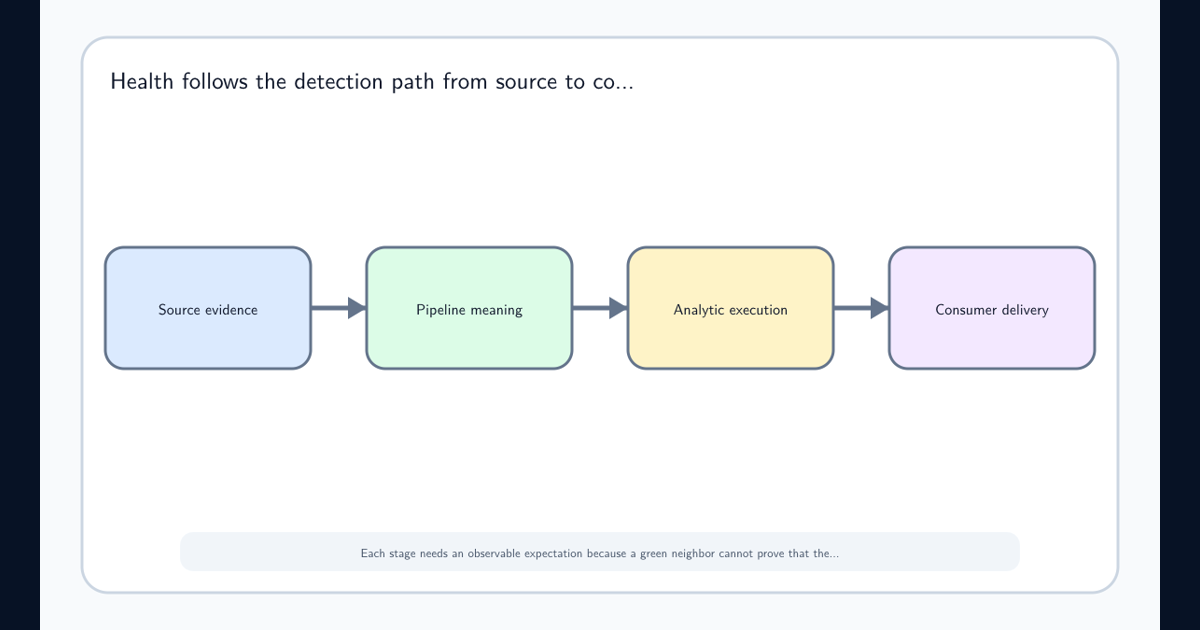
After promotion, continue detection health monitoring. A canary is a release decision, while production health is an ongoing claim about a changing system.
Frequently asked questions
What makes a detection canary safe to promote?
Promotion is justified when a representative scope meets predefined semantic, operational, cost, and analyst-impact criteria, while the team has verified that rollback restores compatible content, state, and dependencies.