Centralized, Embedded, or Hybrid CTI: Which Team Model Fits?
Choose a CTI operating model from decision proximity, consistency, scale, and available expertise rather than copying another organization chart.
A CTI operating model decides where analysts sit, who sets priorities, who owns quality, and how intelligence reaches consumers. Central teams gain consistency and shared scale. Embedded analysts gain context and speed. Hybrid models try to retain both, but require deliberate governance.
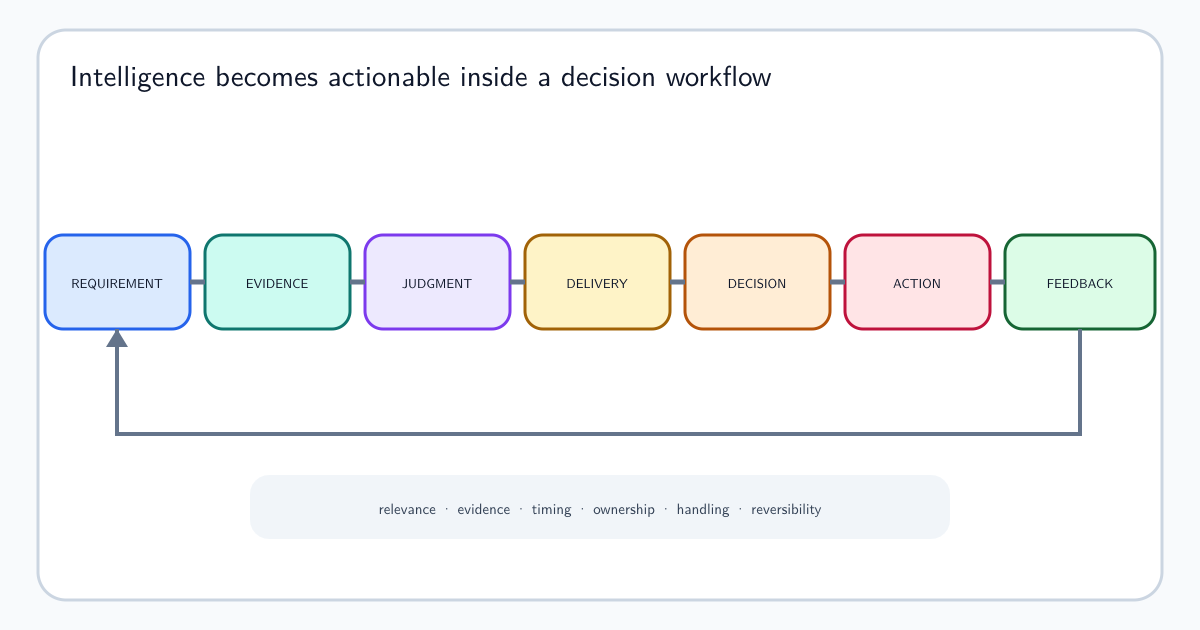
Choose by tracing actual decisions. List the consumers, required response time, specialist skills, sensitive access, and recurring products. The model should shorten the path from requirement to decision without fragmenting evidence or standards.
Compare the Trade-offs
Centralize when requirements overlap, platforms and sources are shared, and specialist capacity is scarce. Embed when one function needs continuous interaction and local context. Use hybrid when shared collection and methods can support analysts assigned to high-demand consumers.
Watch for failure modes: a central team becoming a distant report factory, embedded analysts duplicating work, or hybrid staff receiving conflicting priorities.
Assign Rights, Not Just Seats
Specify who approves requirements, allocates surge work, owns sources, reviews judgments, publishes, measures outcomes, and resolves conflict. Use one requirement register and common confidence language even when analysts are embedded.
Protect time for peer review and community practice. An analyst who reports only to a local consumer can become isolated or pressured toward that consumer’s preferred answer.
Pilot the Handoffs
Run representative cases through the proposed model. Measure time to clarify the requirement, access evidence, review, deliver, and receive feedback. Ask consumers whether the answer arrived in their workflow and analysts whether priorities were coherent.
Start with the lightest model that meets demand and review quarterly. The broader CTI program guide helps connect structure to process and technology.
Frequently asked questions
When does centralized CTI work best?
When scarce expertise, consistent standards, shared sources, and organization-wide priorities matter more than daily proximity to one consumer.
When should analysts be embedded?
Embed when a business or security function has enough sustained demand and context that close participation materially improves decisions.
What makes a hybrid model work?
Clear service ownership, shared standards, planned rotations or coordination, and explicit authority prevent a hybrid from becoming two disconnected teams.
Does company size determine the model?
Not alone. Decision diversity, geographic spread, security maturity, risk, and analyst capacity matter more than employee count.
When should the operating model change?
Review it when demand, business structure, response speed, duplication, quality, or analyst load changes enough to affect service outcomes.