MITRE ATT&CK v19 Detection Strategies and Analytics Explained
Read MITRE ATT&CK v19 detection strategies, analytics, and data components as a layered knowledge model without mistaking framework mappings for deployed coverage.
ATT&CK describes observed behavior, not a deployment checklist
MITRE ATT&CK is a curated knowledge base of adversary behaviors. A technique describes how an adversary may achieve an objective; a sub-technique gives a more specific form. A tactic groups the objective that behavior serves.
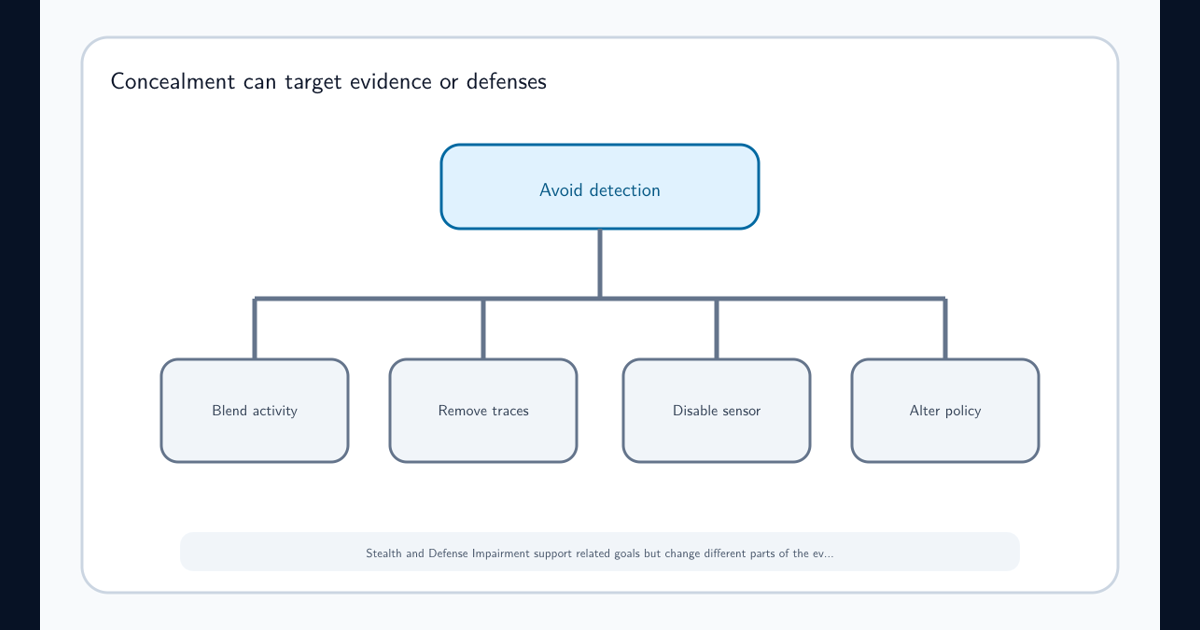
In ATT&CK v19, released in April 2026, Enterprise Defense Evasion was split into Stealth and Defense Impairment. The split helps you distinguish behavior intended to avoid notice from behavior that weakens defensive capability. Version 19 also added sub-techniques to ICS and began Mobile detection strategies.
These changes refine the model. They do not prove that any organization observes or detects the behavior.
A detection strategy explains a reusable way to find behavior
A detection strategy is a cohesive methodology for recognizing a behavior. It can organize several analytics that observe different platforms or parts of the same behavioral chain. This sits between the broad technique and a concrete implementation.
Read the strategy for its behavioral premise: which relationships or changes make the activity distinguishable, which alternatives resemble it, and which evidence sources could support the distinction. Do not copy the title into a coverage matrix and stop.
A strategy can remain valuable when products and query languages change because it preserves the reasoning that implementations are meant to express.
An analytic is platform-specific detection logic
In the v19 model, an analytic represents platform-specific detection logic within a strategy. It can specify relevant log sources, fields, relationships, and conditions. This added precision makes ATT&CK more useful to detection engineers, but it is still reference content.
Translate the analytic into your environment’s identities, schemas, time semantics, baselines, and operational constraints. Verify that named evidence exists and retains the assumed meaning. A Windows-oriented analytic and a cloud control-plane analytic may support one strategy while requiring entirely different tests.
Record the ATT&CK version and object identifiers. Content evolves, so a mapping without version lineage becomes ambiguous.
Data components identify evidence categories, not guaranteed fields
A data component describes a category of properties or activity that can support detection, such as a process creation or account modification. It is more specific than a product name but less specific than your event schema.
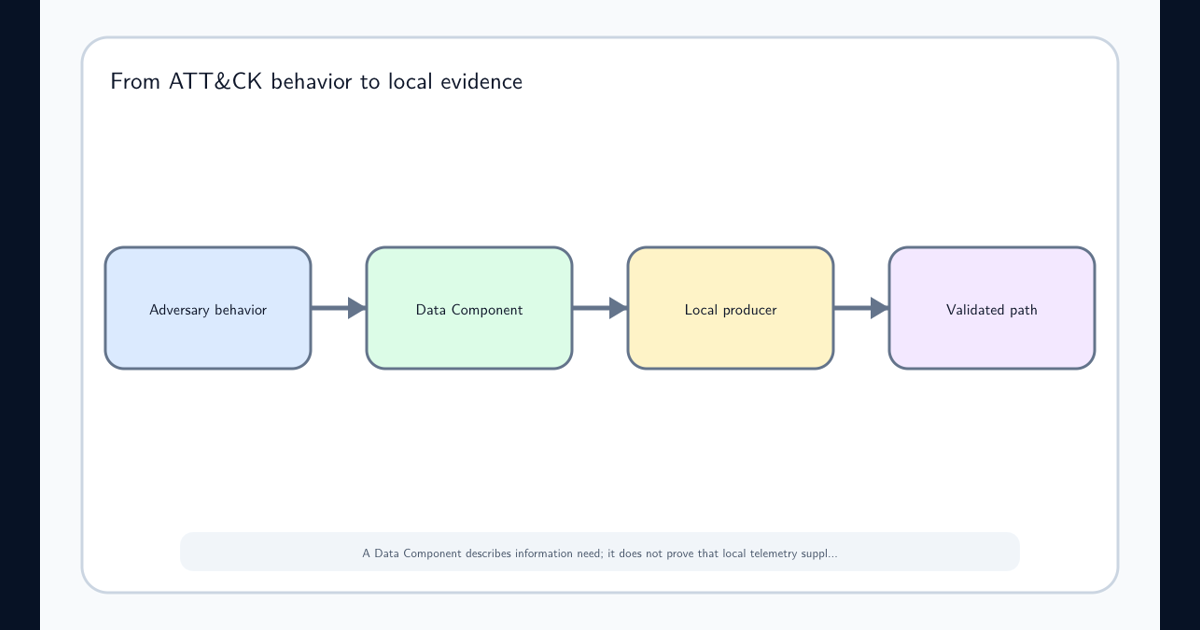
Use ATT&CK data components to reason from behavior toward sensors and fields. Then confirm source coverage, configuration, retention, entity roles, and field semantics locally.
Two products can claim the same data component while exposing different actors, targets, outcomes, and time. Treat the component as a bridge for requirements, not as proof of equivalent evidence.
Coverage claims need evidence beyond an ATT&CK mapping
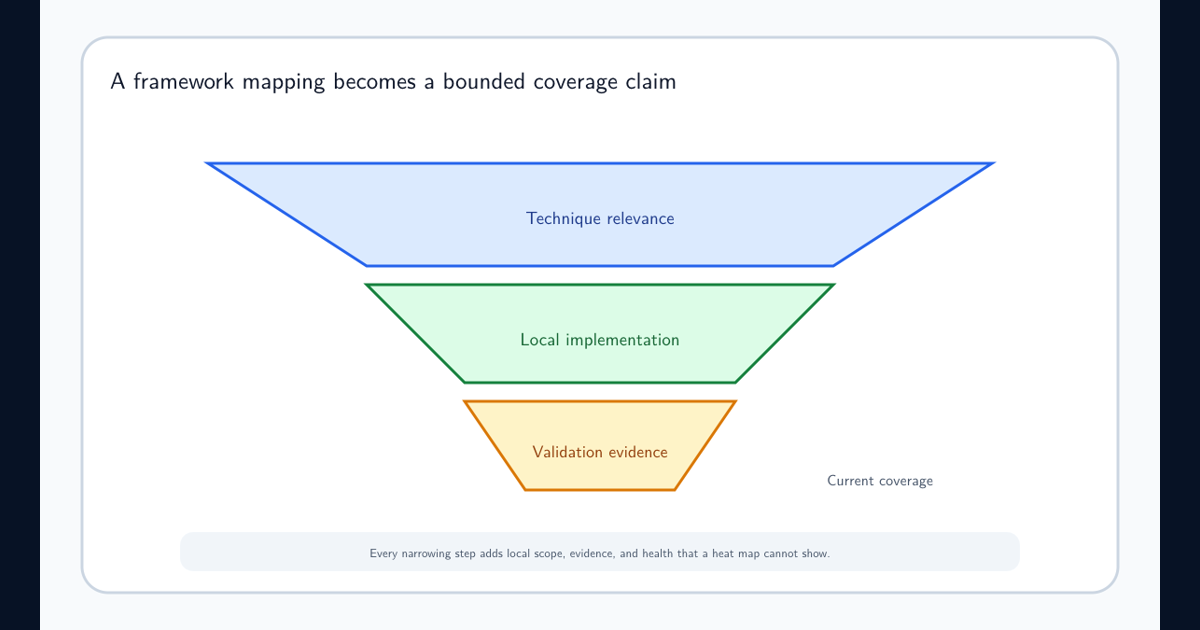
A technique-to-rule link establishes relevance, not effectiveness. A defensible claim also needs a scoped behavior, population, data contract, analytic version, tests, health signals, known alternatives, and consumer outcome.
Distinguish facts from assessment. It is a fact that a rule maps to an ATT&CK object and matched a test record. It is an assessment that the deployed service detects a meaningful portion of that behavior under stated conditions. Remaining variants and visibility gaps are uncertainty.
As of September 2026, ATT&CK v19.2 is the current data release. Reconcile framework updates deliberately rather than allowing changed objects to rewrite the meaning of historical coverage.
Keep local requirements stable when names or relationships change upstream. Review whether a framework revision changes your hypothesis, only its classification, or neither. Historical incidents should retain the mapping version used at the time, while current portfolio views can show an explicit migration. This preserves analytical continuity without freezing the program on an obsolete model.
Frequently asked questions
What changed for detection engineering in MITRE ATT&CK v19?
ATT&CK v19 formalizes detection strategies and platform-specific analytics more broadly, splits Enterprise Defense Evasion into Stealth and Defense Impairment, adds ICS sub-techniques, and begins Mobile detection strategies. The current September 2026 data release is v19.2.