
Ransomware continues to dominate the cybersecurity landscape in 2026, with threat actors refining their techniques and expanding their targets. This comprehensive analysis examines the latest ransomware trends, emerging tactics, and actionable defense strategies for organizations of all sizes. For a deeper understanding of how ransomware operates as a business model, explore our Ransomware as a Service (RaaS) overview.
The Shifting Ransomware Landscape
Ransomware groups have evolved beyond simple encryption-and-extortion models. In 2026, we’re witnessing a sophisticated ecosystem where threat actors employ multiple extortion techniques, leverage AI for automation, and target critical infrastructure with unprecedented precision.
Triple Extortion and Beyond
The traditional double extortion model—encrypting data and threatening to leak it—has expanded. Modern ransomware operators now employ triple extortion, which adds:
- Data leakage threats – Public exposure of sensitive information, similar to the tactics used by the Cl0p ransomware gang
- DDoS attacks – Disrupting operations during negotiations
- Third-party notifications – Contacting partners, customers, and regulators to increase pressure
- Shareholder and board targeting – Direct communications to investors and leadership
AI-Powered Ransomware
Artificial intelligence is revolutionizing ransomware operations:
- Automated reconnaissance – AI scans networks to identify high-value targets and critical backups
- Adaptive encryption – Malware modifies its behavior based on security controls encountered
- Intelligent phishing – AI generates convincing social engineering campaigns at scale
- Evasive techniques – ML-powered evasion of endpoint detection and response (EDR) solutions
Major Ransomware Groups to Watch in 2026
LockBit 4.0
The LockBit ransomware-as-a-service (RaaS) operation remains the most prolific ransomware group. Version 4.0 introduces:
- Faster encryption algorithms
- Cross-platform capabilities (Windows, Linux, macOS)
- Enhanced anti-analysis features
- Customizable affiliate panels
- Integration with initial access brokers for streamlined attacks
Clop and the MOVEit Legacy
Clop continues to exploit zero-day vulnerabilities in enterprise software. Their focus on managed file transfer (MFT) solutions has proven devastating, leading to billions in damages across multiple industries.
BianLian and Rhysida
Emerging ransomware groups like BianLian and Rhysida are gaining prominence with sophisticated tactics and targeting critical infrastructure sectors.
Critical Infrastructure Under Siege
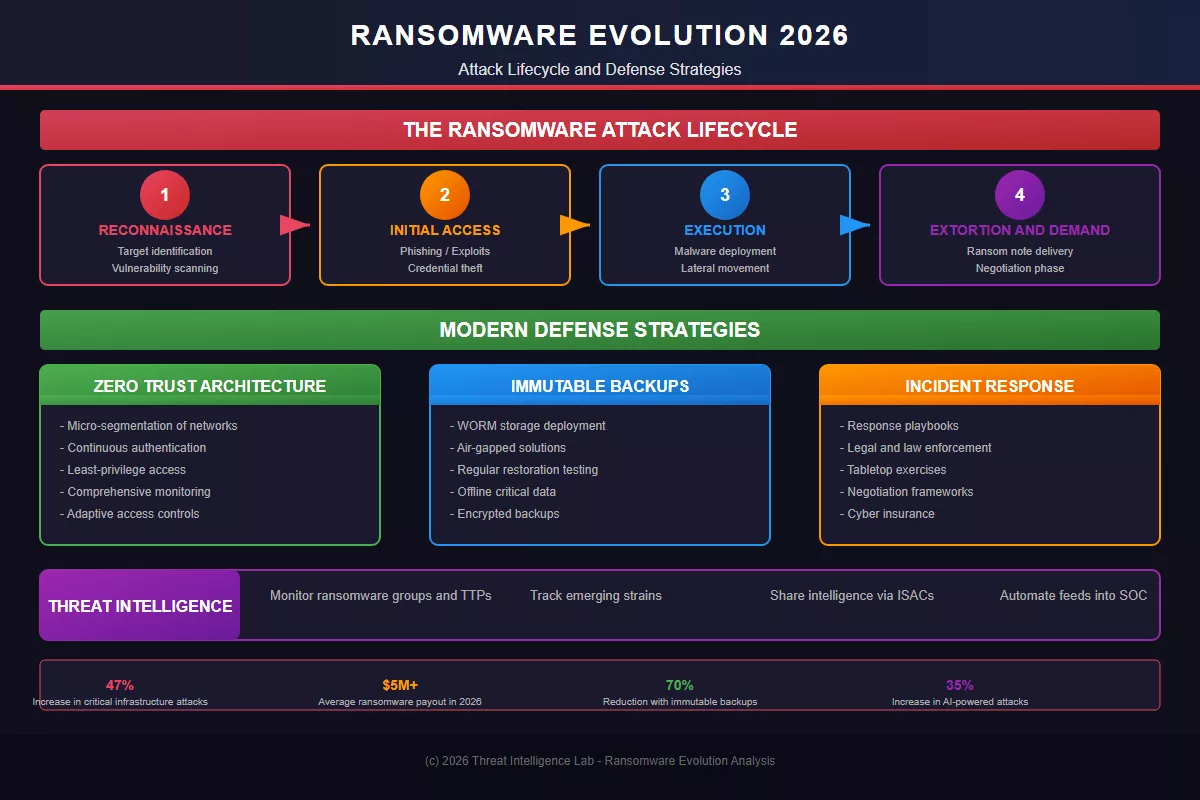
Ransomware attacks on critical infrastructure have increased by 47% year-over-year. Key sectors under attack include:
- Healthcare – Hospitals and healthcare providers face constant threats, with attacks leading to patient care disruptions
- Energy – Power grids and oil/gas operations are prime targets for nation-state-backed ransomware groups
- Transportation – Logistics and shipping companies are increasingly targeted
- Manufacturing – Industrial control systems (ICS) are vulnerable to ransomware that can cause physical damage
- Government – Municipalities and federal agencies struggle with legacy systems and limited budgets
Defense Strategies for 2026
Zero Trust Architecture
Implementing a zero-trust security model is no longer optional. Key components include:
- Micro-segmentation of networks
- Continuous authentication and authorization
- Least-privilege access principles
- Comprehensive logging and monitoring
- Adaptive access controls based on risk signals
Immutable Backups
Immutable backup strategies are the last line of defense:
- Deploy write-once-read-many (WORM) storage
- Implement air-gapped backup solutions
- Regularly test restoration processes
- Maintain offline copies of critical data
- Ensure backups are encrypted and access-controlled
Incident Response Readiness
Preparation is key to minimizing ransomware impact. Learn more about hack and leak crime tactics to better understand attacker motivations.
- Develop and test incident response playbooks
- Establish relationships with legal counsel and law enforcement
- Practice ransomware scenarios through tabletop exercises
- Maintain pre-negotiation frameworks for extortion attempts
- Build relationships with cyber insurance providers
The Role of Threat Intelligence
Proactive threat intelligence is essential for ransomware defense. Understanding supply chain attacks and monitoring dark web forums can provide early warning of emerging threats:
- Monitor ransomware group activities and TTPs
- Track emerging ransomware strains and variants
- Analyze ransomware negotiation tactics
- Share intelligence through ISACs and industry groups
- Automate threat intelligence feeds into security operations
Government and Regulatory Responses
Governments worldwide are taking action against ransomware:
- Increased sanctions against ransomware groups and infrastructure providers
- Mandatory ransomware reporting requirements
- Enhanced international cooperation on cybercrime investigations
- Funding for cybersecurity initiatives and workforce development
- Regulatory pressure on organizations to maintain minimum security standards
Conclusion: Preparing for the Future
Ransomware remains one of the most significant cybersecurity threats facing organizations today. By understanding evolving tactics, implementing comprehensive defense strategies, and leveraging threat intelligence, organizations can significantly reduce their risk. The battle against ransomware requires vigilance, investment, and a commitment to continuous improvement.
Stay informed about ransomware developments by following Threat Intelligence Lab for regular updates, analysis, and actionable intelligence.
Leave a Reply
You must be logged in to post a comment.